Airport Customs Rules in Vietnam: A Guide for International Travelers
Latest update: Jun 12th, 2026
Table of Contents
When arriving in Vietnam, travelers must pass through customs before entering the country. While the customs process is generally straightforward, understanding Vietnam's airport customs rules can help you avoid delays, penalties, or unnecessary complications.
Whether you are visiting Vietnam for tourism, business, or family purposes, knowing what you can bring into the country and what must be declared will make your arrival much smoother.
In this guide, we'll explain the essential airport customs rules in Vietnam and provide practical tips for international travelers.
What Is Customs Clearance?
Customs clearance is the process of inspecting goods and personal belongings entering a country. After completing immigration procedures and collecting your luggage, you will proceed through customs before exiting the airport.
Vietnam Customs is responsible for:
- Monitoring imported goods
- Preventing illegal items from entering the country
- Enforcing declaration requirements
- Protecting public health and safety
Most travelers with normal personal belongings pass through customs without difficulty.
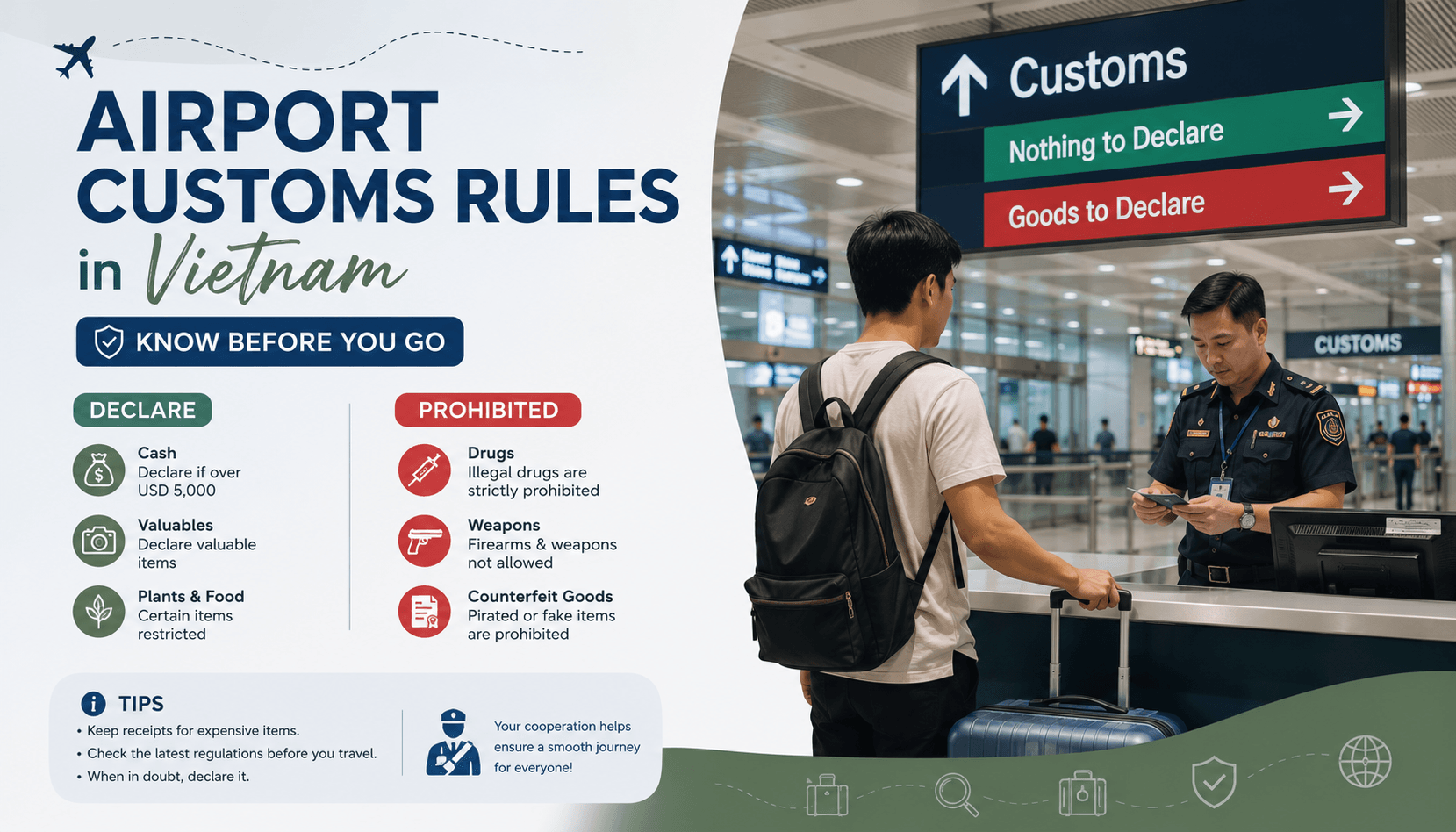
Items You Can Bring Into Vietnam
Visitors are generally allowed to bring personal items intended for their own use during the trip.
Common examples include:
- Clothing
- Personal electronics
- Cameras
- Mobile phones
- Laptops
- Personal toiletries
These items are typically considered personal effects and do not usually require special procedures when carried in reasonable quantities.
Currency Declaration Requirements
Travelers entering Vietnam with large amounts of cash may be required to make a declaration upon arrival.
This requirement helps customs authorities monitor cross-border financial transactions.
If you are carrying significant amounts of:
- Foreign currency
- Vietnamese Dong
- Monetary instruments
you should review current declaration regulations before traveling.
Keeping documentation for your funds may also be helpful.
Restricted and Controlled Items
Certain goods are subject to restrictions or special regulations.
Examples may include:
- Professional communication equipment
- Certain medicines
- Specialized electronic devices
- Commercial goods intended for resale
Travelers carrying unusual or high-value items should verify applicable regulations before departure.
Prohibited Items
Some items are strictly prohibited from entering Vietnam.
Examples generally include:
- Illegal narcotics
- Weapons and explosives
- Hazardous materials
- Counterfeit goods
- Certain prohibited publications
Attempting to import restricted or illegal items may result in confiscation, fines, or legal consequences.
Duty-Free Allowances
International travelers may purchase certain goods through duty-free shops before arriving in Vietnam.
However, duty-free allowances are subject to limits and conditions.
Travelers should be aware that exceeding permitted allowances may require declaration and could result in duties or taxes being applied.
Always keep receipts for duty-free purchases if requested by customs officials.
Customs Inspection Process
After collecting your luggage, you may proceed through one of the customs channels at the airport.
Depending on the airport and your circumstances, customs officers may:
- Scan baggage
- Conduct random inspections
- Ask questions regarding imported goods
- Verify declarations
Most inspections are routine and completed quickly.
Cooperating with customs officers helps ensure a smooth process.
Common Customs Mistakes Travelers Make
Failing to Declare Required Items
Some travelers mistakenly assume declarations are unnecessary.
If you are unsure, it is generally better to seek clarification before proceeding.
Carrying Prohibited Goods
Always review customs regulations before packing.
Bringing Commercial Quantities
Large quantities of products may be viewed as commercial imports rather than personal belongings.
Ignoring Currency Rules
Travelers carrying substantial amounts of cash should understand applicable declaration requirements.
Tips for Smooth Customs Clearance
To avoid problems when arriving in Vietnam:
- Pack only permitted items
- Keep valuable items documented
- Carry receipts for expensive purchases
- Review customs regulations before departure
- Answer customs questions honestly
- Organize luggage for easy inspection
Preparation can significantly reduce delays.
Frequently Asked Questions
Do All Travelers Go Through Customs?
Yes. After collecting baggage, all arriving passengers must pass through customs control.
Can Customs Officers Inspect My Luggage?
Yes. Customs authorities have the right to inspect baggage when necessary.
Should I Keep Purchase Receipts?
Keeping receipts for valuable items can be helpful if questions arise.
Are Random Inspections Common?
Random baggage inspections may occur as part of standard airport security and customs procedures.
Final Thoughts
Understanding airport customs rules in Vietnam is an important part of preparing for international travel. While most visitors experience a straightforward customs process, being aware of declaration requirements, restricted items, and prohibited goods can help prevent unnecessary delays or complications.
Before traveling, take time to review applicable customs regulations, organize your belongings, and prepare any required documentation. By following Vietnam's customs rules and cooperating with airport officials, you can enjoy a smooth arrival and begin your visit with confidence.
- Categories:
- Vietnam Travel Tips

Over the past 23 years in the travel service industry, the growth and success of TRANSOCEAN have stemmed not only from the dedication of our well-trained, enthusiastic, and customer-oriented staff, but also from the exceptional leadership of our Founder and CEO, Mr. STANLEY HO. With more than 20 years of experience in the travel and tourism sector, Mr. STANLEY HO possesses profound knowledge of the market, customer behavior, and modern travel trends. His strategic vision has guided the company toward sustainable growth while maintaining a strong commitment to service quality.