
Business Travel Documentation Issues for Vietnam E-Visa: Common Problems and Solutions
Latest update: Jun 6th, 2026
Table of Contents
- Why Business Travel Documentation Matters
- Common Documentation Issues for Business Travelers
- Travel Itinerary Problems
- Accommodation Documentation Issues
- Common Mistakes During the Vietnam E-Visa Application Process
- Documents Business Travelers Should Prepare
- Immigration Inspection Upon Arrival
- Tips for Avoiding Business Travel Documentation Problems
- Final Thoughts
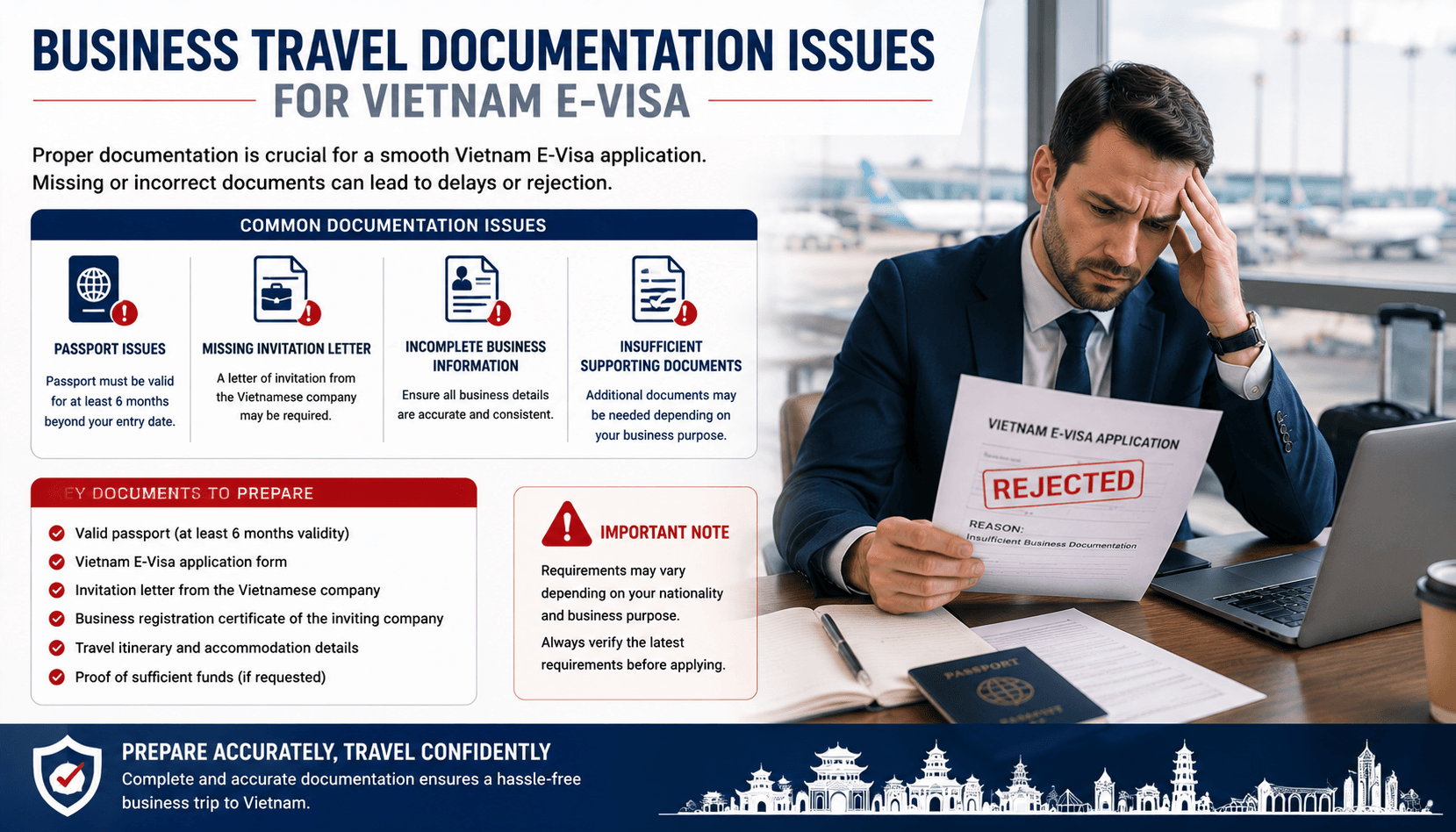
Vietnam has become one of Asia's fastest-growing destinations for international business activities. Entrepreneurs, investors, consultants, and corporate representatives frequently visit Vietnam for meetings, conferences, market research, and partnership opportunities. While the Vietnam E-Visa system has simplified the entry process for many business travelers, documentation issues remain one of the most common causes of delays and travel complications.
Many applicants focus solely on obtaining visa approval and overlook the importance of ensuring that all business travel documents are complete, accurate, and consistent. Even minor discrepancies can create unnecessary challenges before departure or upon arrival in Vietnam.
In this guide, we explore common business travel documentation issues related to Vietnam E-Visa applications and provide practical tips to help travelers avoid potential problems.
Why Business Travel Documentation Matters
Business travelers are often subject to additional scrutiny because their travel purpose differs from that of tourists. Immigration authorities may review travel documents to verify the legitimacy of the trip and ensure that all information provided is accurate.
Proper documentation helps:
- Confirm the purpose of travel
- Verify personal identity
- Support visa application information
- Facilitate immigration procedures
- Reduce travel delays
- Improve overall travel efficiency
Well-organized documents can make a significant difference during international travel.
Common Documentation Issues for Business Travelers
Inconsistent Personal Information
One of the most common mistakes involves inconsistencies between travel documents.
Examples include:
- Different spellings of names
- Incorrect passport numbers
- Mismatched dates of birth
- Errors in nationality information
Even a small discrepancy between a passport and visa application can create complications during immigration checks.
Before submitting a Vietnam E-Visa application, travelers should carefully verify that all information matches their passport exactly.
Expired or Damaged Passports
Business travelers who travel frequently sometimes overlook passport validity.
Common problems include:
- Passports nearing expiration
- Damaged passport pages
- Missing pages
- Unreadable personal information
A passport should be valid and in good condition throughout the entire trip.
Missing Business Contact Information
Business travelers are often expected to have basic information regarding their activities in Vietnam.
Important details may include:
- Company name
- Business contact information
- Meeting location
- Event venue details
- Corporate address
Having this information readily available can help answer questions during travel.
Unclear Purpose of Visit
A vague or inconsistent explanation of the travel purpose may raise questions during immigration inspection.
Business travelers should be prepared to explain:
- Why they are visiting Vietnam
- Who they plan to meet
- The duration of the trip
- The nature of their business activities
Clear and consistent information helps demonstrate legitimate travel intentions.
Travel Itinerary Problems
Many business travelers maintain flexible schedules that change frequently.
While flexibility is common, problems can arise when:
- Flight dates change unexpectedly
- Meeting schedules are altered
- Accommodation details are unavailable
- Travel plans become inconsistent
Keeping an updated itinerary can help avoid confusion and ensure consistency across all travel documents.
Accommodation Documentation Issues
Business travelers sometimes rely on local partners or colleagues to arrange accommodation after arrival.
As a result, they may lack:
- Hotel confirmations
- Accommodation addresses
- Reservation records
Although travel plans may remain flexible, having at least basic accommodation information can support a smoother travel experience.
Common Mistakes During the Vietnam E-Visa Application Process
Incorrect Passport Uploads
Applicants occasionally upload:
- Blurry passport images
- Cropped passport scans
- Incomplete passport pages
- Low-quality photographs
Clear and readable documents improve processing efficiency.
Typographical Errors
Simple typing mistakes remain one of the most common application issues.
Examples include:
- Incorrect passport numbers
- Misspelled names
- Wrong travel dates
- Incorrect email addresses
Reviewing the application carefully before submission can prevent many avoidable problems.
Inconsistent Travel Dates
Arrival and departure dates should align with business plans and travel arrangements.
Inconsistencies may create unnecessary questions during travel.
Documents Business Travelers Should Prepare
To reduce the risk of travel complications, business visitors should organize the following:
Passport
Ensure it remains valid and undamaged.
Vietnam E-Visa Approval
Carry both printed and digital copies.
Flight Reservations
Maintain copies of airline bookings and travel confirmations.
Accommodation Information
Keep hotel reservations or contact details for your intended place of stay.
Business Meeting Information
Prepare details regarding meetings, conferences, exhibitions, or corporate visits.
Emergency Contacts
Store contact information for both business partners and personal contacts.
Immigration Inspection Upon Arrival
Upon arrival in Vietnam, immigration officers may review:
- Passport details
- Visa approval
- Travel itinerary
- Purpose of visit
- Length of stay
Business travelers should be prepared to answer questions clearly and confidently.
Most inspections proceed smoothly when documents are complete and information is consistent.
Tips for Avoiding Business Travel Documentation Problems
Apply Early
Submitting your E-Visa application well before departure provides time to identify and correct any issues.
Verify All Information
Carefully review names, passport numbers, dates, and contact information before submitting any application.
Maintain Organized Records
Store all travel documents in a secure and easily accessible location.
Keep Supporting Documents Available
Meeting schedules, company contacts, and travel itineraries may be useful if additional clarification is requested.
Stay Updated
Business plans can change quickly. Ensure that travel documents remain consistent with your latest itinerary.
Final Thoughts
Business travel documentation issues are among the most common causes of delays and complications for Vietnam E-Visa holders. Inaccurate personal information, incomplete travel plans, missing accommodation details, and inconsistent documentation can all create avoidable challenges.
The best way to ensure a smooth business trip to Vietnam is to prepare thoroughly, review all documents carefully, and maintain consistency across your travel records. By organizing your paperwork in advance and keeping essential information readily available, you can minimize travel disruptions and focus on achieving your business objectives in Vietnam.
Proper preparation is not only beneficial for visa applications—it is a key part of successful international business travel.
- Categories:
- Vietnam E-Visa Infomation

Over the past 23 years in the travel service industry, the growth and success of TRANSOCEAN have stemmed not only from the dedication of our well-trained, enthusiastic, and customer-oriented staff, but also from the exceptional leadership of our Founder and CEO, Mr. STANLEY HO. With more than 20 years of experience in the travel and tourism sector, Mr. STANLEY HO possesses profound knowledge of the market, customer behavior, and modern travel trends. His strategic vision has guided the company toward sustainable growth while maintaining a strong commitment to service quality.