
Currency Exchange on Arrival in Vietnam: A Complete Guide for International Travelers
Latest update: Jun 7th, 2026
Table of Contents
- Why You May Need Local Currency Immediately
- What Is the Official Currency of Vietnam?
- Where Can You Exchange Currency Upon Arrival?
- Common Currencies Accepted for Exchange
- Cash or Card: Which Is Better?
- Common Currency Exchange Mistakes
- Should You Exchange Currency Before Traveling?
- ATMs as an Alternative
- Tips for Safe Currency Exchange
- Frequently Asked Questions
- Final Thoughts
One of the first things many visitors need after landing in Vietnam is local currency. Whether you are traveling for tourism, business, family visits, or long-term stays, having access to Vietnamese Dong (VND) can make your arrival much smoother. From paying for transportation and meals to purchasing a SIM card or covering small travel expenses, local currency remains an important part of daily life in Vietnam.
Many first-time travelers have questions about where to exchange money, whether airport exchange counters are reliable, and how much cash they should carry. Understanding your options before departure can help you avoid unnecessary fees and ensure a stress-free arrival experience.
In this guide, we'll explore everything you need to know about currency exchange on arrival in Vietnam.
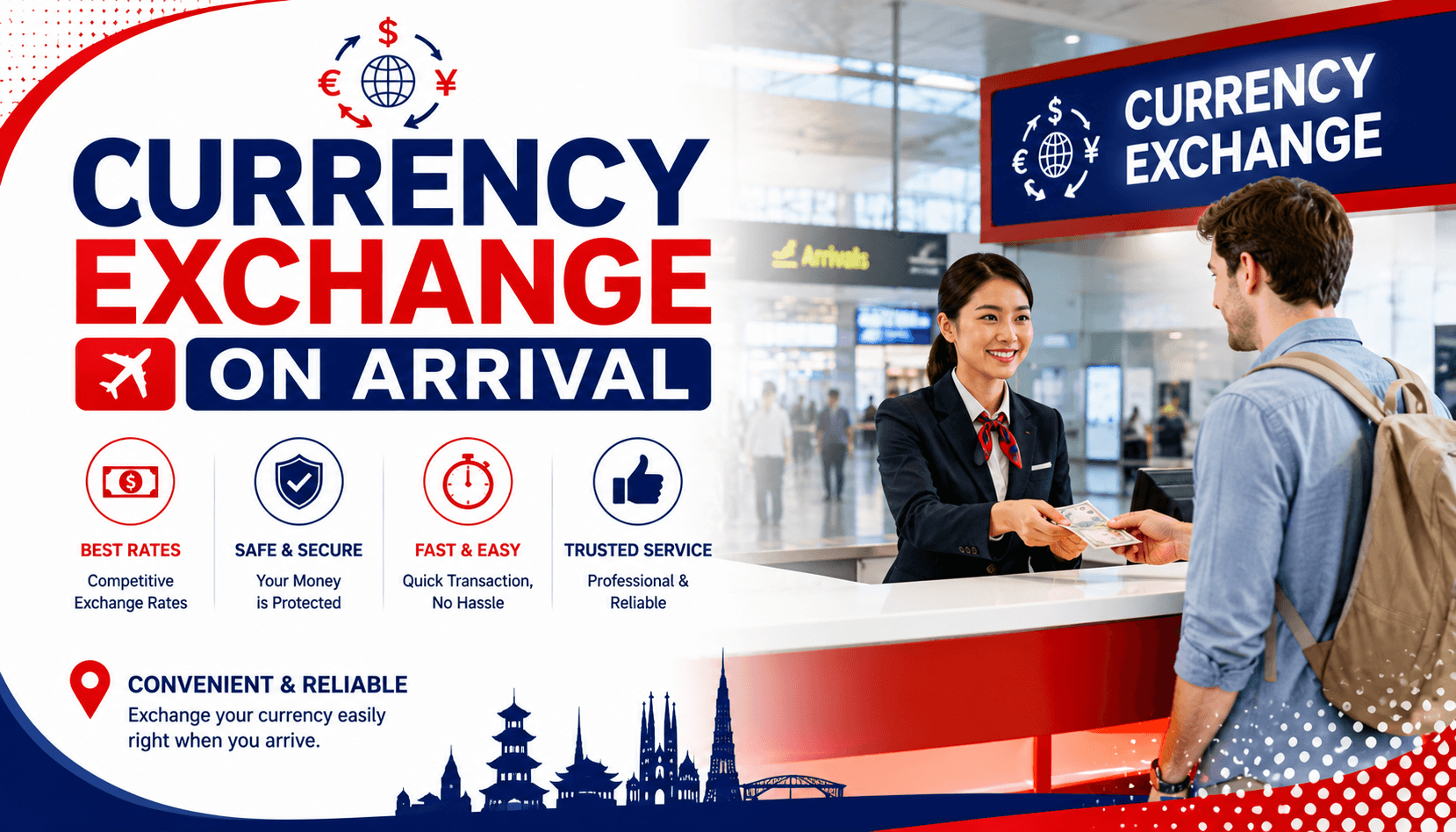
Why You May Need Local Currency Immediately
Although many businesses in major cities accept international payment cards, cash is still widely used throughout Vietnam.
Upon arrival, travelers may need local currency for:
- Airport transportation
- Taxi services
- Food and beverages
- SIM card purchases
- Small retail transactions
- Local markets
- Tips and service charges
Having at least a small amount of Vietnamese Dong available can help avoid inconvenience during the first few hours of your trip.
What Is the Official Currency of Vietnam?
The official currency of Vietnam is the Vietnamese Dong (VND).
Travelers should familiarize themselves with common banknote denominations before arriving.
Because some Vietnamese banknotes have similar colors and designs, first-time visitors should carefully check the value of notes before making payments.
Learning basic currency denominations can help reduce confusion when exchanging money or making purchases.
Where Can You Exchange Currency Upon Arrival?
Airport Currency Exchange Counters
Most international airports in Vietnam offer currency exchange services shortly after passengers clear immigration and customs procedures.
Advantages include:
- Immediate access to local currency
- Convenient airport location
- Quick transactions
- Availability during airport operating hours
For many travelers, airport exchange counters provide the easiest solution for obtaining cash immediately after arrival.
Banks
Commercial banks throughout Vietnam offer currency exchange services.
Benefits include:
- Professional service
- Secure transactions
- Transparent exchange procedures
Banks are often preferred by travelers exchanging larger amounts of money.
Licensed Exchange Offices
Authorized exchange providers can be found in many tourist areas and major cities.
These businesses typically specialize in foreign currency transactions and may offer competitive exchange options.
Hotels
Some hotels provide exchange services for guests.
While convenient, travelers may wish to compare available rates and service conditions before proceeding.
Common Currencies Accepted for Exchange
Vietnam's exchange services frequently handle major international currencies.
Examples often include:
- US Dollars (USD)
- Euros (EUR)
- British Pounds (GBP)
- Australian Dollars (AUD)
- Canadian Dollars (CAD)
- Japanese Yen (JPY)
- Singapore Dollars (SGD)
Travelers carrying less common currencies may wish to verify exchange availability before departure.
Cash or Card: Which Is Better?
Many visitors wonder whether they should rely on cash or international payment cards during their stay.
Benefits of Carrying Cash
Cash remains useful for:
- Local restaurants
- Street food vendors
- Traditional markets
- Smaller shops
- Transportation services
Benefits of Payment Cards
Cards can offer:
- Convenience
- Reduced need to carry large amounts of cash
- Easier expense tracking
- Additional security features
Many experienced travelers use a combination of both methods.
Common Currency Exchange Mistakes
Exchanging Too Much Money at Once
Some travelers convert all of their funds immediately after arrival.
Instead, many visitors prefer exchanging smaller amounts initially and adjusting as needed throughout their trip.
Ignoring Exchange Receipts
Always keep transaction receipts until the exchange process is complete and funds have been verified.
Not Checking Banknotes Carefully
Before leaving the exchange counter:
- Count your money
- Verify denominations
- Check for damaged notes
Taking a few moments to review your cash can prevent misunderstandings later.
Carrying Excessive Cash
Large amounts of cash may increase security risks during travel.
Using a balanced combination of cash and electronic payment methods is often a practical approach.
Should You Exchange Currency Before Traveling?
Some travelers exchange a small amount of Vietnamese Dong before departure.
Potential advantages include:
- Immediate spending money
- Reduced arrival stress
- Transportation readiness
However, availability of Vietnamese Dong may vary depending on the traveler's home country.
Many visitors choose to exchange only a small amount before departure and obtain additional currency after arriving in Vietnam.
ATMs as an Alternative
ATMs are widely available throughout Vietnam, especially in major cities and tourist destinations.
Advantages include:
- Convenient access to cash
- Availability in many locations
- Reduced need to carry large amounts of foreign currency
Before traveling, check with your bank regarding:
- International withdrawal fees
- Foreign transaction charges
- Daily withdrawal limits
Tips for Safe Currency Exchange
Use Official Exchange Services
Avoid exchanging money through unofficial sources.
Authorized providers offer greater security and transparency.
Keep Small Denominations
Smaller banknotes are often useful for transportation, food purchases, and everyday transactions.
Store Cash Securely
Use hotel safes, secure wallets, or money belts when carrying cash.
Monitor Exchange Transactions
Take a moment to verify the amount received before leaving the counter.
Frequently Asked Questions
Can I Use Foreign Currency Directly in Vietnam?
Most day-to-day transactions are conducted using Vietnamese Dong.
Is It Better to Exchange Money at the Airport?
Airport exchange counters offer convenience, particularly for travelers who need local currency immediately after arrival.
Should I Carry Cash or Use Cards?
Many travelers find that combining cash and card payments provides the greatest flexibility.
Are ATMs Easy to Find?
ATMs are commonly available in major cities, airports, shopping centers, and tourist areas.
Final Thoughts
Currency exchange on arrival is an important part of preparing for a successful trip to Vietnam. Whether you choose airport exchange counters, banks, licensed exchange offices, or ATMs, understanding your options can help you access local currency safely and efficiently.
Having Vietnamese Dong available upon arrival makes it easier to pay for transportation, food, communication services, and other travel essentials. By planning ahead, comparing available exchange options, and following safe money-handling practices, travelers can enjoy a smoother and more convenient experience from the moment they land in Vietnam.
A little preparation before departure can help ensure that managing money in Vietnam is simple, secure, and stress-free throughout your journey.
- Categories:
- Vietnam E-Visa Infomation

Over the past 23 years in the travel service industry, the growth and success of TRANSOCEAN have stemmed not only from the dedication of our well-trained, enthusiastic, and customer-oriented staff, but also from the exceptional leadership of our Founder and CEO, Mr. STANLEY HO. With more than 20 years of experience in the travel and tourism sector, Mr. STANLEY HO possesses profound knowledge of the market, customer behavior, and modern travel trends. His strategic vision has guided the company toward sustainable growth while maintaining a strong commitment to service quality.