
Damaged Passport for Vietnam E-Visa: What Travelers Need to Know
Latest update: Jun 6th, 2026
Table of Contents
- Why Passport Condition Matters
- What Is Considered a Damaged Passport for Vietnam E-Visa
- Can You Apply for a Vietnam E-Visa with a Damaged Passport?
- Common Problems Travelers Face
- What Should You Do If Your Passport Is Damaged?
- Tips for a Smooth Vietnam E-Visa Application
- Why Prevention Is Better Than Correction
- Final Thoughts
Applying for a Vietnam E-visa is a convenient process that allows travelers to obtain travel authorization online before their trip. However, many applicants focus only on completing the visa application and overlook an important issue: the condition of their passport.
A damaged passport can create serious complications during the Vietnam E-visa application process, airline check-in, and immigration clearance upon arrival. Even if your visa has been approved, a passport that is torn, stained, altered, or difficult to read may prevent you from traveling successfully.
Understanding how passport damage affects your Vietnam E-visa application can help you avoid unexpected problems and ensure a smoother journey.
Why Passport Condition Matters
Your passport is the primary document used to verify your identity and nationality. When applying for a Vietnam E-visa, immigration authorities review the passport information you provide and compare it with the uploaded passport image.
If your passport is damaged, officials may have difficulty verifying important details such as:
- Full name
- Passport number
- Date of birth
- Nationality
- Expiration date
- Passport photo
Any uncertainty regarding these details can result in processing delays or additional verification requirements.
Even after receiving visa approval, immigration officers and airline staff may refuse to accept a passport that appears significantly damaged.
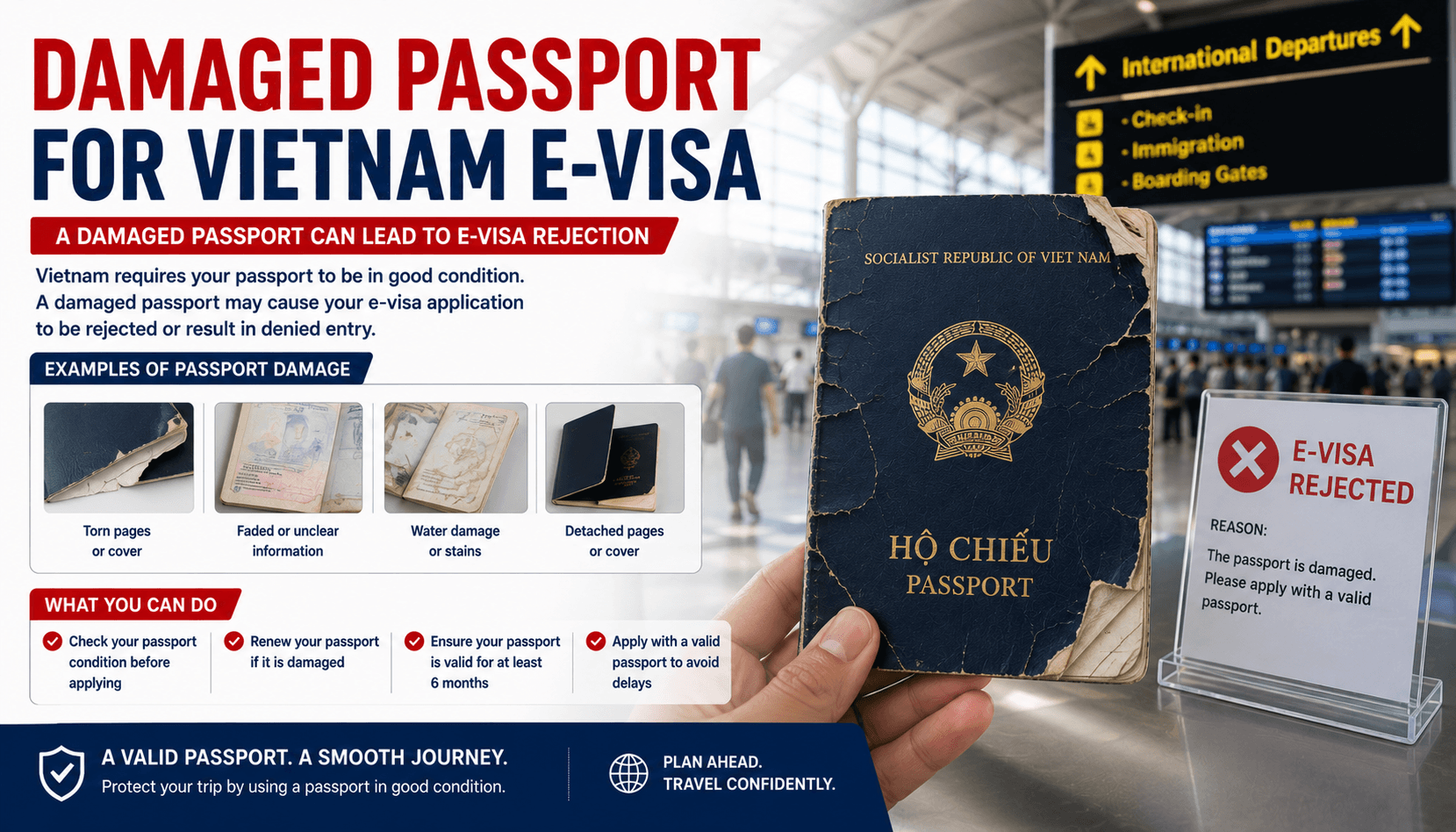
What Is Considered a Damaged Passport for Vietnam E-Visa
Many travelers assume a passport is acceptable as long as it has not expired. In reality, physical condition is also extremely important.
Common examples of passport damage include:
Torn Pages
Pages that are ripped, missing, or partially detached may raise concerns about document integrity.
Water Damage
Passports exposed to water can develop blurred text, faded stamps, and distorted pages that are difficult to inspect.
Damaged Cover
A severely damaged cover may indicate that the passport has been mishandled or altered.
Unreadable Information
If passport details or machine-readable zones cannot be clearly seen, verification may become impossible.
Excessive Wear and Tear
Passports that are heavily worn after years of travel may no longer meet inspection standards.
Unauthorized Marks or Alterations
Handwritten notes, stickers, or modifications not issued by government authorities can create additional complications.
Can You Apply for a Vietnam E-Visa with a Damaged Passport?
Technically, it may still be possible to submit an application if the passport information remains visible. However, approval is not the only concern.
Even if the E-visa is issued, travelers may encounter difficulties later when:
- Checking in for a flight
- Passing immigration inspection
- Entering Vietnam
- Traveling through transit countries
For this reason, travelers should carefully assess the condition of their passport before beginning the visa application process.
If there is any doubt about the passport's usability, renewing it before applying is often the safest option.
Common Problems Travelers Face
Many travelers discover passport issues only days before departure. Some of the most common situations include:
Blurry Passport Scan
A damaged passport may produce unclear digital scans, making it difficult to upload acceptable documents during the E-visa application.
Immigration Questions
Immigration officers may ask additional questions if passport pages appear damaged or altered.
Airline Refusal
Airlines have a responsibility to verify travel documents before boarding. If they believe a passport may not be accepted at the destination, they may deny boarding.
Delayed Travel Plans
Resolving passport issues at the last minute can result in canceled flights, postponed trips, and additional expenses.
What Should You Do If Your Passport Is Damaged?
If you discover damage before applying for a Vietnam E-visa, it is best to evaluate the severity of the issue immediately.
Minor Cosmetic Damage
Small scratches or light wear may not cause significant problems if all information remains clearly visible.
Moderate Damage
If pages are partially torn, stained, or difficult to read, renewing the passport may be advisable before travel.
Severe Damage
Passports with missing pages, extensive water damage, or unreadable information should generally be replaced before submitting any visa application.
Obtaining a new passport first can help prevent future complications during your trip.
Tips for a Smooth Vietnam E-Visa Application
To minimize the risk of delays or document issues, follow these recommendations:
Inspect Your Passport Carefully
Check every page for signs of damage before starting your application.
Verify Passport Information
Ensure all personal details remain readable and accurate.
Create High-Quality Scans
Use clear, high-resolution images when uploading passport documents.
Apply Early
Applying well before your departure date gives you time to address unexpected issues if necessary.
Protect Your Passport
Store your passport in a protective cover and keep it away from liquids, excessive heat, and physical damage.
Why Prevention Is Better Than Correction
Many travel-related problems occur because travelers assume a damaged passport will still be accepted. Unfortunately, immigration authorities and airlines often apply strict document standards.
Replacing a damaged passport before travel is usually much easier than attempting to resolve problems at an airport or border checkpoint.
By reviewing your passport carefully before applying for a Vietnam E-visa, you can avoid unnecessary stress and travel disruptions.
Final Thoughts
A damaged passport can affect much more than your Vietnam E-visa application. It may create obstacles during document verification, airline check-in, immigration inspection, and international travel overall.
Before planning your trip to Vietnam, take the time to inspect your passport thoroughly. If the document shows significant wear, missing pages, water damage, or unreadable information, renewing it before applying for a visa is often the best decision.
Proper preparation helps ensure that your Vietnam E-visa process remains simple, efficient, and stress-free, allowing you to focus on enjoying your journey rather than dealing with avoidable document issues.
- Categories:
- Vietnam E-Visa Infomation

Over the past 23 years in the travel service industry, the growth and success of TRANSOCEAN have stemmed not only from the dedication of our well-trained, enthusiastic, and customer-oriented staff, but also from the exceptional leadership of our Founder and CEO, Mr. STANLEY HO. With more than 20 years of experience in the travel and tourism sector, Mr. STANLEY HO possesses profound knowledge of the market, customer behavior, and modern travel trends. His strategic vision has guided the company toward sustainable growth while maintaining a strong commitment to service quality.