
Food Safety Tips for Tourists: How to Enjoy Local Cuisine Without Worry
Latest update: Jun 18th, 2026
Table of Contents
- Start with Busy and Popular Food Establishments
- Choose Freshly Cooked Meals
- Be Careful with Raw Foods
- Pay Attention to Personal Hygiene
- Drink Safe Water
- Observe Food Preparation Areas
- Introduce New Foods Gradually
- Carry Basic Digestive Medication
- Trust Your Instincts
- Don't Let Food Safety Concerns Limit Your Experience
- Final Thoughts
Trying local food is often one of the most memorable parts of traveling. Whether you're exploring bustling night markets, dining in family-owned restaurants, or sampling famous street food, local cuisine offers a unique window into a country's culture. However, unfamiliar ingredients, preparation methods, and hygiene standards can sometimes lead to digestive problems for travelers. Following a few simple food safety tips for tourists can help you enjoy authentic culinary experiences while minimizing health risks.
The goal isn't to avoid local food—it's to enjoy it safely.
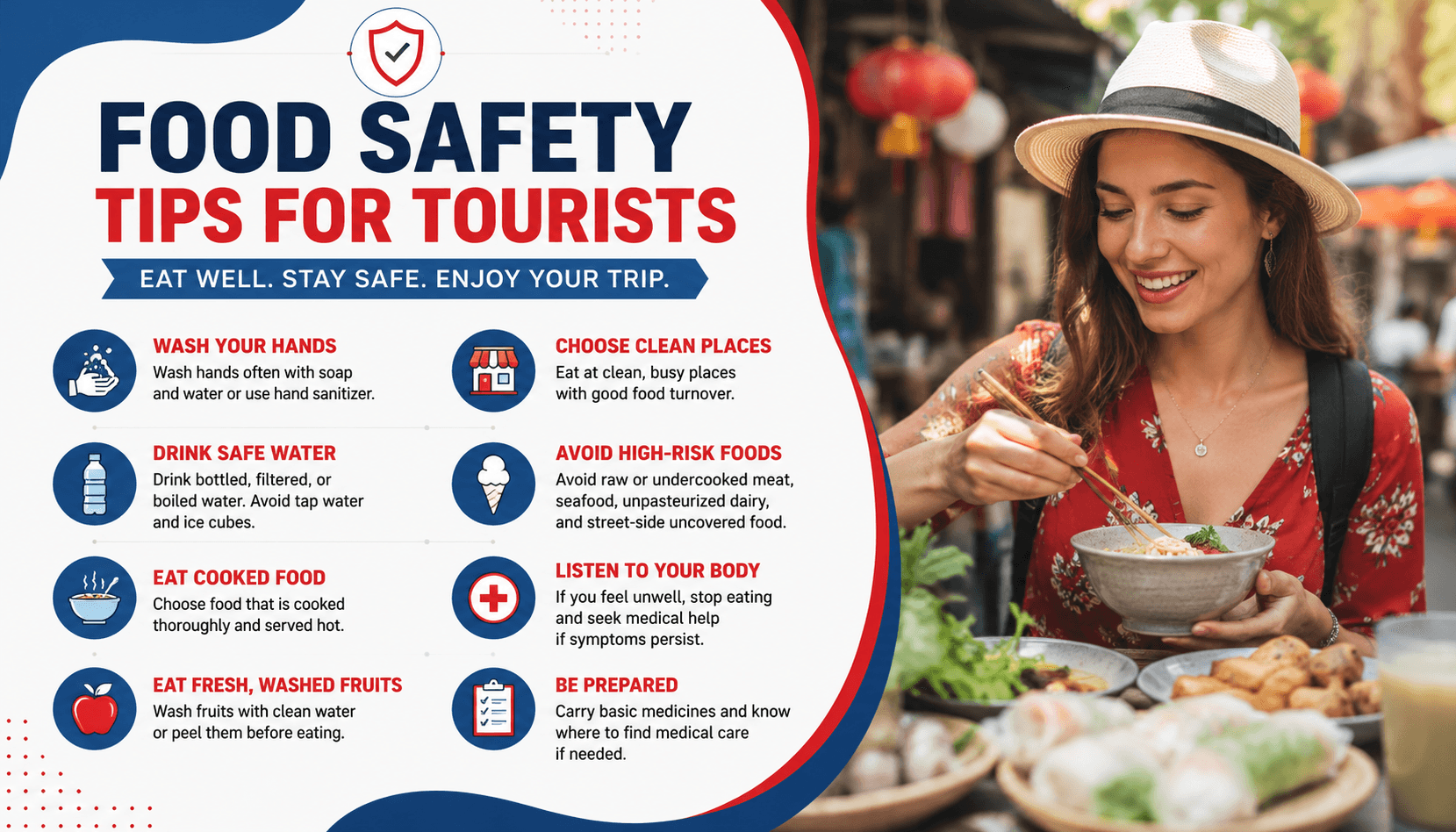
Start with Busy and Popular Food Establishments
One of the easiest ways to identify safe places to eat is by observing where local people choose to dine.
Restaurants and food stalls with a steady flow of customers often have:
- Fresh ingredients
- High food turnover
- Better food handling practices
- Regular preparation schedules
A busy kitchen usually means food is not sitting out for long periods, which can reduce the risk of contamination.
Choose Freshly Cooked Meals
Food that is prepared and served immediately is generally safer than dishes that have been sitting out for hours.
Look for meals that are:
- Cooked to order
- Served hot
- Prepared in front of customers
- Reheated thoroughly if necessary
Heat helps eliminate many bacteria that can cause food-related illnesses.
Be Careful with Raw Foods
Fresh vegetables, salads, and uncooked ingredients can be delicious, but travelers should be cautious if they are unsure how the food was washed or handled.
When in doubt:
- Choose cooked vegetables
- Peel fruits yourself
- Avoid raw ingredients from questionable sources
This is particularly important for travelers with sensitive digestive systems.
Pay Attention to Personal Hygiene
Food safety is closely linked to cleanliness.
Before eating:
- Wash your hands thoroughly
- Carry hand sanitizer when traveling
- Avoid touching food with unclean hands
Simple hygiene habits can significantly reduce the chances of stomach-related problems during your trip.
Drink Safe Water
Many travel-related illnesses are linked to unsafe drinking water rather than food itself.
To stay safe:
- Drink bottled or properly filtered water
- Check that bottle seals are intact
- Carry water during sightseeing activities
Hydration is important, especially when traveling in warm climates.
Observe Food Preparation Areas
You don't need to be a food safety expert to notice basic cleanliness.
Before ordering, take a quick look at:
- Cooking surfaces
- Food storage conditions
- Staff hygiene
- Overall cleanliness
A well-maintained food preparation area often reflects better food handling practices.
Introduce New Foods Gradually
Trying everything on the first day can sometimes overwhelm your digestive system.
Instead:
- Sample unfamiliar foods gradually
- Give your body time to adjust
- Monitor how you feel after meals
This approach allows travelers to enjoy local cuisine without unnecessary discomfort.
Carry Basic Digestive Medication
Even cautious travelers may occasionally experience mild digestive issues.
A travel health kit may include:
- Stomach relief medication
- Oral rehydration products
- Prescribed medications
- Basic first-aid supplies
Being prepared can make minor issues easier to manage.
Trust Your Instincts
If something doesn't look, smell, or feel right, it's usually best to choose another option.
Warning signs may include:
- Food left uncovered for extended periods
- Poor hygiene conditions
- Unpleasant odors
- Unusually empty restaurants during peak hours
Listening to your instincts can help avoid preventable problems.
Don't Let Food Safety Concerns Limit Your Experience
Many travelers worry unnecessarily about trying local food. In reality, millions of tourists safely enjoy authentic cuisine every year.
The key is balancing curiosity with common sense. Most local restaurants, cafés, and food vendors take pride in serving quality meals and welcoming visitors.
Final Thoughts
Following practical food safety tips for tourists can help you experience the best of local cuisine while reducing health risks. Choosing freshly cooked food, drinking safe water, practicing good hygiene, and paying attention to cleanliness are simple habits that can make a significant difference.
Food is an essential part of travel and cultural discovery. With a little awareness and preparation, you can confidently explore new flavors, enjoy authentic local dishes, and create unforgettable culinary memories wherever your journey takes you.
- Categories:
- Vietnam Travel Tips

Over the past 23 years in the travel service industry, the growth and success of TRANSOCEAN have stemmed not only from the dedication of our well-trained, enthusiastic, and customer-oriented staff, but also from the exceptional leadership of our Founder and CEO, Mr. STANLEY HO. With more than 20 years of experience in the travel and tourism sector, Mr. STANLEY HO possesses profound knowledge of the market, customer behavior, and modern travel trends. His strategic vision has guided the company toward sustainable growth while maintaining a strong commitment to service quality.