
How to Avoid Hotel Booking Scams: Essential Tips for Safe Travel
Latest update: Jun 16th, 2026
Table of Contents
- Why Do Hotel Booking Scams Happen?
- Book Through Trusted Platforms
- Verify the Hotel's Official Website
- Be Careful with Extremely Low Prices
- Read Guest Reviews Carefully
- Verify Contact Information
- Use Secure Payment Methods
- Watch for Fake Confirmation Emails
- Common Hotel Booking Scam Warning Signs
- What Should You Do If You Suspect a Scam?
- Final Thoughts
Booking accommodation online has become easier than ever, allowing travelers to compare prices, read reviews, and secure rooms within minutes. However, the rise of online travel platforms has also created opportunities for scammers to target unsuspecting tourists. Falling victim to a hotel booking scam can result in lost money, canceled reservations, and unnecessary stress during your trip.
If you're planning a vacation or business trip, understanding how to avoid hotel booking scams is essential. This guide will help you recognize common warning signs and book accommodation safely.
Why Do Hotel Booking Scams Happen?
Scammers often take advantage of travelers who are searching for discounted hotel deals or making last-minute reservations.
Common goals of hotel booking scams include:
- Stealing payment information
- Collecting deposits for non-existent properties
- Creating fake hotel websites
- Selling fake reservations
- Obtaining personal information
Fortunately, most scams can be avoided with proper research and caution.
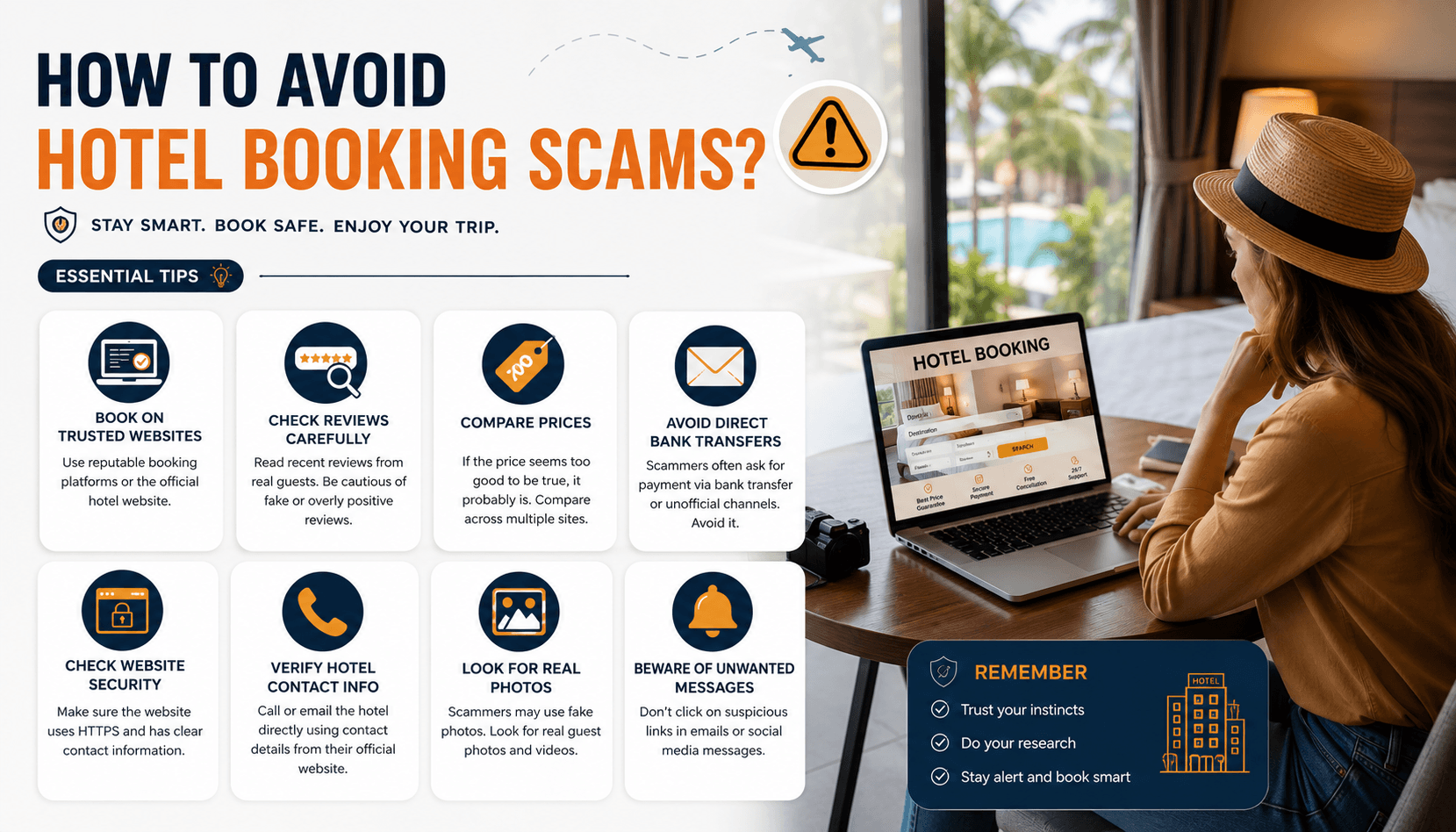
Book Through Trusted Platforms
One of the safest ways to reserve accommodation is by using reputable booking websites and travel agencies.
Reliable booking platforms typically provide:
- Verified hotel listings
- Secure payment systems
- Customer support services
- Genuine guest reviews
- Reservation confirmation records
Avoid making payments through unofficial websites that seem suspicious or unfamiliar.
Verify the Hotel's Official Website
Before completing a reservation, visit the hotel's official website.
Check for:
- Contact information
- Property photos
- Hotel address
- Booking details
- Customer service options
If the information on a booking platform differs significantly from the hotel's official website, investigate further before making a payment.
Be Careful with Extremely Low Prices
Everyone loves a bargain, but prices that seem too good to be true often deserve additional scrutiny.
Warning signs include:
- Deep discounts far below market rates
- Limited-time offers requiring immediate payment
- Non-refundable reservations at unusually low prices
Compare prices across multiple booking websites to determine whether the offer appears realistic.
Read Guest Reviews Carefully
Guest reviews can reveal valuable information about a property's legitimacy and quality.
When reading reviews:
- Look for detailed comments
- Check recent reviews
- Pay attention to recurring complaints
- Review both positive and negative feedback
A large number of suspiciously similar reviews may indicate manipulation or fraudulent activity.
Verify Contact Information
Legitimate hotels typically provide multiple ways to contact them.
Before booking, verify:
- Phone numbers
- Email addresses
- Physical addresses
- Social media profiles
If you have concerns, contact the hotel directly to confirm your reservation details before making payment.
Use Secure Payment Methods
Payment security is one of the most important aspects of avoiding hotel booking scams.
For safer transactions:
- Use credit cards when possible
- Avoid direct cash transfers
- Use secure online payment systems
- Never send money to personal accounts without verification
Credit cards often provide additional fraud protection and dispute resolution options.
Watch for Fake Confirmation Emails
Some scammers send fraudulent booking confirmations designed to appear legitimate.
Be cautious if:
- Confirmation emails contain spelling errors
- Sender addresses appear suspicious
- Payment requests differ from the original booking process
- Reservation details seem incomplete
Always verify confirmation details through the hotel's official contact channels.
Common Hotel Booking Scam Warning Signs
Travelers should be alert if they encounter:
- Requests for unusual payment methods
- Missing contact information
- Poor-quality websites
- Pressure to book immediately
- Inconsistent property descriptions
- Lack of recent reviews
Recognizing these warning signs can prevent costly mistakes.
What Should You Do If You Suspect a Scam?
If you believe a hotel booking may be fraudulent:
- Stop communicating with the suspicious source.
- Contact the hotel directly.
- Verify your reservation status.
- Notify your payment provider if necessary.
- Report the incident to the booking platform.
Taking quick action can help minimize financial losses.
Final Thoughts
Learning how to avoid hotel booking scams is an important part of travel planning. By using trusted booking platforms, verifying hotel information, reading reviews carefully, and choosing secure payment methods, travelers can significantly reduce their risk of fraud.
A few extra minutes of research before booking can save time, money, and frustration later. Whether you're visiting Vietnam or traveling anywhere else in the world, staying vigilant and informed will help ensure a safe and enjoyable accommodation experience from check-in to check-out.
- Categories:
- Vietnam Travel Tips

Over the past 23 years in the travel service industry, the growth and success of TRANSOCEAN have stemmed not only from the dedication of our well-trained, enthusiastic, and customer-oriented staff, but also from the exceptional leadership of our Founder and CEO, Mr. STANLEY HO. With more than 20 years of experience in the travel and tourism sector, Mr. STANLEY HO possesses profound knowledge of the market, customer behavior, and modern travel trends. His strategic vision has guided the company toward sustainable growth while maintaining a strong commitment to service quality.