
How to Travel Between Vietnamese Cities? A Complete Transportation Guide for Tourists
Latest update: Jun 13th, 2026
Table of Contents
- Domestic Flights: The Fastest Way to Travel
- Trains: A Scenic Travel Experience
- Long-Distance Buses: Budget-Friendly Transportation
- Private Cars and Transfers
- Ride-Hailing Services for Regional Travel
- Motorbike Travel for Adventurous Tourists
- Factors to Consider When Choosing Transportation
- Tips for Smooth Intercity Travel in Vietnam
- Final Thoughts
Vietnam is a diverse and beautiful country stretching from the mountainous north to the tropical south. Many travelers visiting Vietnam want to explore multiple destinations, such as Hanoi, Ha Long Bay, Da Nang, Hoi An, Nha Trang, Ho Chi Minh City, and Phu Quoc. Fortunately, Vietnam offers a variety of transportation options that make traveling between cities convenient and affordable.
Whether you're visiting for tourism, business, or family purposes, understanding the best ways to travel between Vietnamese cities can help you save time, money, and stress. In this guide, we'll explore the most popular transportation methods and help you choose the right option for your journey.
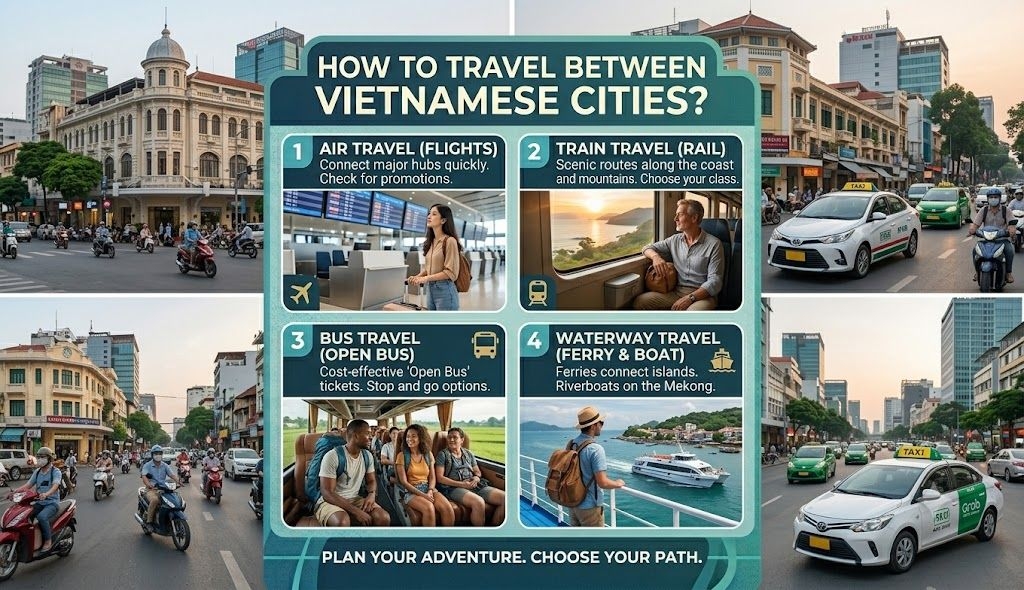
Domestic Flights: The Fastest Way to Travel
For travelers with limited time, domestic flights are often the most efficient option.
Vietnam has a well-developed aviation network connecting major cities, including:
- Hanoi
- Ho Chi Minh City
- Da Nang
- Nha Trang
- Phu Quoc
- Hue
- Da Lat
Benefits of Domestic Flights
- Fast travel times
- Frequent daily departures
- Convenient airport facilities
- Ideal for long-distance routes
For example, a flight from Hanoi to Ho Chi Minh City takes only about two hours, while traveling by road or rail can take more than a day.
Domestic flights are particularly popular among international tourists who want to maximize their vacation time.
Trains: A Scenic Travel Experience
Vietnam's railway system offers one of the most memorable ways to travel between cities.
The famous North-South Railway connects many major destinations along the country's coastline.
Popular train routes include:
- Hanoi to Da Nang
- Da Nang to Nha Trang
- Nha Trang to Ho Chi Minh City
- Hue to Hanoi
Advantages of Train Travel
- Beautiful scenery
- Comfortable seating and sleeper cabins
- More luggage flexibility
- Relaxing travel experience
The train journey through central Vietnam is especially popular due to its stunning coastal views and mountain landscapes.
Long-Distance Buses: Budget-Friendly Transportation
For budget-conscious travelers, buses are one of the most affordable ways to travel around Vietnam.
Modern bus services often provide:
- Air conditioning
- Reclining seats
- Sleeper cabins
- Wi-Fi on selected routes
Best for Budget Travelers
Long-distance buses connect nearly every city and town in Vietnam, making them a practical option for travelers seeking lower transportation costs.
Overnight sleeper buses are particularly popular because they save both travel time and accommodation expenses.
Private Cars and Transfers
Private transportation is becoming increasingly popular among tourists who value comfort and flexibility.
A private transfer allows travelers to:
- Choose departure times
- Travel directly to their destination
- Stop at attractions along the route
- Avoid crowded transportation hubs
Ideal for Families and Groups
Private vehicles are especially useful for:
- Families with children
- Business travelers
- Elderly passengers
- Small travel groups
Although more expensive than buses or trains, private transfers provide a comfortable and personalized experience.
Ride-Hailing Services for Regional Travel
In many areas, ride-hailing applications can be useful for shorter intercity journeys.
These services offer:
- Transparent pricing
- Easy booking
- GPS tracking
- Convenient payment options
While not always practical for long distances, they are helpful for nearby destinations and day trips.
Motorbike Travel for Adventurous Tourists
Vietnam is famous for motorbike travel, and many adventurous visitors choose this option to explore the country.
Popular motorbike routes include:
- Ha Giang Loop
- Hai Van Pass
- Central Highlands routes
Things to Consider
Motorbike travel offers flexibility and incredible scenery, but it requires experience, safety awareness, and familiarity with local traffic conditions.
It is generally more suitable for experienced riders.
Factors to Consider When Choosing Transportation
Before deciding how to travel between Vietnamese cities, consider:
Distance
Long routes are usually best served by flights.
Budget
Buses and trains are often more economical than flights or private transfers.
Time Available
Flights save time, while trains offer a more leisurely experience.
Comfort Preferences
Private cars and sleeper trains provide additional comfort for longer journeys.
Travel Style
Adventure travelers may prefer motorbikes, while families often choose private transportation.
Tips for Smooth Intercity Travel in Vietnam
To ensure a hassle-free journey:
- Book transportation in advance during peak seasons
- Confirm departure and arrival times
- Keep travel documents accessible
- Arrive early at stations and airports
- Monitor weather conditions during long journeys
- Carry snacks and water for extended trips
A little preparation can make traveling between cities much easier.
Final Thoughts
Traveling between Vietnamese cities is relatively easy thanks to the country's extensive transportation network. Whether you choose domestic flights for speed, trains for scenic views, buses for affordability, or private transfers for comfort, there is an option to suit every budget and travel style.
By understanding the advantages of each transportation method and planning your itinerary carefully, you can enjoy a smooth and memorable journey while exploring everything Vietnam has to offer. From the bustling streets of Hanoi to the beaches of Phu Quoc, efficient transportation makes discovering Vietnam both convenient and enjoyable.
- Categories:
- Vietnam Travel Tips

Over the past 23 years in the travel service industry, the growth and success of TRANSOCEAN have stemmed not only from the dedication of our well-trained, enthusiastic, and customer-oriented staff, but also from the exceptional leadership of our Founder and CEO, Mr. STANLEY HO. With more than 20 years of experience in the travel and tourism sector, Mr. STANLEY HO possesses profound knowledge of the market, customer behavior, and modern travel trends. His strategic vision has guided the company toward sustainable growth while maintaining a strong commitment to service quality.