
Language Barriers at Immigration in Vietnam: How Travelers Can Prepare for a Smooth Entry
Latest update: Jun 7th, 2026
Table of Contents
- Why Language Barriers Occur at Immigration
- Common Questions Asked by Immigration Officers
- Do Immigration Officers Speak English?
- How Language Barriers Can Create Delays
- Documents That Help Overcome Language Barriers
- Tips for Communicating at Immigration
- Technology Can Help
- Common Mistakes Travelers Make
- Special Considerations for Non-English Speakers
- Benefits of Being Prepared
- Frequently Asked Questions
- Final Thoughts
Arriving in a new country is an exciting experience, but for many international travelers, communication concerns can create anxiety before reaching immigration control. One of the most common worries among first-time visitors to Vietnam is the possibility of language barriers during the immigration process.
Questions such as "Will immigration officers speak English?", "What if I cannot understand the questions?" or "Can language misunderstandings affect my entry?" are frequently asked by travelers preparing for a trip to Vietnam.
Fortunately, most immigration procedures are straightforward, and with proper preparation, language-related challenges can usually be managed without difficulty. In this guide, we explain common language barriers at immigration, how they may affect travelers, and practical tips to ensure a smooth arrival in Vietnam.
Why Language Barriers Occur at Immigration
Immigration officers are responsible for verifying the identity and travel eligibility of incoming passengers. While many officers at major international airports have experience dealing with foreign travelers, communication styles and language abilities can vary.
Language barriers may occur due to:
- Different native languages
- Accents and pronunciation differences
- Travel-related terminology
- Misunderstanding immigration questions
- Nervousness after long flights
For first-time visitors, even simple questions may seem difficult when arriving in an unfamiliar environment.
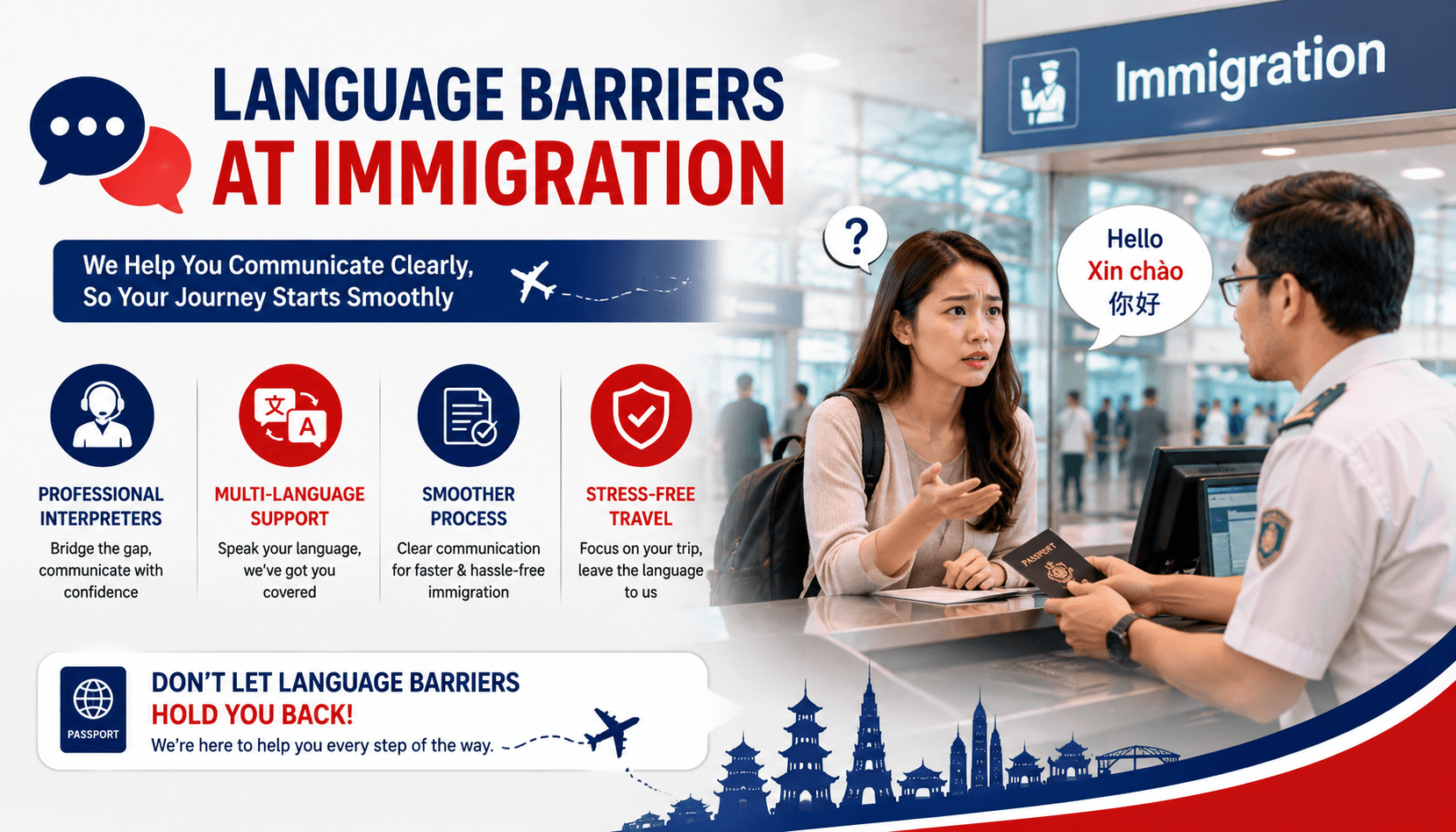
Common Questions Asked by Immigration Officers
In most cases, immigration officers ask straightforward questions related to your trip.
Examples may include:
- What is the purpose of your visit?
- How long will you stay in Vietnam?
- Where will you be staying?
- When will you depart Vietnam?
- Is this your first visit to Vietnam?
These questions are generally intended to verify information already provided in your travel documents.
Travelers who prepare basic answers in advance often complete immigration procedures more efficiently.
Do Immigration Officers Speak English?
At major international airports such as:
- Hanoi
- Ho Chi Minh City
- Da Nang
many immigration officers interact regularly with international visitors.
English is commonly used for basic immigration communication, especially with foreign travelers. However, language proficiency levels may vary between officers and airports.
Travelers should not assume lengthy conversations will be necessary. Most immigration inspections involve only brief document verification and a few routine questions.
How Language Barriers Can Create Delays
Although language difficulties rarely result in serious problems by themselves, misunderstandings can sometimes lead to additional questions.
Examples include:
Unclear Travel Purpose
If a traveler cannot explain the purpose of their trip clearly, immigration officers may request additional clarification.
Inconsistent Answers
Misunderstanding a question may lead to responses that conflict with visa information or travel records.
Difficulty Providing Accommodation Information
Some travelers cannot easily communicate hotel names, addresses, or destination details.
Nervous Communication
Travel fatigue and anxiety can make communication more challenging, especially when English is not the traveler's first language.
Documents That Help Overcome Language Barriers
One of the easiest ways to minimize communication issues is to carry organized supporting documents.
Helpful documents include:
Passport
Your passport remains the primary identification document.
Visa or E-Visa Approval
Keep both digital and printed copies available.
Hotel Reservation
Having accommodation details readily accessible can answer many common questions.
Return or Onward Ticket
Proof of departure plans may help clarify your travel intentions.
Travel Itinerary
A simple itinerary can assist officers in understanding your visit.
Business Documents
Business travelers may benefit from carrying:
- Meeting schedules
- Conference registrations
- Company contact information
- Invitation letters
Tips for Communicating at Immigration
Stay Calm and Polite
If you do not understand a question immediately, remain calm and ask politely for clarification.
Stress and frustration can make communication more difficult.
Speak Clearly and Simply
Short, direct answers are usually sufficient.
For example:
- "Tourism."
- "Ten days."
- "Hotel in Ho Chi Minh City."
- "Business meeting."
Simple responses are often the most effective.
Use Supporting Documents
If verbal communication becomes difficult, show:
- Hotel booking confirmations
- Flight reservations
- Travel itineraries
- Business invitations
Documents can quickly clarify your travel plans.
Avoid Guessing
If you do not understand a question, politely indicate that you need clarification rather than providing an uncertain answer.
Technology Can Help
Modern travelers often use smartphones to assist with communication.
Useful tools may include:
- Translation applications
- Offline language resources
- Saved hotel addresses
- Screenshots of travel documents
Having key information stored on your device can be extremely helpful during international travel.
Common Mistakes Travelers Make
Arriving Unprepared
Some visitors arrive without printed travel documents or accommodation information.
Forgetting Hotel Details
Not knowing where you will stay may create confusion during questioning.
Overcomplicating Answers
Providing excessive information can sometimes create misunderstandings.
Simple and accurate answers are generally best.
Panicking During Questions
Many travelers become nervous simply because they are speaking with immigration officials.
In reality, most questions are routine and intended to verify travel information.
Special Considerations for Non-English Speakers
Travelers who are not comfortable speaking English can prepare by:
- Writing hotel addresses on paper
- Printing travel itineraries
- Keeping translations available
- Saving important information on their phone
Visual documentation often eliminates the need for extensive conversation.
Benefits of Being Prepared
Preparation can help travelers:
- Reduce arrival stress
- Complete immigration procedures faster
- Avoid misunderstandings
- Improve confidence
- Navigate airport procedures more efficiently
A few minutes of preparation before departure can make a significant difference upon arrival.
Frequently Asked Questions
Can Language Barriers Cause Entry Refusal?
In most cases, language difficulties alone do not result in entry refusal.
Problems typically arise only when important travel information cannot be verified.
Should I Bring Printed Documents?
Yes. Printed copies can be extremely useful if communication becomes difficult.
What If I Don't Understand an Immigration Officer?
Politely ask the officer to repeat the question or use supporting documents to explain your travel plans.
Are Translation Apps Allowed?
Many travelers use translation tools to assist with communication when necessary.
Final Thoughts
Language barriers at immigration are a common concern for travelers visiting Vietnam, especially first-time visitors. However, most immigration interactions are brief, routine, and focused on verifying travel documents and basic travel information.
The best way to overcome communication challenges is through preparation. Carry your passport, visa approval, hotel reservation, return ticket, and travel itinerary in an organized manner. Be ready to answer simple questions about your trip, remain calm, and use supporting documents whenever necessary.
With proper preparation and a positive attitude, language barriers rarely become a major obstacle. Most travelers successfully complete immigration procedures and begin their Vietnam journey without significant difficulty, allowing them to focus on enjoying everything Vietnam has to offer.
- Categories:
- Vietnam E-Visa Infomation

Over the past 23 years in the travel service industry, the growth and success of TRANSOCEAN have stemmed not only from the dedication of our well-trained, enthusiastic, and customer-oriented staff, but also from the exceptional leadership of our Founder and CEO, Mr. STANLEY HO. With more than 20 years of experience in the travel and tourism sector, Mr. STANLEY HO possesses profound knowledge of the market, customer behavior, and modern travel trends. His strategic vision has guided the company toward sustainable growth while maintaining a strong commitment to service quality.