
Missing Travel Itinerary for Applying Vietnam E-Visa: What Travelers Should Know
Latest update: Jun 6th, 2026
Table of Contents
- What Is a Travel Itinerary?
- Why Is a Travel Itinerary Important?
- Do You Need a Detailed Itinerary for a Vietnam E-Visa?
- Common Reasons Travelers Do Not Have an Itinerary
- Can Missing an Itinerary Cause Problems?
- What Information Should Be Prepared?
- How a Travel Itinerary Helps During Immigration
- Tips for Travelers Without a Finalized Itinerary
- Common Mistakes to Avoid
- Benefits of Having a Travel Itinerary
- Final Thoughts
Planning a trip to Vietnam involves several important steps, including obtaining a valid passport, arranging transportation, and applying for a Vietnam E-Visa. During the application process, many travelers wonder whether a detailed travel itinerary is required and what happens if they do not have one prepared.
A missing travel itinerary is a common concern, particularly among backpackers, spontaneous travelers, business visitors, and digital nomads who prefer flexible travel plans. While not every traveler follows a strict schedule, having a basic itinerary can help support a smoother visa application process and provide greater confidence during international travel.
In this guide, we explain the importance of travel itineraries, how they relate to Vietnam E-Visa applications, and practical tips for travelers who have not finalized their plans.
What Is a Travel Itinerary?
A travel itinerary is a document or plan that outlines the details of a trip. It does not necessarily need to be highly detailed, but it generally provides an overview of your travel arrangements.
A typical itinerary may include:
- Arrival and departure dates
- Flight information
- Accommodation details
- Planned destinations
- Transportation arrangements
- Business meeting schedules
- Tour reservations
The purpose of an itinerary is to demonstrate the general structure of your trip and provide supporting information about your intended stay.
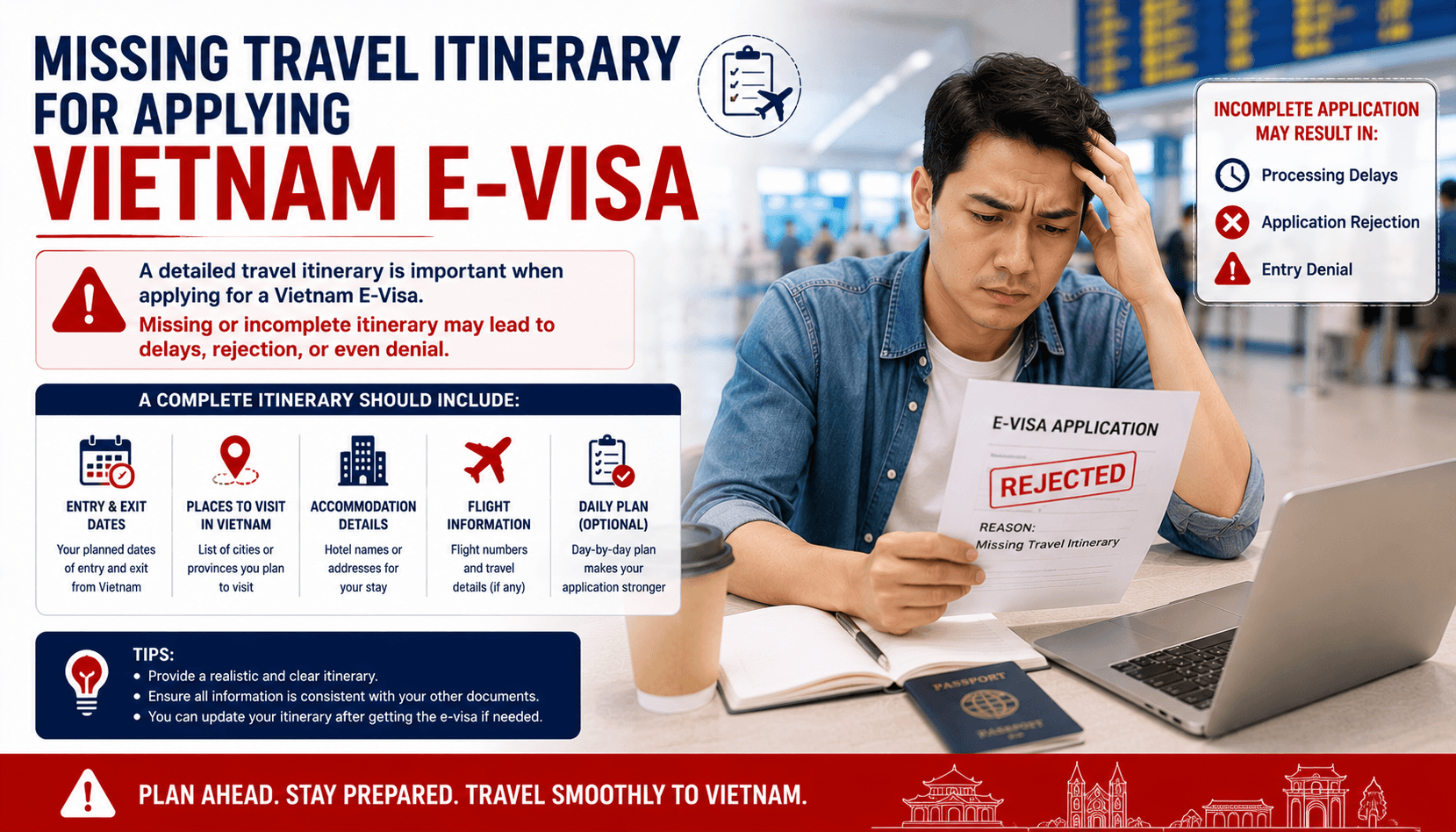
Why Is a Travel Itinerary Important?
Many travelers focus solely on obtaining a Vietnam E-Visa and overlook the importance of documenting their travel plans.
A travel itinerary can help:
- Organize your trip effectively
- Support visa-related information
- Simplify airport procedures
- Assist with accommodation planning
- Provide emergency reference information
- Help explain travel plans if questioned by authorities
Even a simple itinerary can make international travel more convenient.
Do You Need a Detailed Itinerary for a Vietnam E-Visa?
One of the most common questions is whether a fully confirmed itinerary is required when applying for a Vietnam E-Visa.
In reality, many travelers apply before finalizing every aspect of their trip. It is common for visitors to continue making adjustments to:
- Hotel bookings
- Domestic transportation
- Tour schedules
- Business appointments
- Travel routes
However, applicants should still provide accurate information regarding their intended travel dates and general plans whenever possible.
Consistency between visa information and travel arrangements is always recommended.
Common Reasons Travelers Do Not Have an Itinerary
There are many legitimate reasons why a traveler may not have a finalized itinerary before applying.
Flexible Backpacking Trips
Many backpackers prefer to make decisions as they travel rather than following a rigid schedule.
Multi-Country Travel
Visitors exploring several Southeast Asian countries often adjust their plans along the way.
Business Travel
Business schedules may change depending on meetings, conferences, and client requirements.
Last-Minute Vacations
Some travelers book flights quickly and organize the rest of their plans later.
Visiting Friends or Family
Travelers staying with relatives may not require extensive accommodation or transportation planning.
Can Missing an Itinerary Cause Problems?
In most situations, a traveler without a detailed itinerary can still successfully prepare for a trip to Vietnam. However, the absence of clear travel plans may occasionally create challenges.
Potential concerns include:
- Difficulty answering travel-related questions
- Inconsistent documentation
- Confusion regarding accommodation arrangements
- Challenges explaining the purpose of the trip
- Limited supporting evidence if additional information is requested
Having at least a basic outline of your travel plans can help avoid these issues.
What Information Should Be Prepared?
Even if your itinerary is not finalized, it is helpful to prepare key travel details before departure.
Arrival Information
Know your planned:
- Entry date
- Arrival airport
- Flight number
Accommodation Details
Keep the address and contact information for your first accommodation, if available.
Planned Destinations
You do not need every detail, but knowing the major cities you intend to visit can be helpful.
Departure Plans
If possible, have information regarding your return or onward travel arrangements.
How a Travel Itinerary Helps During Immigration
Upon arrival in Vietnam, immigration officers may occasionally ask basic questions regarding your trip.
Examples include:
- Why are you visiting Vietnam?
- How long will you stay?
- Where will you be staying?
- What cities do you plan to visit?
Travelers with a basic itinerary can answer these questions confidently and consistently.
While many visitors pass through immigration quickly, preparation is always beneficial.
Tips for Travelers Without a Finalized Itinerary
Create a Preliminary Plan
Even if details may change later, create a simple outline of your intended trip.
Save Important Reservations
Keep copies of:
- Flight confirmations
- Hotel bookings
- Transportation reservations
- Tour confirmations
Organize Digital Documents
Store travel documents electronically so they can be accessed easily during your trip.
Keep Information Consistent
Ensure that information provided in your visa application aligns with your general travel plans.
Stay Flexible but Prepared
Flexibility is common among travelers, but having a basic framework can make the journey smoother.
Common Mistakes to Avoid
Travelers should avoid:
- Providing inaccurate travel information
- Using accommodation details that do not exist
- Submitting inconsistent travel dates
- Forgetting important reservation documents
- Waiting until departure day to organize plans
A little preparation can prevent unnecessary stress later.
Benefits of Having a Travel Itinerary
Even if it is not mandatory in every situation, a travel itinerary offers several advantages:
- Better trip organization
- Easier visa preparation
- Simplified immigration procedures
- Improved travel budgeting
- Greater confidence during international travel
Most importantly, it helps travelers stay informed about their own plans.
Final Thoughts
Missing a detailed travel itinerary when applying for a Vietnam E-Visa is a common situation, especially among travelers with flexible schedules. While it is not always necessary to have every detail finalized, preparing a basic itinerary can support your travel plans and make the application process easier.
By organizing key information such as arrival dates, accommodation details, transportation arrangements, and intended destinations, travelers can reduce uncertainty and improve their overall travel experience.
Whether you are visiting Vietnam for tourism, business, or family reasons, a well-prepared itinerary remains one of the simplest ways to ensure a smoother and more enjoyable journey.
- Categories:
- Vietnam E-Visa Infomation

Over the past 23 years in the travel service industry, the growth and success of TRANSOCEAN have stemmed not only from the dedication of our well-trained, enthusiastic, and customer-oriented staff, but also from the exceptional leadership of our Founder and CEO, Mr. STANLEY HO. With more than 20 years of experience in the travel and tourism sector, Mr. STANLEY HO possesses profound knowledge of the market, customer behavior, and modern travel trends. His strategic vision has guided the company toward sustainable growth while maintaining a strong commitment to service quality.