
Previous Visa Overstay Record: How It Can Affect Your Future Travel to Vietnam
Latest update: Jun 6th, 2026
Table of Contents
- What Is a Visa Overstay?
- Why Immigration Authorities Monitor Overstay Records
- Common Reasons Travelers Overstay Their Visa
- Can a Previous Overstay Affect a Vietnam E-Visa Application?
- What Happens If You Previously Overstayed in Vietnam?
- Common Myths About Visa Overstay Records
- How to Reduce Future Immigration Problems
- How to Avoid Future Visa Overstays
- Final Thoughts
International travel requires compliance with the immigration laws of the destination country. One issue that can create concerns for travelers is a previous visa overstay record. Whether the overstay occurred in Vietnam or another country, many travelers wonder how their immigration history may affect future visa applications and border entry procedures.
Although every case is different, understanding the potential impact of a previous visa overstay can help travelers prepare properly and avoid unnecessary complications when planning a future trip to Vietnam.
In this article, we explain what a visa overstay is, why immigration authorities pay attention to overstay records, and what travelers should know before applying for a Vietnam E-Visa.
What Is a Visa Overstay?
A visa overstay occurs when a traveler remains in a country beyond the period authorized by their visa, entry permit, or immigration stamp.
For example:
- A visitor receives permission to stay for 30 days.
- The traveler remains in the country for 35 days.
- The additional five days are considered an overstay.
Overstays can occur for various reasons, including:
- Flight cancellations
- Medical emergencies
- Misunderstanding visa validity dates
- Personal circumstances
- Simple oversight
Regardless of the reason, overstaying a visa may be recorded in immigration systems and become part of a traveler's immigration history.
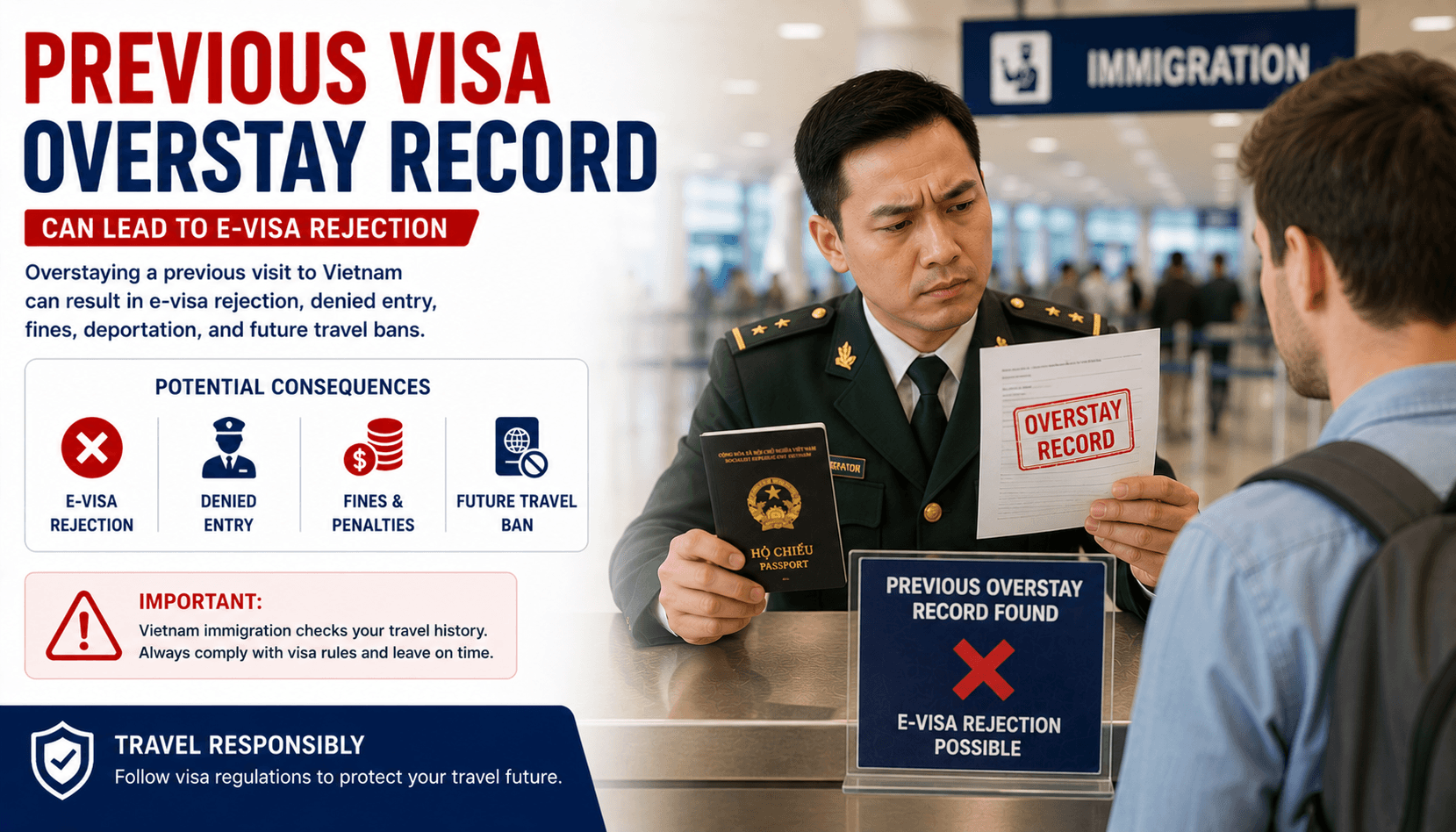
Why Immigration Authorities Monitor Overstay Records
Immigration agencies around the world are responsible for ensuring that visitors comply with entry and exit regulations.
A previous overstay record may be reviewed because it can help authorities assess:
- Compliance with immigration laws
- Travel history
- Risk of future overstays
- Accuracy of visa applications
- Overall immigration behavior
This does not automatically mean that a traveler will be denied a future visa, but immigration authorities may pay closer attention to previous violations.
Common Reasons Travelers Overstay Their Visa
Many people assume that visa overstays are always intentional. In reality, a large number of overstays result from misunderstandings or unexpected events.
Confusion About Visa Expiration Dates
Some travelers mistakenly assume that their visa validity period begins on the date they arrive rather than the date listed on the visa.
Flight Disruptions
Weather conditions, airline cancellations, and transportation problems can occasionally delay departure.
Medical Emergencies
Unexpected illness or injury may prevent a traveler from leaving before their authorized stay expires.
Changes in Travel Plans
Flexible travel schedules sometimes lead visitors to lose track of visa deadlines.
Lack of Awareness
First-time international travelers may not fully understand immigration requirements and accidentally remain beyond the permitted period.
Can a Previous Overstay Affect a Vietnam E-Visa Application?
One of the most common questions travelers ask is whether a previous visa overstay record will automatically prevent them from obtaining a Vietnam E-Visa.
The answer depends on multiple factors, including:
- The length of the overstay
- The country where the overstay occurred
- Whether penalties were resolved
- The traveler's overall immigration history
- Current immigration regulations
A previous overstay does not necessarily mean future travel is impossible. However, immigration authorities may review the applicant's travel history more carefully.
Providing accurate and truthful information during the visa application process is always essential.
What Happens If You Previously Overstayed in Vietnam?
Travelers who have previously overstayed in Vietnam may be particularly concerned about future entry.
In such situations, immigration authorities may already have records of:
- Entry dates
- Departure dates
- Previous visa status
- Administrative penalties
- Compliance history
Future applications may receive additional scrutiny depending on the circumstances of the previous overstay.
Travelers should ensure that any previous immigration issues have been properly resolved before planning a return visit.
Common Myths About Visa Overstay Records
There are many misconceptions regarding overstays and future travel.
Myth 1: One Overstay Means Permanent Denial
A previous overstay does not automatically result in a permanent travel ban.
Each case is typically evaluated based on its individual circumstances.
Myth 2: Immigration Authorities Cannot Access Old Records
Modern immigration systems often maintain travel records for extended periods.
Past entries, exits, and visa histories may remain available for review.
Myth 3: Small Overstays Never Matter
Even short overstays can become part of an individual's immigration record.
Although minor cases may have less impact, travelers should not assume they will be ignored.
Myth 4: You Can Hide Previous Immigration Issues
Providing inaccurate information on visa applications may create additional complications.
Honesty and consistency are always recommended when dealing with immigration matters.
How to Reduce Future Immigration Problems
Travelers with a previous overstay record can take several steps to improve future travel experiences.
Follow Visa Rules Carefully
Always monitor entry and exit dates and avoid exceeding authorized stay periods.
Keep Travel Documentation
Maintain records related to previous travel, including visas, departure confirmations, and supporting documents.
Resolve Outstanding Issues
If penalties or administrative matters remain unresolved, address them before planning future travel.
Apply Early
Submitting visa applications well in advance provides additional time to address potential questions or documentation requests.
Be Honest During Applications
Accurate information helps build credibility and reduces the likelihood of complications.
How to Avoid Future Visa Overstays
Preventing an overstay is much easier than dealing with its consequences.
Practical tips include:
- Setting reminders for visa expiration dates
- Monitoring travel schedules carefully
- Keeping copies of immigration documents
- Confirming visa validity before travel
- Leaving sufficient time for unexpected delays
Good planning can significantly reduce the risk of immigration issues.
Final Thoughts
A previous visa overstay record can be a concern for international travelers, but it does not automatically prevent future travel to Vietnam. Immigration authorities may review an applicant's travel history, particularly if previous violations occurred, but each case is generally assessed based on its specific circumstances.
The best approach is to comply with immigration requirements, maintain accurate travel records, and ensure all visa-related issues are resolved promptly. By understanding the potential impact of a previous overstay and preparing carefully for future trips, travelers can improve their chances of a smooth and successful journey to Vietnam.
- Categories:
- Vietnam E-Visa Infomation

Over the past 23 years in the travel service industry, the growth and success of TRANSOCEAN have stemmed not only from the dedication of our well-trained, enthusiastic, and customer-oriented staff, but also from the exceptional leadership of our Founder and CEO, Mr. STANLEY HO. With more than 20 years of experience in the travel and tourism sector, Mr. STANLEY HO possesses profound knowledge of the market, customer behavior, and modern travel trends. His strategic vision has guided the company toward sustainable growth while maintaining a strong commitment to service quality.