
Single Entry vs Multiple Entry Confusion for Vietnam E-Visa: A Complete Guide for Travelers
Latest update: Jun 6th, 2026
Table of Contents
- What Is a Single-Entry Vietnam E-Visa?
- What Is a Multiple-Entry Vietnam E-Visa?
- Why Travelers Get Confused
- Common Travel Scenarios That Cause Problems
- How to Determine Which Visa Type You Need
- Signs You May Have Selected the Wrong Visa Type
- How to Avoid Entry-Related Visa Problems
- What Happens If You Need to Re-Enter Vietnam?
- Final Thoughts
One of the most common mistakes travelers make when applying for a Vietnam E-Visa is misunderstanding the difference between a single-entry visa and a multiple-entry visa. While both visa types allow visitors to enter Vietnam legally, choosing the wrong option can lead to unexpected travel disruptions, additional expenses, and unnecessary stress during your trip.
Many international travelers only realize the difference after their visa has been approved or when they attempt to re-enter Vietnam during a multi-country journey. Understanding how each visa type works before applying can help ensure that your travel plans go smoothly.
What Is a Single-Entry Vietnam E-Visa?
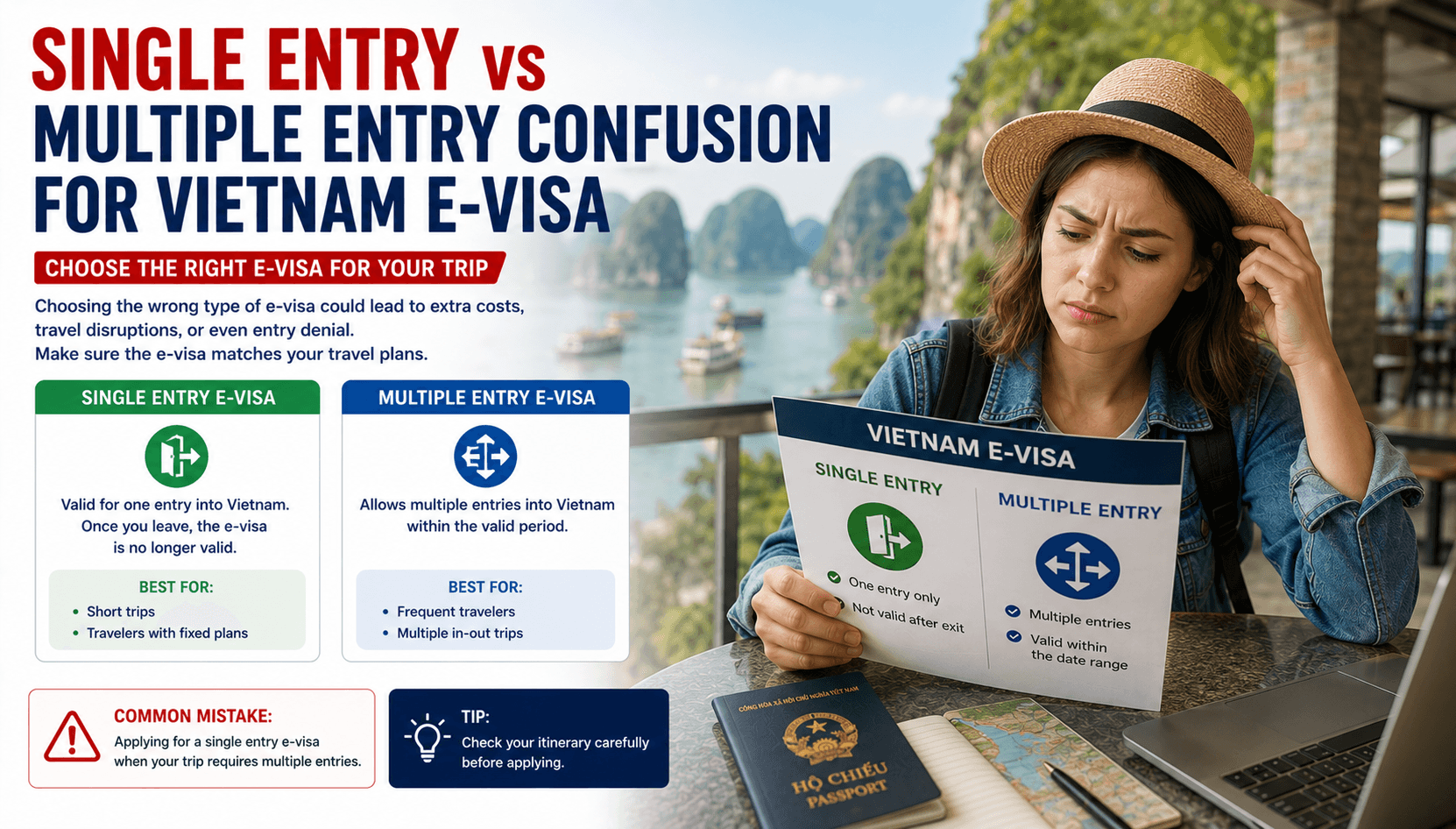
A single-entry Vietnam E-Visa allows a traveler to enter Vietnam one time during the validity period of the visa.
Once you leave Vietnam, the visa is generally considered used, even if the visa validity period has not yet expired.
For example:
- You enter Vietnam through Hanoi.
- You spend ten days traveling throughout the country.
- You leave Vietnam for Thailand.
After departing Vietnam, your single-entry visa can no longer be used to return to Vietnam.
If you later decide to come back to Vietnam, you would typically need a new valid visa or travel authorization.
What Is a Multiple-Entry Vietnam E-Visa?
A multiple-entry Vietnam E-Visa allows travelers to enter and leave Vietnam multiple times during the visa's validity period.
This option is particularly useful for visitors who plan to travel between Vietnam and neighboring countries during the same trip.
For example:
- Arrive in Ho Chi Minh City.
- Travel to Cambodia.
- Return to Vietnam.
- Visit Laos.
- Re-enter Vietnam again before flying home.
With a valid multiple-entry visa, these movements are generally much more convenient because the visa remains valid for multiple arrivals.
Why Travelers Get Confused
The confusion often comes from misunderstanding the meaning of "entry."
Many travelers assume that a visa remains valid until the expiration date regardless of how many times they leave the country.
However, visa validity and number of entries are two separate concepts.
A traveler may have:
- A visa valid for several weeks or months.
- Only one permitted entry.
Once that entry has been used and the traveler exits Vietnam, the visa's remaining validity period does not necessarily allow re-entry.
This misunderstanding is one of the most common visa-related issues faced by international visitors.
Common Travel Scenarios That Cause Problems
Visiting Multiple Southeast Asian Countries
Many tourists combine Vietnam with neighboring destinations such as:
- Thailand
- Cambodia
- Laos
- Singapore
- Malaysia
A traveler may enter Vietnam first, visit another country, and then plan to return to Vietnam before flying home.
If they only hold a single-entry visa, re-entry may not be possible without obtaining additional authorization.
Cruise Travelers
Some cruise itineraries visit Vietnam multiple times during the same journey.
Travelers who are unaware of their visa entry limitations may encounter complications when attempting to return to Vietnamese ports.
Business Travelers
Business professionals often travel frequently between Vietnam and nearby countries for meetings, conferences, and project visits.
Selecting the wrong visa type can disrupt important business schedules.
Flexible Travel Plans
Many travelers do not finalize their itinerary before departure.
A visitor may initially plan to stay only in Vietnam but later decide to explore neighboring countries.
A single-entry visa may become restrictive in these situations.
How to Determine Which Visa Type You Need
Before applying, carefully review your complete travel itinerary.
A single-entry visa may be sufficient if:
- You will enter Vietnam once.
- You will remain in Vietnam for the entire trip.
- You will depart Vietnam only when your journey ends.
A multiple-entry visa may be more appropriate if:
- You plan to leave and return to Vietnam.
- You are visiting several countries during the same trip.
- Your itinerary remains flexible.
- You expect multiple business visits within the visa validity period.
Thinking ahead can help prevent costly mistakes later.
Signs You May Have Selected the Wrong Visa Type
Many travelers realize the issue only after receiving visa approval.
Warning signs include:
- Booking flights that require re-entry into Vietnam.
- Adding neighboring countries to your itinerary.
- Planning a regional backpacking trip.
- Scheduling business meetings across multiple countries.
- Discovering transit arrangements that involve leaving Vietnam and returning.
If your travel plans change, it is important to review whether your visa type still matches your itinerary.
How to Avoid Entry-Related Visa Problems
Plan Your Route Before Applying
The best way to avoid confusion is to finalize your travel itinerary before submitting a visa application.
Review Visa Details Carefully
Before completing the application, verify:
- Visa validity dates
- Number of permitted entries
- Arrival information
- Travel schedule
Understand Regional Travel Plans
If you intend to explore Southeast Asia, consider how often you may need to enter Vietnam during the trip.
Do Not Assume All Visas Work the Same Way
Many countries have different visa policies, and travelers should avoid making assumptions based on previous travel experiences elsewhere.
What Happens If You Need to Re-Enter Vietnam?
If you leave Vietnam and later discover that your visa only allows a single entry, you may face difficulties returning to the country.
Depending on current immigration regulations, travelers may need to obtain appropriate authorization before attempting re-entry.
For this reason, reviewing your travel plans early is always the safest approach.
Final Thoughts
Confusion between single-entry and multiple-entry Vietnam E-Visas is one of the most common travel planning mistakes. While both visa types allow legal entry into Vietnam, they serve different travel needs and should be selected carefully.
Before applying, evaluate your itinerary, future travel plans, and whether you expect to leave and re-enter Vietnam during your journey. A clear understanding of entry rules can help prevent disruptions, save time, and ensure a more enjoyable travel experience.
By choosing the correct visa type from the beginning, travelers can focus on exploring Vietnam and the surrounding region with confidence and peace of mind.
- Categories:
- Vietnam E-Visa Infomation

Over the past 23 years in the travel service industry, the growth and success of TRANSOCEAN have stemmed not only from the dedication of our well-trained, enthusiastic, and customer-oriented staff, but also from the exceptional leadership of our Founder and CEO, Mr. STANLEY HO. With more than 20 years of experience in the travel and tourism sector, Mr. STANLEY HO possesses profound knowledge of the market, customer behavior, and modern travel trends. His strategic vision has guided the company toward sustainable growth while maintaining a strong commitment to service quality.