
Transit Through Vietnam Requirements for Vietnam E-Visa: What International Travelers Need to Know
Latest update: Jun 7th, 2026
Table of Contents
- What Is Transit Travel?
- Do Transit Passengers Need a Vietnam E-Visa?
- Airside Transit vs. Entering Vietnam
- Common Transit Situations That May Require Additional Preparation
- Common Transit Travel Problems
- Documents Transit Travelers Should Prepare
- Tips for a Smooth Transit Through Vietnam
- Why Understanding Transit Rules Matters
- Final Thoughts
Vietnam has become a major aviation hub in Southeast Asia, connecting travelers between Asia, Europe, Australia, and the Americas. Every year, millions of passengers transit through Vietnam's international airports while traveling to their final destinations. However, many travelers are unsure whether they need a Vietnam E-Visa when transiting through the country.
Understanding Vietnam transit requirements is essential for avoiding boarding issues, immigration complications, and unexpected travel disruptions. The rules can vary depending on your flight itinerary, airport procedures, and whether you plan to enter Vietnam during your layover.
This guide explains the most common transit scenarios and what travelers should know about Vietnam E-Visa requirements when passing through Vietnam.
What Is Transit Travel?
Transit travel occurs when a passenger stops in a country temporarily while traveling to another destination.
Common examples include:
- Flying from Australia to Europe through Vietnam
- Traveling from Japan to Thailand with a layover in Vietnam
- Connecting between international flights at a Vietnamese airport
In many cases, transit passengers remain within the airport before boarding their next flight.
However, not all transit situations are the same, which is why understanding the specific requirements is important.
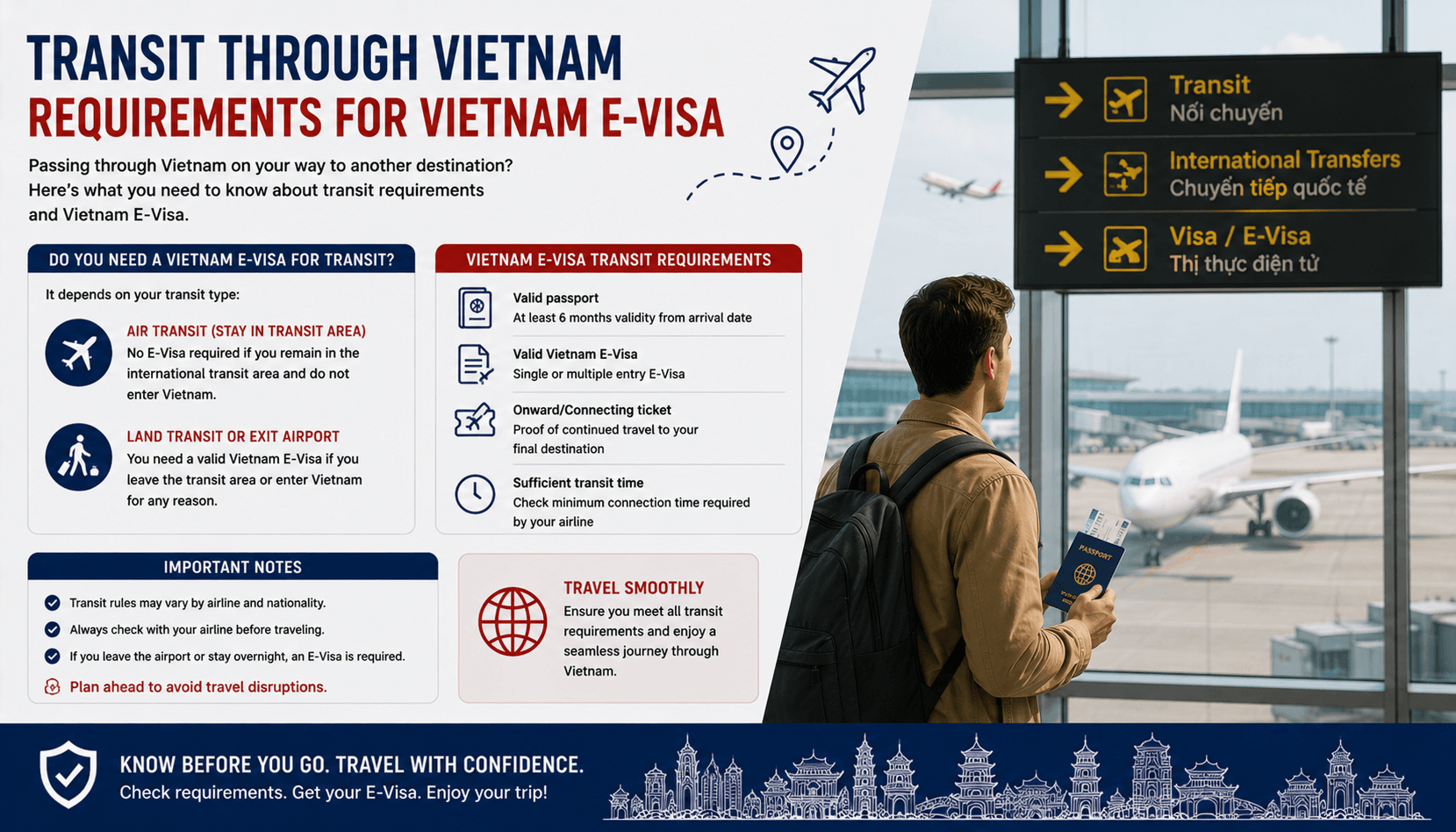
Do Transit Passengers Need a Vietnam E-Visa?
One of the most common questions travelers ask is whether a Vietnam E-Visa is required during transit.
The answer depends on several factors, including:
- Length of the layover
- Airport procedures
- Flight arrangements
- Whether the traveler enters Vietnam
- Baggage collection requirements
Travelers should carefully review their itinerary before departure to determine whether immigration clearance may be required.
Airside Transit vs. Entering Vietnam
Airside Transit
Airside transit generally refers to remaining within the international transit area of the airport without passing through immigration control.
In this situation, travelers typically:
- Remain inside the airport
- Wait for their connecting flight
- Do not officially enter Vietnam
For some passengers, this process may not require additional immigration procedures.
Entering Vietnam During Transit
Some travelers choose or need to leave the airport during a layover.
Examples include:
- Overnight connections
- Long layovers
- Hotel stays
- Tourism during transit
- Visiting friends or business contacts
Once a traveler passes through immigration and enters Vietnam, they must comply with applicable entry requirements.
Common Transit Situations That May Require Additional Preparation
Self-Transfer Flights
Many travelers purchase separate airline tickets for different segments of their journey.
In these cases, passengers may need to:
- Exit the transit area
- Collect checked baggage
- Re-check luggage
- Complete immigration procedures
Travelers should verify airline requirements before departure.
Long Layovers
A lengthy layover may encourage travelers to explore Vietnam before their next flight.
Popular transit cities include:
- Ho Chi Minh City
- Hanoi
- Da Nang
If travelers plan to leave the airport, they should ensure they meet Vietnam's entry requirements.
Overnight Connections
Flights that require an overnight stay often involve leaving the airport and staying at a hotel before continuing the journey.
Proper travel documentation becomes especially important in these situations.
Common Transit Travel Problems
Assuming Transit Always Means No Visa Requirements
Many travelers mistakenly believe that all transit passengers are exempt from entry requirements.
Airport procedures and airline arrangements can vary significantly.
Baggage Collection Requirements
Certain flight itineraries require passengers to retrieve luggage and complete check-in again for a connecting flight.
This process may involve immigration clearance depending on the circumstances.
Flight Schedule Changes
Unexpected delays or cancellations can affect transit plans and potentially alter travel requirements.
Flexible preparation can help reduce travel stress.
Incomplete Travel Documentation
Travelers occasionally arrive without:
- Flight confirmations
- Passport copies
- Travel itinerary details
- Necessary travel authorization
Proper documentation helps support a smoother travel experience.
Documents Transit Travelers Should Prepare
Even if you expect to remain in the airport, it is wise to carry organized travel documents.
Important documents may include:
Passport
Ensure your passport remains valid and in good condition.
Flight Reservations
Keep copies of all connecting flight confirmations.
Travel Itinerary
Maintain a clear record of your travel schedule.
Accommodation Information
If staying overnight, have hotel booking details available.
Travel Authorization Documents
Carry any required visas, transit approvals, or destination entry documents.
Tips for a Smooth Transit Through Vietnam
Review Your Flight Itinerary Carefully
Understand whether your flights are:
- On the same ticket
- Operated by different airlines
- Subject to baggage re-check procedures
Check Airline Requirements
Airlines often provide important information regarding transit procedures and documentation.
Monitor Flight Updates
Changes to schedules may affect transit arrangements.
Prepare for Unexpected Situations
Delays, cancellations, and airport changes can occur during international travel.
Keeping all documents accessible can help you adapt quickly.
Arrive with Sufficient Connection Time
Allow enough time between flights, especially when transferring between airlines or terminals.
Why Understanding Transit Rules Matters
Transit-related misunderstandings can lead to:
- Missed flights
- Boarding denials
- Immigration complications
- Additional travel expenses
- Unexpected delays
The more prepared you are before departure, the easier it becomes to navigate international travel.
Final Thoughts
Transit through Vietnam can be a smooth and convenient experience when travelers understand the requirements associated with their specific itinerary. Whether you remain in the international transit area or plan to enter Vietnam during a layover, preparation is essential.
Review your flight arrangements carefully, maintain organized travel documents, and understand whether immigration clearance may be required during your journey. By planning ahead and staying informed, you can avoid common transit-related issues and enjoy a seamless travel experience through Vietnam.
Proper preparation not only helps prevent travel disruptions but also ensures that your connection through Vietnam remains efficient, stress-free, and enjoyable.
- Categories:
- Vietnam E-Visa Infomation

Over the past 23 years in the travel service industry, the growth and success of TRANSOCEAN have stemmed not only from the dedication of our well-trained, enthusiastic, and customer-oriented staff, but also from the exceptional leadership of our Founder and CEO, Mr. STANLEY HO. With more than 20 years of experience in the travel and tourism sector, Mr. STANLEY HO possesses profound knowledge of the market, customer behavior, and modern travel trends. His strategic vision has guided the company toward sustainable growth while maintaining a strong commitment to service quality.