
Vietnam Arrival Guide for First-Time Visitors: Everything You Need to Know Before Landing
Latest update: Jun 3rd, 2026
Table of Contents
- Prepare Your Travel Documents Before Departure
- Major International Airports in Vietnam
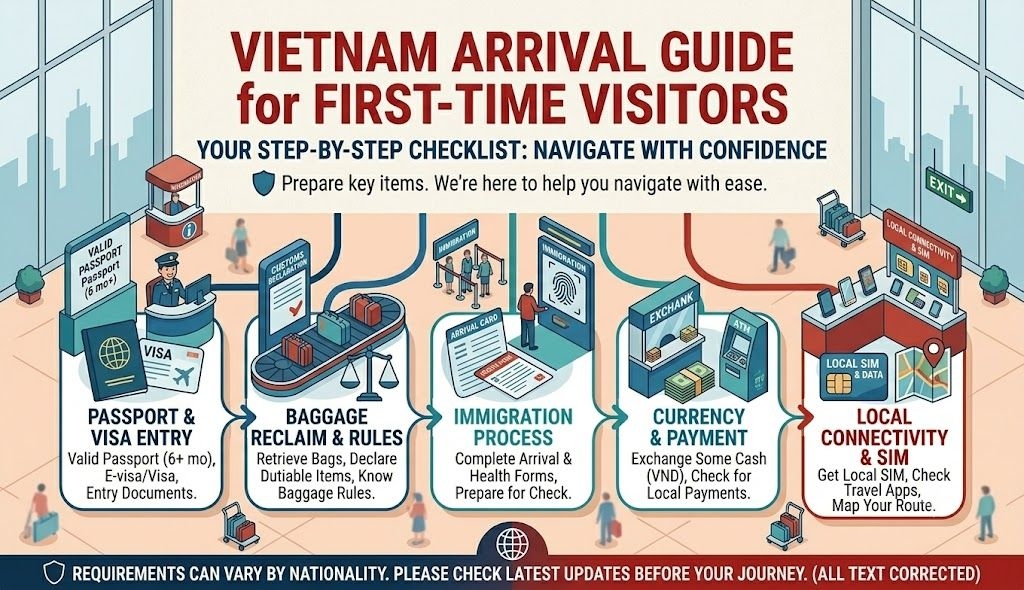
- Immigration Process Upon Arrival
- Understanding Vietnam E-Visa Entry
- Customs and Arrival Procedures
- Getting Local Currency
- Buying a SIM Card at the Airport
- Transportation from the Airport
- Common Mistakes First-Time Visitors Should Avoid
- Essential Arrival Tips
- What to Do If You Experience Problems at the Airport
- Final Thoughts
Vietnam has become one of Asia's most exciting destinations, attracting millions of international visitors every year. From the bustling streets of Ho Chi Minh City to the cultural charm of Hanoi and the breathtaking scenery of Ha Long Bay, the country offers unforgettable experiences for travelers of all backgrounds.
If this is your first trip to Vietnam, understanding what happens after your flight lands can help make your arrival smooth and stress-free. This comprehensive Vietnam arrival guide covers immigration procedures, visa requirements, airport tips, transportation options, and practical advice for first-time visitors.
Before traveling, you can arrange your visa through Expedite Vietnam Visa Application Service.
Prepare Your Travel Documents Before Departure
The easiest way to avoid problems upon arrival is to prepare all necessary documents before boarding your flight.
Most travelers should have:
- A passport valid for at least six months
- An approved Vietnam visa or e-visa (if required)
- Flight itinerary
- Hotel reservation details
- Return or onward travel information
- Travel insurance documentation (recommended)
Many airlines verify entry requirements before allowing passengers to board. Missing documents may result in denied boarding even before reaching Vietnam.
Major International Airports in Vietnam
Most first-time visitors arrive through one of Vietnam's main international airports:
Noi Bai International Airport (HAN)
Located in Hanoi, this airport serves as the primary gateway to northern Vietnam.
Tan Son Nhat International Airport (SGN)
Located in Ho Chi Minh City, this is Vietnam's busiest international airport and serves southern Vietnam.
Da Nang International Airport (DAD)
A popular arrival point for travelers visiting Da Nang, Hoi An, and central Vietnam.
Each airport offers immigration facilities, currency exchange counters, SIM card services, and transportation options for arriving passengers.
Immigration Process Upon Arrival
After leaving the aircraft, follow the signs directing passengers toward Immigration or Passport Control.
The process typically includes:
Step 1: Present Your Passport
Immigration officers will review:
- Passport validity
- Visa status
- Entry eligibility
- Travel information
Ensure your passport matches the visa information exactly.
Step 2: Receive Entry Stamp
If everything is in order, the officer will stamp your passport and authorize entry into Vietnam.
Before leaving the immigration counter, verify that the stamp information is correct.
Step 3: Proceed to Baggage Claim
After immigration clearance, collect your checked luggage from the designated carousel.
Monitor airport screens to identify the correct baggage belt.
Understanding Vietnam E-Visa Entry
Vietnam's e-visa program has simplified travel for visitors from around the world.
Travelers using an e-visa should:
- Carry a printed copy of the approved e-visa
- Save a digital copy on their mobile device
- Verify passport information before departure
- Confirm visa validity dates
For fast and convenient visa support, visit Expedite Vietnam Visa.
Customs and Arrival Procedures
After collecting luggage, travelers proceed through customs inspection.
Generally, visitors should:
- Declare items if required
- Follow customs regulations
- Keep valuable items documented when necessary
Most tourists pass through customs quickly when carrying standard personal belongings.
Getting Local Currency
Vietnam's currency is the Vietnamese Dong (VND).
Upon arrival, visitors can exchange money at:
- Airport currency exchange counters
- Local banks
- Licensed exchange offices
Many international credit cards are accepted in larger cities, hotels, and shopping centers. However, cash remains useful for local markets, street food vendors, and smaller businesses.
Helpful Tip
Exchange only a small amount at the airport initially. Better exchange rates are often available in city centers.
Buying a SIM Card at the Airport
Staying connected immediately after arrival can make your trip much easier.
Major mobile providers include:
- Viettel
- Vinaphone
- Mobifone
Airport SIM card counters are typically located in arrival halls and offer tourist-friendly packages with data and local calling options.
Having internet access helps with:
- Booking transportation
- Navigation
- Translation apps
- Contacting hotels
Transportation from the Airport
Airport Taxis
Official taxis are widely available at major airports.
Always use:
- Authorized taxi companies
- Airport taxi counters
- Metered services when possible
Ride-Hailing Apps
Many visitors prefer using apps such as Grab for transparent pricing and convenient booking.
Hotel Transfers
Some hotels provide airport pickup services, which can be particularly helpful for first-time visitors.
Private Transfers
Travelers seeking additional convenience may arrange private transportation before arrival.
Common Mistakes First-Time Visitors Should Avoid
Not Checking Passport Validity
Your passport should generally have at least six months of validity remaining.
Arriving Without the Correct Visa
Even if you qualify for visa exemptions, verify requirements before departure.
Misunderstanding Visa Dates
Many travelers mistakenly assume they can enter at any time after receiving a visa.
Always check:
- Entry date
- Exit date
- Number of permitted entries
Using Unofficial Transportation
Only use trusted transportation providers to avoid unnecessary complications.
Essential Arrival Tips
Save Important Documents Digitally
Keep electronic copies of:
- Passport
- Visa
- Travel insurance
- Flight tickets
- Hotel confirmations
Keep Local Emergency Contacts
Store contact information for:
- Your embassy
- Hotel
- Travel insurance provider
- Family members
Stay Hydrated
Vietnam's climate can be significantly warmer and more humid than many visitors expect.
Carry Small Denominations
Smaller currency notes are useful for transportation, snacks, and minor purchases immediately after arrival.
What to Do If You Experience Problems at the Airport
If you encounter issues related to:
- Visa information
- Immigration questions
- Travel documentation
- Entry procedures
Remain calm and cooperate with airport officials.
Many situations can be resolved through document verification or additional clarification.
Travelers needing visa support before departure can review application requirements and processing information through Vietnam Visa Processing Information.
Final Thoughts
Arriving in Vietnam for the first time can be an exciting experience. With proper preparation, the arrival process is generally straightforward and efficient. Having the correct visa, a valid passport, organized travel documents, and a basic understanding of airport procedures will help you begin your journey with confidence.
Whether you're visiting for tourism, business, or family travel, planning ahead can save time and reduce stress. Prepare your documents carefully, understand the arrival process, and you'll be ready to enjoy everything Vietnam has to offer from the moment you land
- Categories:
- Vietnam E-Visa Infomation

Over the past 23 years in the travel service industry, the growth and success of TRANSOCEAN have stemmed not only from the dedication of our well-trained, enthusiastic, and customer-oriented staff, but also from the exceptional leadership of our Founder and CEO, Mr. STANLEY HO. With more than 20 years of experience in the travel and tourism sector, Mr. STANLEY HO possesses profound knowledge of the market, customer behavior, and modern travel trends. His strategic vision has guided the company toward sustainable growth while maintaining a strong commitment to service quality.