
Vietnam E-Visa vs Visa on Arrival: Which One Should I Choose?
Latest update: Jun 9th, 2026
Table of Contents
- What Is a Vietnam E-Visa?
- What Is Vietnam Visa on Arrival?
- Vietnam E-Visa vs Visa on Arrival: Key Differences
- Advantages of Vietnam E-Visa
- Advantages of Visa on Arrival
- Common Mistakes Travelers Make
- Which Option Is Better for Tourists?
- Which Option Is Better for Business Travelers?
- Tips for Choosing the Right Vietnam Visa
- Final Thoughts
Planning a trip to Vietnam involves several important decisions, and one of the most common questions travelers ask is: Should I apply for a Vietnam E-Visa or choose Visa on Arrival (VOA)?
Both options have been used by international visitors for tourism and business travel. However, each visa type has different procedures, requirements, advantages, and limitations. Choosing the right option can help you save time, avoid travel complications, and enjoy a smoother arrival experience.
In this guide, we'll compare Vietnam E-Visa and Visa on Arrival to help you determine which option best suits your travel needs.
What Is a Vietnam E-Visa?
A Vietnam E-Visa is an electronic visa that allows eligible foreign travelers to apply online before their trip.
The application process is completed electronically, and travelers receive visa approval digitally before departure.
Key features of a Vietnam E-Visa include:
- Online application process
- No embassy visit required in many cases
- Electronic approval
- Convenient document submission
- Pre-approved travel authorization before boarding
The E-Visa has become one of the most popular options for travelers visiting Vietnam.
What Is Vietnam Visa on Arrival?
Visa on Arrival (VOA) is a process that allows travelers to obtain a visa after arriving at a designated international airport in Vietnam.
Before traveling, applicants typically obtain an approval document and then complete additional procedures upon arrival.
The process generally involves:
- Receiving pre-travel approval documentation
- Presenting documents at the airport
- Completing arrival procedures
- Receiving the visa before entering Vietnam
Visa on Arrival is only available through specific arrival channels and procedures.
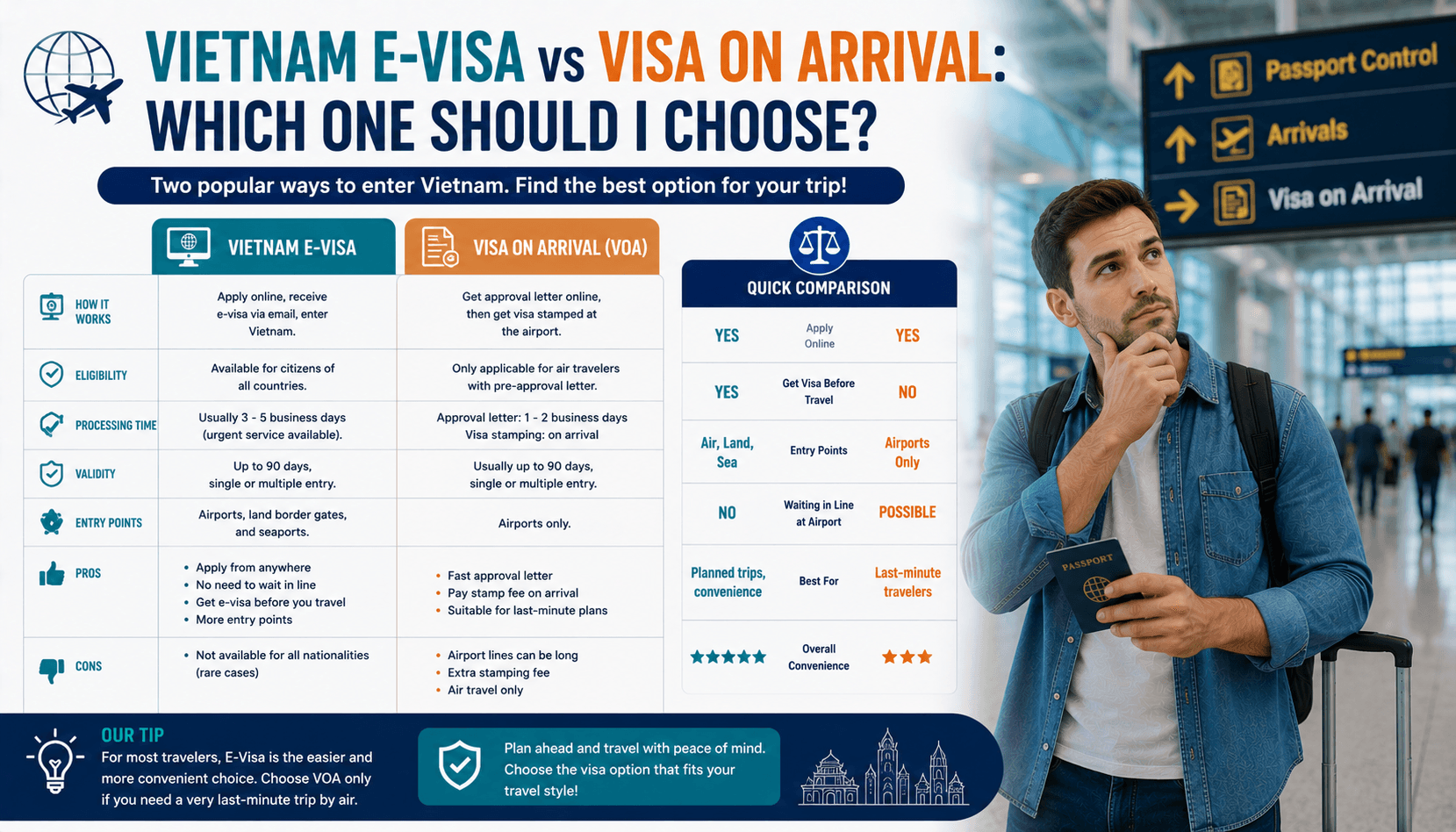
Vietnam E-Visa vs Visa on Arrival: Key Differences
Application Process
Vietnam E-Visa
The entire application process is completed online before travel.
Travelers submit:
- Passport information
- Personal details
- Travel information
- Required documents
Approval is obtained before departure.
Visa on Arrival
Applicants usually complete part of the process before travel and finish visa issuance procedures after arriving in Vietnam.
Additional airport processing may be required.
Convenience
Vietnam E-Visa
One of the biggest advantages of the E-Visa is convenience.
Travelers can:
- Apply from anywhere
- Receive approval electronically
- Arrive with documentation already prepared
This reduces paperwork upon arrival.
Visa on Arrival
Visa on Arrival may involve additional waiting time at the airport because travelers must complete visa issuance procedures before immigration clearance.
Airport Waiting Time
Vietnam E-Visa
E-Visa holders can typically proceed directly toward immigration procedures after arrival.
This can reduce overall processing time at the airport.
Visa on Arrival
Travelers may need to visit a separate visa processing counter before proceeding to immigration.
During busy travel periods, this may increase waiting times.
Travel Planning
Vietnam E-Visa
E-Visa approval before departure provides additional confidence because travelers know their visa status in advance.
Visa on Arrival
Travelers still need to complete certain arrival procedures before entering Vietnam.
Some visitors may prefer having all approvals finalized before travel.
Advantages of Vietnam E-Visa
Many travelers choose the E-Visa because of its simplicity and convenience.
Benefits include:
Online Application
Everything can be completed remotely.
Reduced Airport Procedures
Less paperwork is typically required upon arrival.
Faster Arrival Experience
Many travelers find the arrival process more efficient.
Easy Document Management
Digital approval can be stored electronically and printed if needed.
Advantages of Visa on Arrival
Although E-Visas have become increasingly popular, Visa on Arrival may still be suitable for certain travelers.
Potential advantages include:
Alternative Travel Option
Some travelers may prefer arrival-based visa processing depending on their circumstances.
Business Travel Flexibility
Certain business travel situations may involve different visa arrangements.
Familiar Process for Frequent Travelers
Some experienced visitors may already be familiar with VOA procedures.
Common Mistakes Travelers Make
Choosing a Visa Without Understanding the Requirements
Not every visa option is appropriate for every traveler.
Researching the available choices before booking flights is important.
Applying Too Late
Last-minute applications can create unnecessary stress.
Incorrect Personal Information
Mistakes involving:
- Passport numbers
- Names
- Dates of birth
can cause delays regardless of the visa type selected.
Ignoring Airport Procedures
Travelers should understand what documents will be required upon arrival.
Which Option Is Better for Tourists?
For many leisure travelers, the Vietnam E-Visa is often considered the more convenient option because:
- Applications are completed online
- Approval is obtained before travel
- Airport procedures may be simpler
- Less paperwork is required upon arrival
Tourists who prefer a streamlined travel experience frequently choose the E-Visa route.
Which Option Is Better for Business Travelers?
The answer depends on the specific travel situation.
Business visitors should consider:
- Travel urgency
- Documentation requirements
- Planned length of stay
- Entry arrangements
Carefully reviewing available visa options before departure can help determine the best choice.
Tips for Choosing the Right Vietnam Visa
Before making a decision:
Review Your Travel Plans
Consider:
- Travel dates
- Purpose of visit
- Entry location
- Length of stay
Apply Early
Regardless of the visa type selected, early preparation reduces travel risks.
Verify Passport Information
Ensure all application details match your passport exactly.
Keep Printed Copies Available
Digital and printed copies of important travel documents are always recommended.
Final Thoughts
When comparing Vietnam E-Visa vs Visa on Arrival, many modern travelers prefer the E-Visa because of its convenience, online application process, and reduced airport procedures. Receiving approval before departure can provide additional peace of mind and help simplify arrival in Vietnam.
However, Visa on Arrival may still be a useful option in certain travel situations depending on individual needs and travel arrangements.
The best choice ultimately depends on your travel purpose, timeline, and personal preferences. By understanding the differences between these two visa options and preparing your documentation carefully, you can enjoy a smoother journey and begin your Vietnam experience with confidence.
- Categories:
- Vietnam E-Visa Infomation

Over the past 23 years in the travel service industry, the growth and success of TRANSOCEAN have stemmed not only from the dedication of our well-trained, enthusiastic, and customer-oriented staff, but also from the exceptional leadership of our Founder and CEO, Mr. STANLEY HO. With more than 20 years of experience in the travel and tourism sector, Mr. STANLEY HO possesses profound knowledge of the market, customer behavior, and modern travel trends. His strategic vision has guided the company toward sustainable growth while maintaining a strong commitment to service quality.