
Vietnam Entry Requirements Updates: What International Travelers Need to Know
Latest update: Jun 7th, 2026
Table of Contents
- Why Entry Requirement Updates Matter
- Valid Passport Requirements
- Vietnam Visa and E-Visa Requirements
- Entry Port Information
- Accommodation and Travel Information
- Immigration Inspection Upon Arrival
- Customs Requirements
- Traveling with Children
- Business Traveler Requirements
- Common Entry Requirement Mistakes
- Tips for a Smooth Entry into Vietnam
- Why Staying Updated Is Important
- Final Thoughts
Vietnam continues to be one of the most attractive destinations in Asia for tourism, business, investment, and long-term travel. As international travel regulations evolve, visitors should stay informed about the latest Vietnam entry requirements before planning their trip. Entry policies may change due to immigration regulations, visa programs, border management procedures, and travel security measures.
Whether you are traveling to Vietnam for leisure, business, family visits, or professional activities, understanding the most recent entry requirements can help ensure a smooth and stress-free journey.
In this guide, we discuss important Vietnam entry requirement updates and provide practical tips for international travelers.
Why Entry Requirement Updates Matter
Many travelers assume that entry rules remain unchanged over time. However, immigration policies and border procedures can be updated periodically to improve security, streamline traveler processing, and adapt to changing international travel conditions.
Failing to review current entry requirements before departure may lead to:
- Travel delays
- Airline boarding issues
- Immigration complications
- Missing documentation
- Unexpected travel expenses
Staying informed is one of the best ways to prepare for a successful trip to Vietnam.
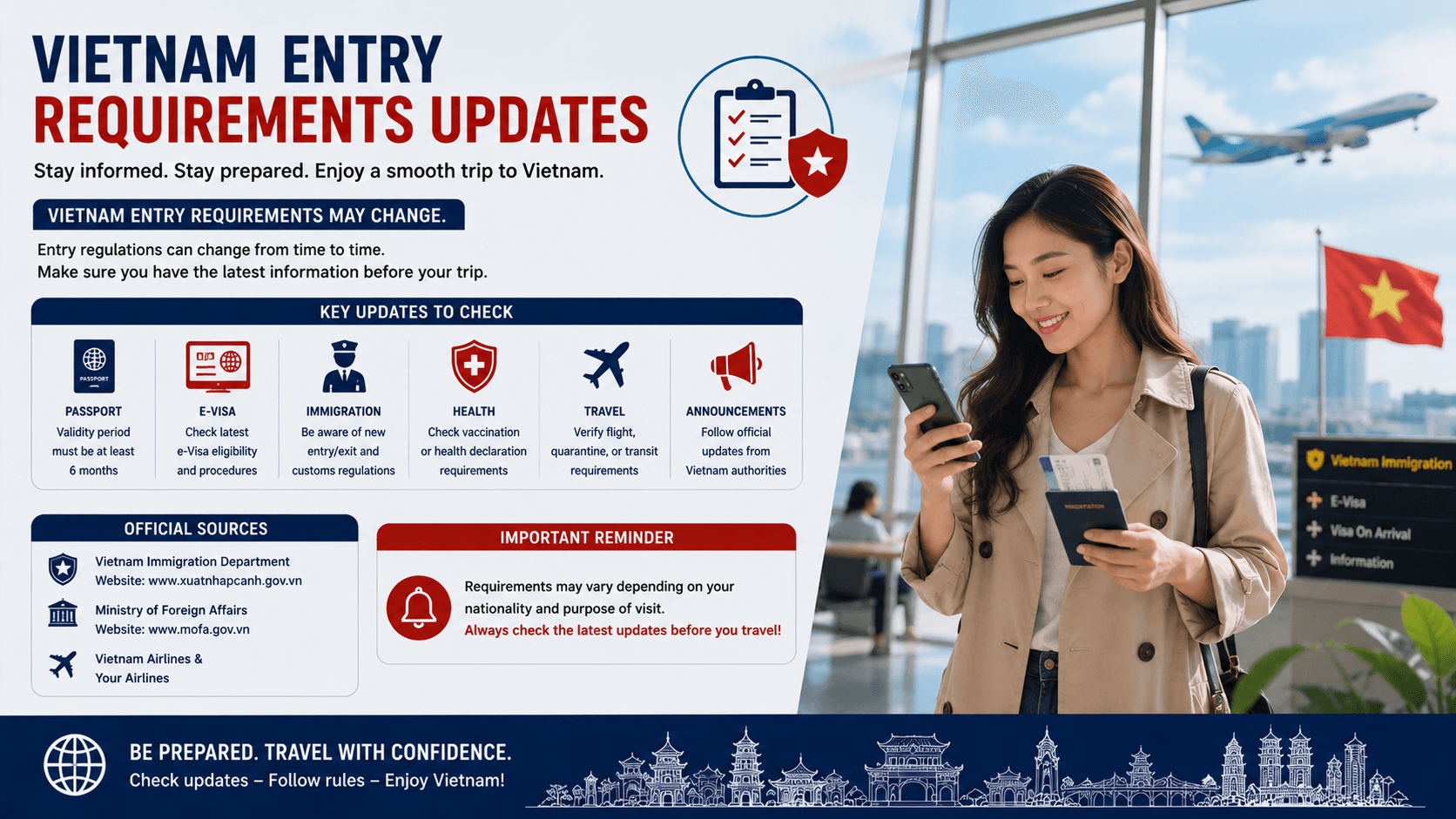
Valid Passport Requirements
A passport remains the most important document for entering Vietnam.
Before traveling, visitors should verify that their passport:
- Is valid and undamaged
- Contains accurate personal information
- Has sufficient validity remaining
- Matches all visa and travel documents
One of the most common travel issues occurs when passengers discover passport-related problems shortly before departure.
Checking passport validity well in advance can help avoid last-minute complications.
Vietnam Visa and E-Visa Requirements
Depending on nationality and travel purpose, visitors may need appropriate visa authorization before entering Vietnam.
Many travelers choose the Vietnam E-Visa because it offers:
- Online application convenience
- Digital processing
- Simplified travel preparation
- Faster document management
When applying for a visa, travelers should ensure that all information provided is accurate and consistent with their passport.
Common errors include:
- Incorrect passport numbers
- Misspelled names
- Wrong dates of birth
- Incorrect arrival dates
Reviewing all information carefully before submission can help prevent delays.
Entry Port Information
Travelers should pay attention to their planned entry point when preparing travel documents.
Common entry locations include:
- International airports
- Land border crossings
- Seaports
It is important that travel plans remain consistent with visa information and intended arrival arrangements.
Unexpected changes to arrival locations may require additional preparation.
Accommodation and Travel Information
Although many travelers have flexible schedules, it is helpful to maintain basic travel information before arrival.
Important details may include:
- Hotel reservations
- Temporary accommodation address
- Contact information
- Travel itinerary
- Return or onward travel plans
Having these documents available can simplify immigration procedures and support travel planning.
Immigration Inspection Upon Arrival
After arriving in Vietnam, travelers must complete immigration procedures before entering the country.
Immigration officers may review:
- Passport
- Visa approval
- Travel information
- Accommodation details
- Purpose of visit
Most visitors complete the process quickly when their documentation is accurate and organized.
Travelers should be prepared to answer basic questions regarding their stay.
Customs Requirements
Entry requirements involve more than immigration approval.
Travelers must also comply with customs regulations regarding items brought into Vietnam.
Examples may include:
- Currency declarations
- High-value goods
- Commercial merchandise
- Restricted items
- Certain medications
Understanding customs regulations before departure can help avoid unnecessary delays upon arrival.
Traveling with Children
Families traveling with minors should ensure that all children possess the necessary travel documents.
Parents should verify:
- Passport validity
- Visa information
- Family travel records
- Emergency contact details
Children's travel documents should be reviewed as carefully as those of adult travelers.
Business Traveler Requirements
Business visitors may need additional documentation related to their trip.
Examples include:
- Meeting schedules
- Company contact information
- Conference registrations
- Business invitations
- Corporate travel records
Maintaining organized documentation can simplify international business travel and support immigration procedures.
Common Entry Requirement Mistakes
Expired Passports
One of the most frequent causes of travel disruption remains passport expiration issues.
Incorrect Visa Information
Errors in visa applications can create unnecessary complications upon arrival.
Incomplete Travel Documents
Missing flight confirmations, accommodation details, or supporting records may delay travel preparations.
Last-Minute Planning
Waiting until shortly before departure often increases the likelihood of mistakes.
Tips for a Smooth Entry into Vietnam
Verify Documents Early
Review all travel documents several weeks before departure whenever possible.
Keep Digital and Printed Copies
Maintain backups of:
- Passport information
- Visa approval
- Flight reservations
- Hotel bookings
- Travel itinerary
Monitor Travel Updates
Entry requirements can evolve over time. Checking for updates before departure is always recommended.
Organize Important Information
Store all travel documents in one secure location for easy access during the journey.
Why Staying Updated Is Important
Travel regulations may change due to:
- Immigration policy adjustments
- Security enhancements
- Administrative updates
- International travel developments
Travelers who stay informed are generally better prepared to respond to new requirements and avoid unexpected issues.
Final Thoughts
Vietnam remains a welcoming destination for millions of international visitors each year, but successful travel begins with understanding current entry requirements. Valid passports, accurate visa information, organized travel documentation, and awareness of customs procedures all contribute to a smoother arrival experience.
By reviewing the latest Vietnam entry requirements updates before departure, travelers can reduce uncertainty, avoid common mistakes, and enjoy a more efficient journey. Whether visiting for tourism, business, or family purposes, careful preparation remains the key to a successful trip to Vietnam.
Staying informed today can help ensure a hassle-free entry experience tomorrow.
- Categories:
- Vietnam E-Visa Infomation

Over the past 23 years in the travel service industry, the growth and success of TRANSOCEAN have stemmed not only from the dedication of our well-trained, enthusiastic, and customer-oriented staff, but also from the exceptional leadership of our Founder and CEO, Mr. STANLEY HO. With more than 20 years of experience in the travel and tourism sector, Mr. STANLEY HO possesses profound knowledge of the market, customer behavior, and modern travel trends. His strategic vision has guided the company toward sustainable growth while maintaining a strong commitment to service quality.