
What Happens If You Overstay in Vietnam? A Complete Guide for Foreign Travelers
Latest update: Jun 3rd, 2026
Table of Contents
- What Is Considered a Visa Overstay in Vietnam?
- Common Reasons Travelers Overstay
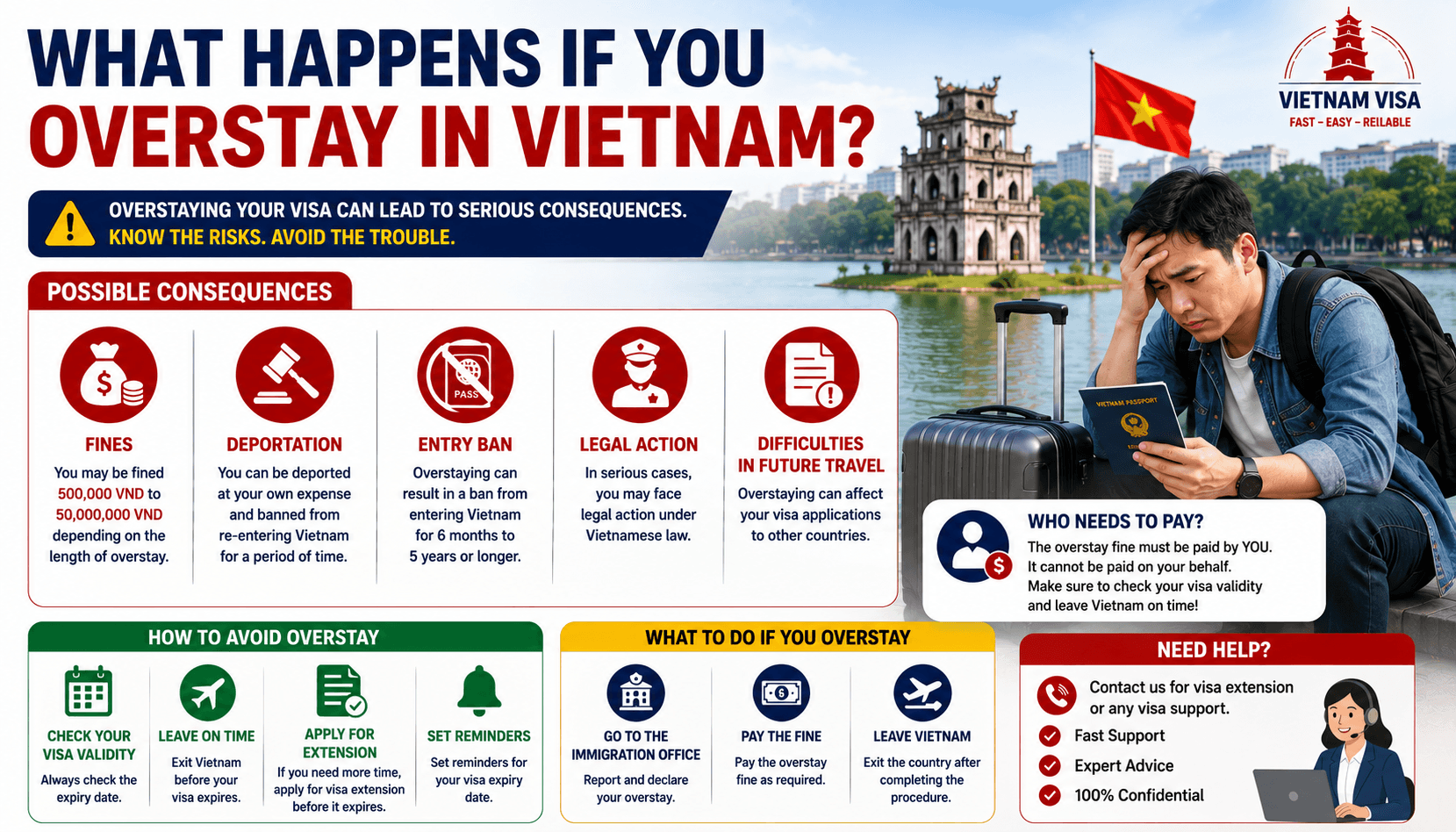
- Penalties for Overstaying in Vietnam
- What If You Overstay by Only One or Two Days?
- What Happens During a Long-Term Overstay?
- What Should You Do If You Discover an Overstay?
- Can You Extend Your Visa Before It Expires?
- How to Prevent Visa Overstays
- Frequently Asked Questions
- Final Thoughts
Vietnam is one of Southeast Asia’s most popular destinations for tourists, business travelers, digital nomads, and expatriates. While most visitors carefully follow their visa conditions, some travelers accidentally remain in the country beyond their authorized stay. Whether caused by a misunderstanding of visa validity dates, unexpected emergencies, or simple oversight, overstaying a visa in Vietnam can lead to penalties and travel complications.
Understanding the consequences of overstaying and knowing what steps to take can help minimize problems and ensure compliance with Vietnamese immigration regulations.
If you need assistance with obtaining a valid visa before traveling, you can start your application through Apply Vietnam Visa Online.
What Is Considered a Visa Overstay in Vietnam?
A visa overstay occurs when a foreign national remains in Vietnam after the expiration date shown on their visa or residence authorization.
Many travelers mistakenly assume that the number of days they have spent in Vietnam determines their legal stay. In reality, immigration authorities focus on the visa validity period stated on the approved visa document. Once that date passes, the visitor is technically overstaying.
Even a one-day overstay may be considered a violation of immigration regulations.
Common Reasons Travelers Overstay
Visa overstays are not always intentional. Some of the most common situations include:
- Misreading visa expiration dates
- Flight cancellations or travel disruptions
- Medical emergencies
- Family emergencies
- Lost passports
- Confusion regarding entry and exit requirements
- Assuming a visa can be extended automatically
While immigration officers may consider individual circumstances, travelers are generally responsible for maintaining valid immigration status throughout their stay.
Penalties for Overstaying in Vietnam
The consequences of overstaying depend on several factors, including:
- Length of the overstay
- Circumstances surrounding the violation
- Previous immigration history
- Cooperation with authorities
Monetary Fines
Most short-term overstays result in administrative fines. The amount can vary depending on the number of days exceeded and current immigration regulations.
The longer the overstay period, the higher the potential penalty.
Exit Procedures
Travelers who overstay may be required to complete additional immigration procedures before departing Vietnam.
This can involve:
- Paying fines
- Obtaining exit authorization
- Visiting immigration offices
- Providing supporting documentation
The process may take additional time compared with a normal departure.
Possible Future Visa Difficulties
A visa overstay may affect future travel plans.
Immigration records can be reviewed during future visa applications, and repeated violations may result in increased scrutiny when applying for:
- Vietnam visas
- Visa extensions
- Temporary residence permits
- Certain immigration benefits
What If You Overstay by Only One or Two Days?
Many travelers become concerned after realizing they have exceeded their visa validity by a very short period.
Although short overstays are generally treated less severely than long-term violations, they are still considered immigration offenses.
Travelers should not assume that a minor overstay will automatically be ignored.
The best approach is to address the situation immediately and follow immigration guidance before departure.
What Happens During a Long-Term Overstay?
Longer overstays typically carry greater consequences.
Potential outcomes may include:
- Higher financial penalties
- Additional administrative procedures
- Mandatory reporting to immigration authorities
- Restrictions on future visa approvals
- Possible deportation in serious cases
The exact outcome depends on individual circumstances and current immigration policies.
What Should You Do If You Discover an Overstay?
If you realize that your visa has already expired, taking action quickly is important.
1. Do Not Ignore the Situation
Waiting until departure day may complicate the process.
The sooner the issue is addressed, the easier it is typically to resolve.
2. Contact Immigration Authorities or Visa Support Services
Professional guidance can help you understand available options and required procedures.
For visa assistance and travel support, visit Expedite Vietnam Visa Official Website
3. Prepare Supporting Documents
Depending on your circumstances, immigration authorities may request:
- Passport
- Current visa information
- Flight itinerary
- Accommodation records
- Medical documentation (if applicable)
- Explanations regarding the overstay
4. Follow Official Instructions
Each case is unique. Immigration officials may provide specific instructions based on the length and circumstances of the overstay.
Can You Extend Your Visa Before It Expires?
The easiest way to avoid overstay problems is to monitor visa validity dates carefully.
Travelers who anticipate needing additional time in Vietnam should explore available visa options before expiration.
Applying early helps reduce the risk of accidental overstays and unnecessary penalties.
How to Prevent Visa Overstays
Simple planning can help travelers avoid immigration complications.
Track Important Dates
Keep a record of:
- Visa approval date
- Entry date
- Visa expiration date
- Planned departure date
Setting calendar reminders several weeks before expiration can be helpful.
Verify Visa Details Carefully
Many travelers mistakenly confuse:
- Visa issuance dates
- Entry dates
- Expiration dates
Review your visa document carefully upon approval.
Leave Extra Time for Departure
Unexpected circumstances can affect travel plans.
Consider allowing flexibility in your itinerary rather than scheduling departure at the very last moment of visa validity.
Apply for a Valid Visa Before Travel
Proper preparation remains the best way to avoid immigration issues.
You can begin the application process here Apply Vietnam Visa Online
Frequently Asked Questions
Can I leave Vietnam if my visa has already expired?
In most cases, yes, but additional immigration procedures and penalties may apply before departure.
Will an overstay affect future visits to Vietnam?
Potentially. Immigration records may be reviewed during future visa applications, particularly for repeated violations.
Is a short overstay treated differently from a long overstay?
Generally, shorter overstays tend to result in less severe consequences than lengthy violations, although both remain immigration offenses.
Final Thoughts
Overstaying a visa in Vietnam can lead to fines, administrative procedures, and possible complications for future travel. While many overstays result from simple mistakes rather than intentional violations, travelers remain responsible for maintaining valid immigration status throughout their stay.
The best strategy is prevention: carefully track visa validity dates, verify travel plans, and address any immigration concerns before your visa expires. By planning ahead and taking prompt action when issues arise, travelers can enjoy a smoother and more stress-free experience in Vietnam.
For visa support, travel guidance, and application assistance, visit Expedite Vietnam Visa
- Categories:
- Vietnam E-Visa Infomation

Over the past 23 years in the travel service industry, the growth and success of TRANSOCEAN have stemmed not only from the dedication of our well-trained, enthusiastic, and customer-oriented staff, but also from the exceptional leadership of our Founder and CEO, Mr. STANLEY HO. With more than 20 years of experience in the travel and tourism sector, Mr. STANLEY HO possesses profound knowledge of the market, customer behavior, and modern travel trends. His strategic vision has guided the company toward sustainable growth while maintaining a strong commitment to service quality.