
What Is the Local Currency Exchange Rate in Vietnam?
Latest update: Jun 15th, 2026
Table of Contents
- What Is the Official Currency of Vietnam?
- How Does the Exchange Rate Work?
- Where Can You Check Current Exchange Rates?
- Best Places to Exchange Currency in Vietnam
- Factors That Affect Exchange Rates
- Tips for Getting the Best Exchange Rate
- Common Mistakes Travelers Make
- Should You Bring Cash or Use Cards?
- Frequently Asked Questions
- Final Thoughts
One of the most common questions travelers ask before visiting Vietnam is: "What is the local currency exchange rate?" Understanding exchange rates can help you budget effectively, avoid unnecessary fees, and get the best value for your money during your trip.
Vietnam's official currency is the Vietnamese Dong (VND). Whether you're exchanging cash, withdrawing money from an ATM, or making purchases with a credit card, knowing how exchange rates work can help you manage your travel expenses more efficiently.
What Is the Official Currency of Vietnam?
The official currency used throughout Vietnam is the Vietnamese Dong (VND).
You'll commonly see prices displayed as:
- 10,000 VND
- 50,000 VND
- 100,000 VND
- 500,000 VND
Because the Vietnamese Dong has a relatively high numerical value compared to some foreign currencies, first-time visitors may initially find the denominations confusing.
Taking some time to familiarize yourself with the currency before arrival can make transactions much easier.
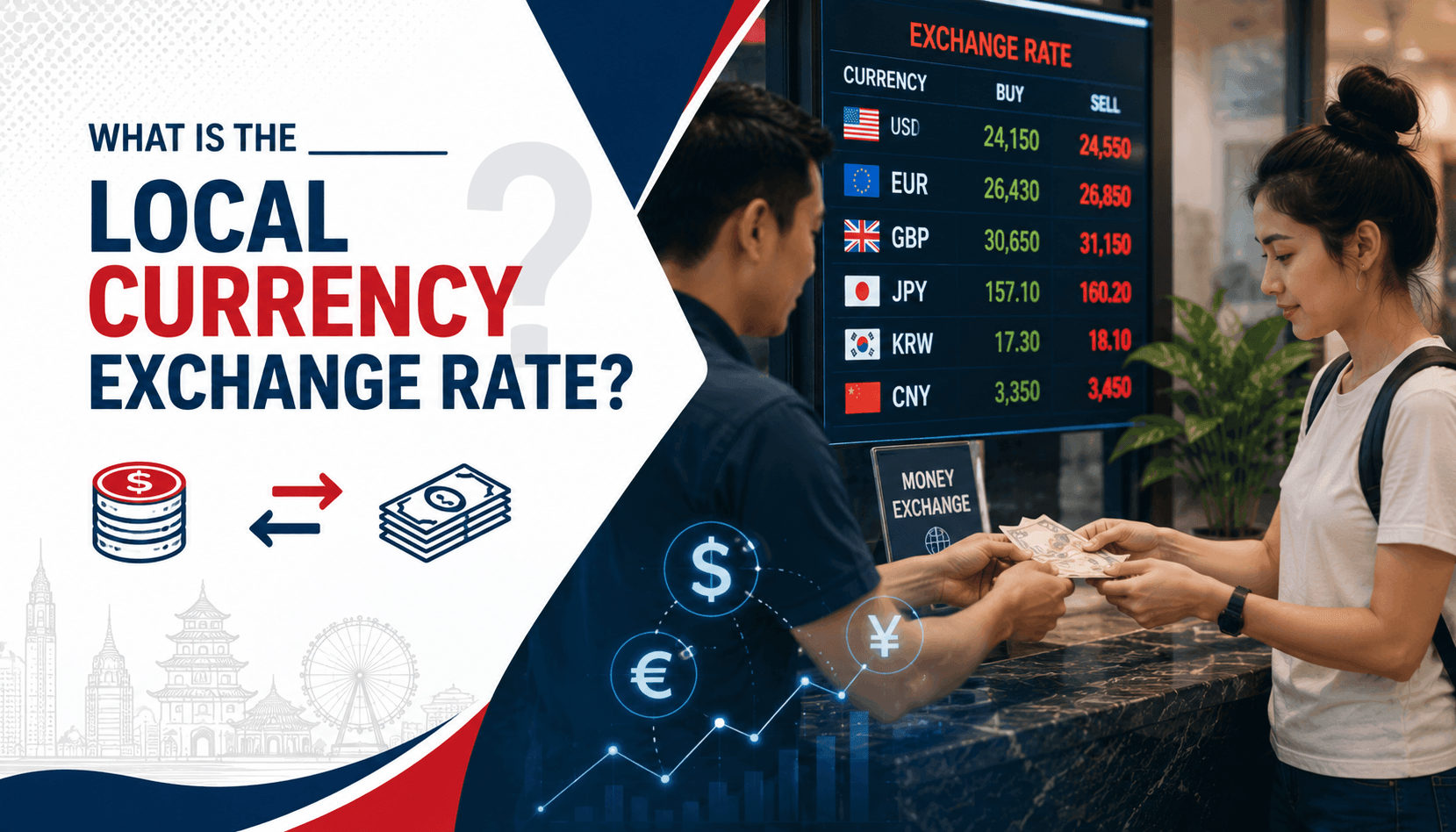
How Does the Exchange Rate Work?
An exchange rate represents how much one currency is worth compared to another.
For example:
- 1 US Dollar (USD) may equal a certain amount of Vietnamese Dong.
- 1 Euro (EUR) may convert to a different amount of Vietnamese Dong.
- 1 British Pound (GBP) will have its own exchange rate.
Exchange rates fluctuate daily due to market conditions, economic factors, and international currency movements.
As a result, the exact rate available today may differ from the rate available next week or next month.
Where Can You Check Current Exchange Rates?
Travelers can verify current exchange rates through:
- Banks
- Currency exchange counters
- Financial websites
- Mobile banking applications
- International payment providers
Checking rates before exchanging money allows you to compare options and obtain better value.
Best Places to Exchange Currency in Vietnam
Several reliable options are available for exchanging foreign currency.
Banks
Banks are generally considered one of the safest places to exchange money.
Benefits include:
- Transparent rates
- Professional service
- Secure transactions
- Official receipts
Licensed Currency Exchange Counters
Authorized exchange counters can be found in:
- Airports
- Shopping centers
- Tourist districts
These locations often provide convenient access to Vietnamese Dong.
ATMs
Many travelers prefer withdrawing cash directly from ATMs.
Advantages include:
- Easy access to local currency
- Competitive bank exchange rates
- Reduced need to carry large amounts of cash
However, ATM fees may apply depending on your bank.
Factors That Affect Exchange Rates
Several factors can influence the exchange rate you receive.
Market Fluctuations
Currency values change constantly based on global financial markets.
Service Fees
Banks and exchange providers may charge:
- Transaction fees
- Service fees
- Currency conversion fees
Exchange Location
Rates at airports may differ from those available in city centers.
For this reason, many travelers compare multiple providers before exchanging large amounts of money.
Tips for Getting the Best Exchange Rate
To maximize the value of your money:
- Compare rates from different providers
- Exchange only through authorized locations
- Avoid unofficial money changers
- Monitor current exchange trends
- Understand any fees before completing a transaction
A little preparation can help you save money throughout your trip.
Common Mistakes Travelers Make
Many visitors lose money by:
- Exchanging currency at the first available location
- Ignoring transaction fees
- Failing to compare rates
- Carrying excessive amounts of cash
- Using unlicensed exchange services
Being informed helps you avoid these common problems.
Should You Bring Cash or Use Cards?
A combination of both is usually the best approach.
Credit cards are commonly accepted at:
- Hotels
- Shopping malls
- International restaurants
- Airports
Cash remains useful for:
- Street food vendors
- Local markets
- Small businesses
- Rural destinations
Having both payment methods provides flexibility throughout your trip.
Frequently Asked Questions
Does the Exchange Rate Change Daily?
Yes. Currency exchange rates can fluctuate every day depending on market conditions.
Are Airport Exchange Rates Good?
Airport exchanges are convenient but may not always offer the most competitive rates.
Is It Better to Exchange Money Before Arrival?
Many travelers exchange a small amount before departure and obtain additional Vietnamese Dong after arriving in Vietnam.
Can I Use Foreign Currency in Vietnam?
Most transactions are conducted in Vietnamese Dong, making local currency the preferred option.
Final Thoughts
Understanding the local currency exchange rate in Vietnam is an important part of travel planning. Exchange rates fluctuate regularly, so it's always a good idea to check current rates before exchanging money or making large purchases.
By using reputable banks, licensed exchange counters, and trusted ATMs, travelers can obtain Vietnamese Dong safely and efficiently. Combining cash with credit card payments will provide the greatest convenience while exploring Vietnam's cities, cultural attractions, and beautiful landscapes. With proper preparation, managing your money in Vietnam can be simple, secure, and cost-effective.
- Categories:
- Vietnam Travel Tips

Over the past 23 years in the travel service industry, the growth and success of TRANSOCEAN have stemmed not only from the dedication of our well-trained, enthusiastic, and customer-oriented staff, but also from the exceptional leadership of our Founder and CEO, Mr. STANLEY HO. With more than 20 years of experience in the travel and tourism sector, Mr. STANLEY HO possesses profound knowledge of the market, customer behavior, and modern travel trends. His strategic vision has guided the company toward sustainable growth while maintaining a strong commitment to service quality.