
What Should I Prepare Before Arriving in Vietnam? A Complete Travel Checklist
Latest update: Jun 10th, 2026
Table of Contents
- 1. Check Your Passport Validity
- 2. Obtain the Correct Vietnam Visa
- 3. Print Important Travel Documents
- 4. Confirm Your Accommodation Details
- 5. Prepare Your Return or Onward Ticket
- 6. Arrange Airport Transportation
- 7. Exchange Currency or Prepare Payment Methods
- 8. Purchase Travel Insurance
- 9. Download Useful Travel Apps
- 10. Prepare a Local SIM Card Plan
- 11. Review Vietnam Customs Regulations
- 12. Organize Emergency Contact Information
- Common Mistakes Travelers Make
- Benefits of Proper Preparation
- Final Thoughts
Planning a trip to Vietnam is exciting, whether you are visiting for tourism, business, family reunions, or long-term travel. Vietnam offers stunning landscapes, vibrant cities, rich culture, delicious cuisine, and countless opportunities for adventure. However, proper preparation before departure is essential to ensure a smooth arrival and avoid unnecessary travel complications.
Many travelers focus only on booking flights and hotels but overlook important details such as visa requirements, travel documents, airport procedures, and local transportation. Taking the time to prepare before arriving in Vietnam can save you from stress, delays, and unexpected expenses.
In this guide, we cover everything you should prepare before arriving in Vietnam.
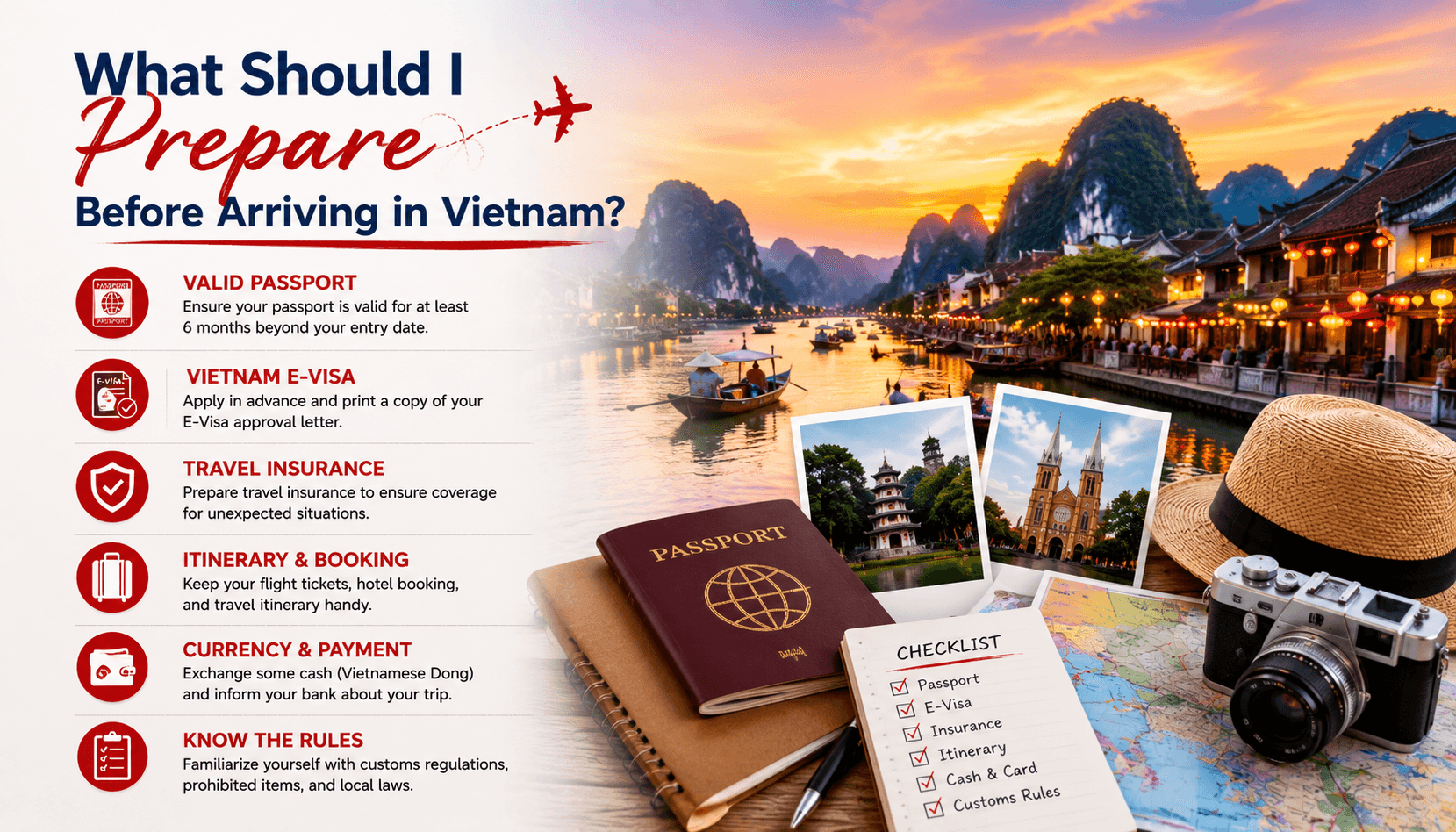
1. Check Your Passport Validity
Your passport is the most important travel document you will carry.
Before traveling, ensure that your passport:
- Is valid for your entire trip
- Is in good physical condition
- Has no damaged pages
- Contains accurate personal information
Immigration officers may inspect passports carefully upon arrival. A damaged or expired passport could lead to travel disruptions or denied entry.
It is advisable to review your passport well before departure so that any issues can be resolved in advance.
2. Obtain the Correct Vietnam Visa
Most international travelers need an appropriate visa or travel authorization before entering Vietnam.
Before your trip, verify:
- Visa eligibility
- Visa validity dates
- Entry and exit dates
- Passport information on the visa
Many travelers use the Vietnam E-Visa system because it allows applications to be completed online before departure.
Always double-check your visa information to ensure it matches your passport exactly.
3. Print Important Travel Documents
Although digital copies are convenient, printed documents can be extremely helpful when traveling internationally.
Prepare printed copies of:
- Passport information page
- Vietnam E-Visa approval
- Flight itinerary
- Hotel reservations
- Travel insurance documents
- Emergency contact information
Keeping both digital and printed versions provides additional security if internet access becomes unavailable.
4. Confirm Your Accommodation Details
Immigration officers occasionally ask travelers where they will stay during their visit.
Before arriving in Vietnam, prepare:
- Hotel name
- Hotel address
- Reservation confirmation
- Contact telephone number
Having accommodation information readily available can help answer immigration questions quickly and confidently.
5. Prepare Your Return or Onward Ticket
While not always requested, proof of onward travel may be useful during airline check-in or immigration procedures.
Examples include:
- Return flight tickets
- Departure reservations
- Travel itineraries to another destination
Keeping these documents accessible can help demonstrate your planned departure from Vietnam.
6. Arrange Airport Transportation
After a long international flight, many travelers prefer having transportation organized before arrival.
Common options include:
- Hotel airport transfers
- Airport taxis
- Private transportation services
- Ride-hailing applications
Planning transportation in advance can reduce stress and help avoid confusion at the airport.
7. Exchange Currency or Prepare Payment Methods
Vietnam's official currency is the Vietnamese Dong (VND).
Before arriving, consider how you will pay for:
- Transportation
- Meals
- SIM cards
- Small purchases
Many travelers prepare by:
- Bringing international bank cards
- Carrying a small amount of local currency
- Using airport currency exchange services
- Checking international ATM access
Having multiple payment options provides flexibility during your trip.
8. Purchase Travel Insurance
Travel insurance is often overlooked but can provide valuable protection.
Coverage may assist with:
- Medical emergencies
- Flight delays
- Lost luggage
- Travel interruptions
- Unexpected expenses
Review your policy carefully to understand what is covered before departure.
9. Download Useful Travel Apps
Mobile applications can make your trip significantly easier.
Helpful apps may include:
- Maps and navigation tools
- Translation applications
- Transportation services
- Currency conversion tools
- Airline applications
Downloading these apps before departure ensures access even if internet service is limited after arrival.
10. Prepare a Local SIM Card Plan
Reliable internet access can be extremely helpful when arriving in Vietnam.
Many travelers purchase:
- Airport SIM cards
- Tourist SIM packages
- International roaming plans
Internet access allows you to:
- Contact hotels
- Use navigation apps
- Book transportation
- Communicate with family and friends
Planning connectivity in advance can save valuable time upon arrival.
11. Review Vietnam Customs Regulations
Before packing, familiarize yourself with customs requirements.
Pay particular attention to:
- Currency declaration rules
- Restricted items
- Prohibited goods
- Medication regulations
Understanding customs requirements can help prevent delays during airport inspections.
12. Organize Emergency Contact Information
Unexpected situations can occur during travel.
Prepare a list that includes:
- Family contacts
- Hotel contacts
- Airline information
- Travel insurance provider
- Local emergency numbers
Store the information both digitally and on paper.
Common Mistakes Travelers Make
Many arrival problems occur because of simple oversights.
Common mistakes include:
Incorrect Visa Information
Always verify passport numbers, names, and travel dates.
Forgetting Printed Documents
Technology can fail, so physical copies remain useful.
Booking Flights Before Checking Visa Dates
Ensure your visa validity period matches your travel itinerary.
Not Preparing Local Currency
Small expenses immediately after arrival often require cash.
Ignoring Passport Expiration Dates
A passport issue can disrupt an entire trip.
Benefits of Proper Preparation
Travelers who prepare thoroughly often enjoy:
- Faster immigration clearance
- Reduced airport stress
- Fewer documentation problems
- Easier transportation arrangements
- Greater peace of mind
A few hours of preparation before departure can prevent significant travel difficulties later.
Final Thoughts
Preparing properly before arriving in Vietnam is one of the best ways to ensure a smooth and enjoyable travel experience. By verifying your passport and visa, organizing travel documents, arranging transportation, preparing payment methods, and understanding arrival procedures, you can avoid many common travel problems.
Whether you are visiting Vietnam for business, tourism, or family reasons, careful preparation helps reduce stress and allows you to focus on enjoying your trip from the moment you land. A well-organized traveler is often a confident traveler, and that confidence begins long before arriving at the airport.
- Categories:
- Vietnam E-Visa Infomation

Over the past 23 years in the travel service industry, the growth and success of TRANSOCEAN have stemmed not only from the dedication of our well-trained, enthusiastic, and customer-oriented staff, but also from the exceptional leadership of our Founder and CEO, Mr. STANLEY HO. With more than 20 years of experience in the travel and tourism sector, Mr. STANLEY HO possesses profound knowledge of the market, customer behavior, and modern travel trends. His strategic vision has guided the company toward sustainable growth while maintaining a strong commitment to service quality.