
What to Do in a Medical Emergency While Traveling in Vietnam
Latest update: Jun 18th, 2026
Table of Contents
- Stay Calm and Assess the Situation
- Know When an Emergency Requires Immediate Action
- Contact Emergency Medical Services
- Reach the Nearest Suitable Medical Facility
- Notify Your Travel Insurance Provider
- Keep Important Documents Accessible
- Managing Language Challenges
- Inform Family or Friends
- Follow Medical Instructions Carefully
- Preparing Before an Emergency Happens
- Final Thoughts
A dream vacation can change unexpectedly in a matter of seconds. A sudden illness, an accident during a sightseeing tour, severe food poisoning, or an unexpected allergic reaction can quickly turn an enjoyable trip into a stressful situation. Knowing what to do in a medical emergency before it happens can help you respond calmly, get appropriate care, and protect your health while traveling in Vietnam.
Although medical emergencies are relatively uncommon for most visitors, being prepared is one of the smartest travel decisions you can make.
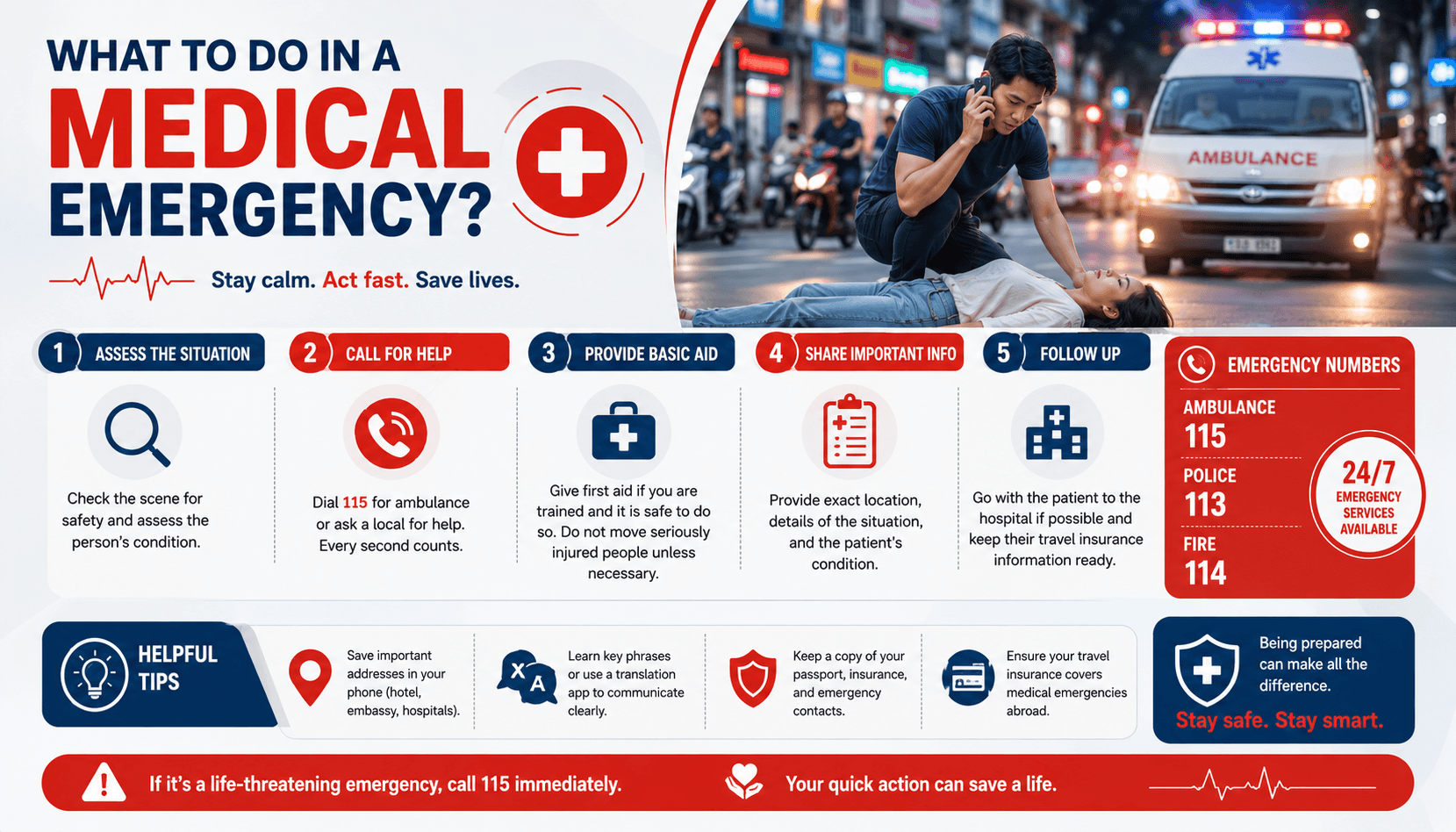
Stay Calm and Assess the Situation
The first and most important step during a medical emergency is to remain as calm as possible.
Panic can make decision-making more difficult and may worsen the situation. Take a few moments to evaluate:
- What symptoms are occurring?
- Is the condition life-threatening?
- Does the person require immediate medical attention?
- Is emergency transportation needed?
A clear assessment helps determine the next course of action.
Know When an Emergency Requires Immediate Action
Not every illness requires emergency treatment, but certain symptoms should never be ignored.
Seek urgent medical assistance if someone experiences:
- Difficulty breathing
- Severe chest pain
- Loss of consciousness
- Serious bleeding
- Head injuries
- Sudden weakness or paralysis
- Severe allergic reactions
In these situations, time is critical.
Contact Emergency Medical Services
Vietnam's major cities have emergency medical services and hospitals capable of handling urgent situations.
If you are unable to travel safely to a hospital, seek emergency assistance immediately.
Many hotels, tour operators, and transportation providers can help contact local emergency services or arrange urgent transportation.
If language barriers exist, asking a local resident or hotel staff member for assistance can save valuable time.
Reach the Nearest Suitable Medical Facility
Depending on the severity of the situation, you may need to visit:
- An emergency department
- A private hospital
- An international clinic
- A local medical center
In large cities such as Hanoi, Ho Chi Minh City, and Da Nang, travelers can usually find facilities familiar with treating international patients.
When possible, choose a medical provider experienced in serving foreign visitors.
Notify Your Travel Insurance Provider
Many travelers overlook this step during an emergency.
If you have travel insurance, contact your provider as soon as practical. Insurance companies often offer:
- 24-hour emergency assistance
- Medical referrals
- Hospital recommendations
- Translation support
- Payment guidance
Early communication can simplify both treatment and reimbursement procedures.
Keep Important Documents Accessible
During a medical emergency, healthcare providers may request certain information.
Try to have access to:
- Passport
- Travel insurance details
- Emergency contacts
- Current medications
- Known allergies
Keeping digital copies stored securely on your phone can be extremely helpful.
Managing Language Challenges
Communication can sometimes become an obstacle when seeking medical care abroad.
To improve understanding:
- Use translation applications
- Show written descriptions of symptoms
- Carry a list of medications
- Ask hotel staff for interpretation assistance
Many international clinics in Vietnam also employ English-speaking medical professionals.
Inform Family or Friends
If the situation is serious, contact trusted family members or friends as soon as possible.
Provide information such as:
- Your location
- Medical facility name
- Current condition
- Contact details
Keeping others informed ensures additional support if needed.
Follow Medical Instructions Carefully
Once treatment begins, carefully follow all medical advice.
This may include:
- Taking prescribed medication
- Attending follow-up appointments
- Resting before continuing travel
- Monitoring symptoms
Ignoring medical recommendations can prolong recovery and potentially worsen the condition.
Preparing Before an Emergency Happens
The best emergency plan starts before your trip begins.
Travelers should consider:
- Purchasing comprehensive travel insurance
- Researching nearby hospitals
- Saving emergency contact numbers
- Packing essential medications
- Learning basic health-related phrases
Preparation can dramatically reduce stress during an unexpected situation.
Final Thoughts
Understanding what to do in a medical emergency can make a significant difference when traveling in Vietnam or anywhere else in the world. While most trips are completed without major health issues, unexpected situations can happen to anyone. Staying calm, seeking appropriate medical care, contacting your insurance provider, and keeping essential information accessible are key steps in managing an emergency effectively.
With proper preparation and a clear response plan, travelers can feel more confident knowing they are ready to handle unforeseen medical situations and continue enjoying their journey safely.
- Categories:
- Vietnam Travel Tips

Over the past 23 years in the travel service industry, the growth and success of TRANSOCEAN have stemmed not only from the dedication of our well-trained, enthusiastic, and customer-oriented staff, but also from the exceptional leadership of our Founder and CEO, Mr. STANLEY HO. With more than 20 years of experience in the travel and tourism sector, Mr. STANLEY HO possesses profound knowledge of the market, customer behavior, and modern travel trends. His strategic vision has guided the company toward sustainable growth while maintaining a strong commitment to service quality.