
Things Tourists Should Not Do in Vietnam: Essential Travel Etiquette and Mistakes to Avoid
Latest update: Jun 18th, 2026
Table of Contents
- Don't Disrespect Religious Sites
- Don't Ignore Local Traffic Conditions
- Don't Carry Large Amounts of Cash
- Don't Assume Bargaining Is Appropriate Everywhere
- Don't Take Photos Without Permission
- Don't Forget to Respect Local Customs
- Don't Purchase Illegal or Restricted Items
- Don't Underestimate the Climate
- Don't Neglect Travel Documents
- Don't Accept Every Offer from Strangers
- Don't Forget Basic Cultural Courtesy
- Final Thoughts
Vietnam is a captivating destination filled with breathtaking landscapes, vibrant cities, fascinating history, and world-renowned cuisine. Most visitors leave with unforgettable memories and positive experiences. However, like any country, Vietnam has cultural norms, social expectations, and local regulations that travelers should understand. Knowing the things tourists should not do in Vietnam can help you avoid misunderstandings, show respect for local customs, and enjoy a smoother trip.
Fortunately, most mistakes are easy to avoid with a little awareness and preparation.
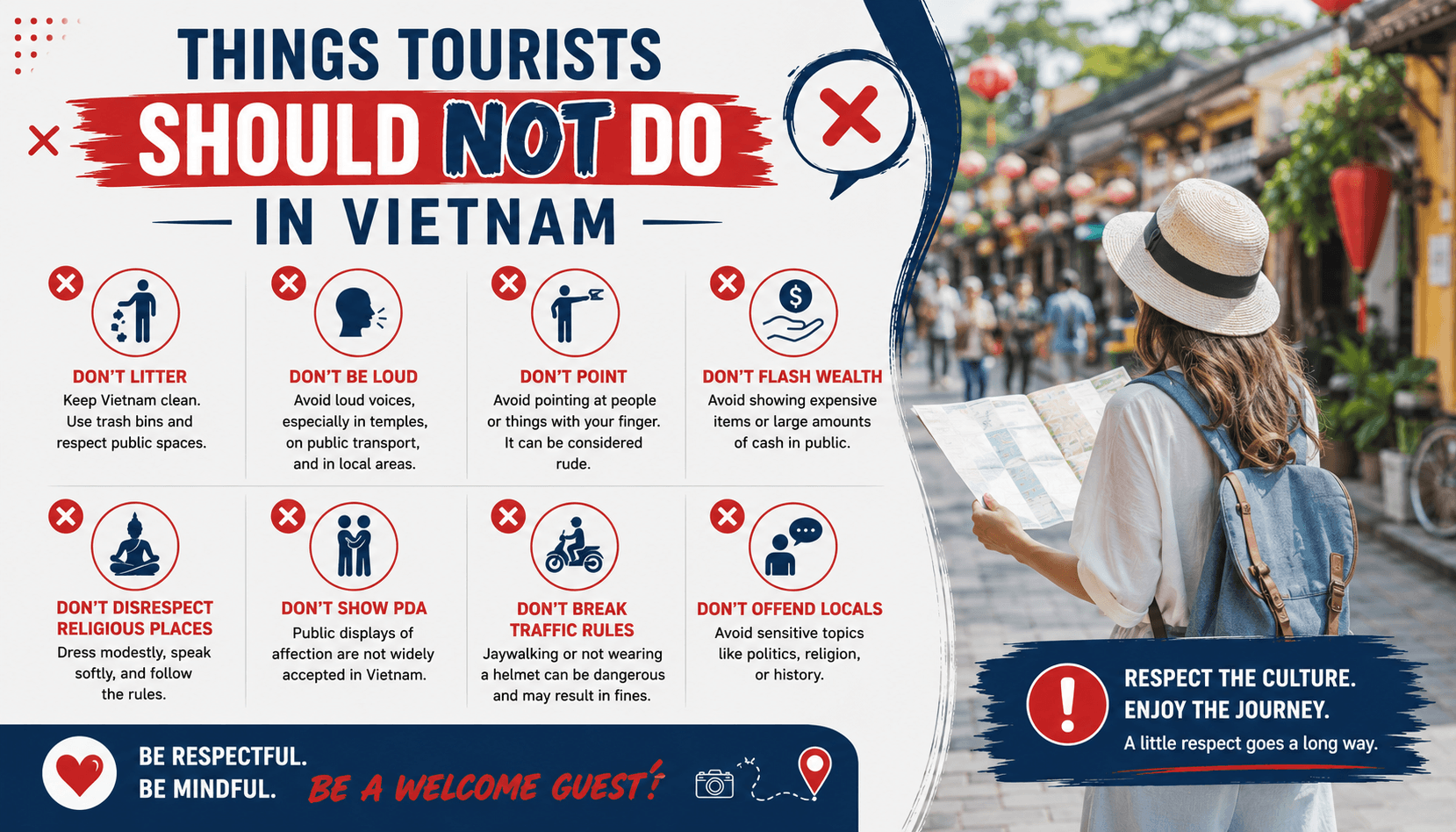
Don't Disrespect Religious Sites
Vietnam is home to countless temples, pagodas, churches, and spiritual landmarks that hold deep cultural significance.
When visiting religious sites, avoid:
- Wearing overly revealing clothing
- Speaking loudly
- Touching sacred objects without permission
- Interrupting religious ceremonies
Visitors who show respect for these places are often welcomed warmly by local communities.
Don't Ignore Local Traffic Conditions
One of the biggest surprises for first-time visitors is Vietnam's busy traffic.
A common mistake tourists make is:
- Crossing roads suddenly
- Stopping in the middle of traffic flow
- Assuming vehicles will stop immediately
Instead, cross carefully and maintain a steady pace. Local drivers are generally accustomed to navigating around pedestrians.
Understanding local traffic behavior can greatly improve your safety.
Don't Carry Large Amounts of Cash
Vietnam remains a cash-friendly destination, but carrying excessive cash is unnecessary and may increase risk.
Avoid:
- Displaying large amounts of money
- Keeping all cash in one location
- Leaving valuables unattended
Using secure payment methods and carrying only what you need for the day is usually the best approach.
Don't Assume Bargaining Is Appropriate Everywhere
Negotiation is common in some traditional markets and souvenir shops, but not every business expects customers to bargain.
Avoid aggressively negotiating in:
- Supermarkets
- Shopping malls
- Restaurants
- Established retail stores
Understanding where bargaining is acceptable demonstrates cultural awareness and respect.
Don't Take Photos Without Permission
Vietnam offers countless opportunities for photography, from colorful markets to scenic landscapes.
However, tourists should avoid:
- Photographing people without consent
- Interrupting religious activities for photos
- Invading personal privacy
A simple request often results in a more positive interaction and sometimes even a friendly conversation.
Don't Forget to Respect Local Customs
Vietnamese culture places great importance on politeness and social harmony.
Tourists should avoid:
- Raising their voice unnecessarily
- Public confrontations
- Disrespectful gestures
- Impatient behavior
Maintaining a calm and courteous attitude is generally appreciated throughout the country.
Don't Purchase Illegal or Restricted Items
Travelers should be aware of local laws regarding prohibited goods.
Avoid purchasing:
- Illegal wildlife products
- Counterfeit merchandise
- Restricted cultural artifacts
- Protected natural items
Violating regulations can lead to fines or legal complications.
Don't Underestimate the Climate
Vietnam's weather varies significantly by season and region.
A common travel mistake is:
- Ignoring hydration needs
- Spending excessive time in direct sunlight
- Failing to prepare for sudden rain
Packing appropriately and monitoring weather forecasts can help you stay comfortable during your trip.
Don't Neglect Travel Documents
Your passport, visa, and travel information are among your most important possessions.
Avoid:
- Leaving documents unsecured
- Failing to keep digital copies
- Traveling without identification when required
Preparing backup copies can save considerable time if problems arise.
Don't Accept Every Offer from Strangers
Vietnamese people are generally friendly and welcoming, but tourists should still exercise common sense.
Be cautious of:
- Unofficial tour offers
- Unexpected transportation services
- Deals that seem unusually cheap
- Requests for immediate payment
Taking a few moments to verify information can help prevent scams and misunderstandings.
Don't Forget Basic Cultural Courtesy
Simple gestures often make a big difference.
Visitors should remember to:
- Smile when greeting people
- Be patient in crowded areas
- Show appreciation for hospitality
- Learn a few basic Vietnamese phrases
These small efforts often lead to more meaningful travel experiences.
Final Thoughts
Understanding the things tourists should not do in Vietnam is not about following strict rules—it's about traveling respectfully and responsibly. Vietnam is a welcoming country where visitors are encouraged to explore, learn, and engage with local culture. By respecting traditions, staying aware of your surroundings, following local laws, and practicing common courtesy, you can avoid unnecessary problems and enjoy a richer travel experience.
The more thoughtfully you travel, the more rewarding your time in Vietnam will be. With an open mind and respectful attitude, you'll discover why millions of visitors return to Vietnam again and again.
- Categories:
- Vietnam Travel Tips

Over the past 23 years in the travel service industry, the growth and success of TRANSOCEAN have stemmed not only from the dedication of our well-trained, enthusiastic, and customer-oriented staff, but also from the exceptional leadership of our Founder and CEO, Mr. STANLEY HO. With more than 20 years of experience in the travel and tourism sector, Mr. STANLEY HO possesses profound knowledge of the market, customer behavior, and modern travel trends. His strategic vision has guided the company toward sustainable growth while maintaining a strong commitment to service quality.