
Vietnamese Customs and Etiquette: A Traveler's Guide to Respectful Cultural Experiences
Latest update: Jun 18th, 2026
Table of Contents
One of the most rewarding aspects of visiting Vietnam is experiencing its rich culture and warm hospitality. Beyond famous attractions, delicious cuisine, and stunning landscapes, travelers often remember the kindness and friendliness of local people. Understanding Vietnamese customs and etiquette can help visitors build positive interactions, avoid cultural misunderstandings, and enjoy a more meaningful travel experience.
While Vietnamese people are generally welcoming and forgiving of cultural differences, making an effort to respect local traditions is always appreciated.
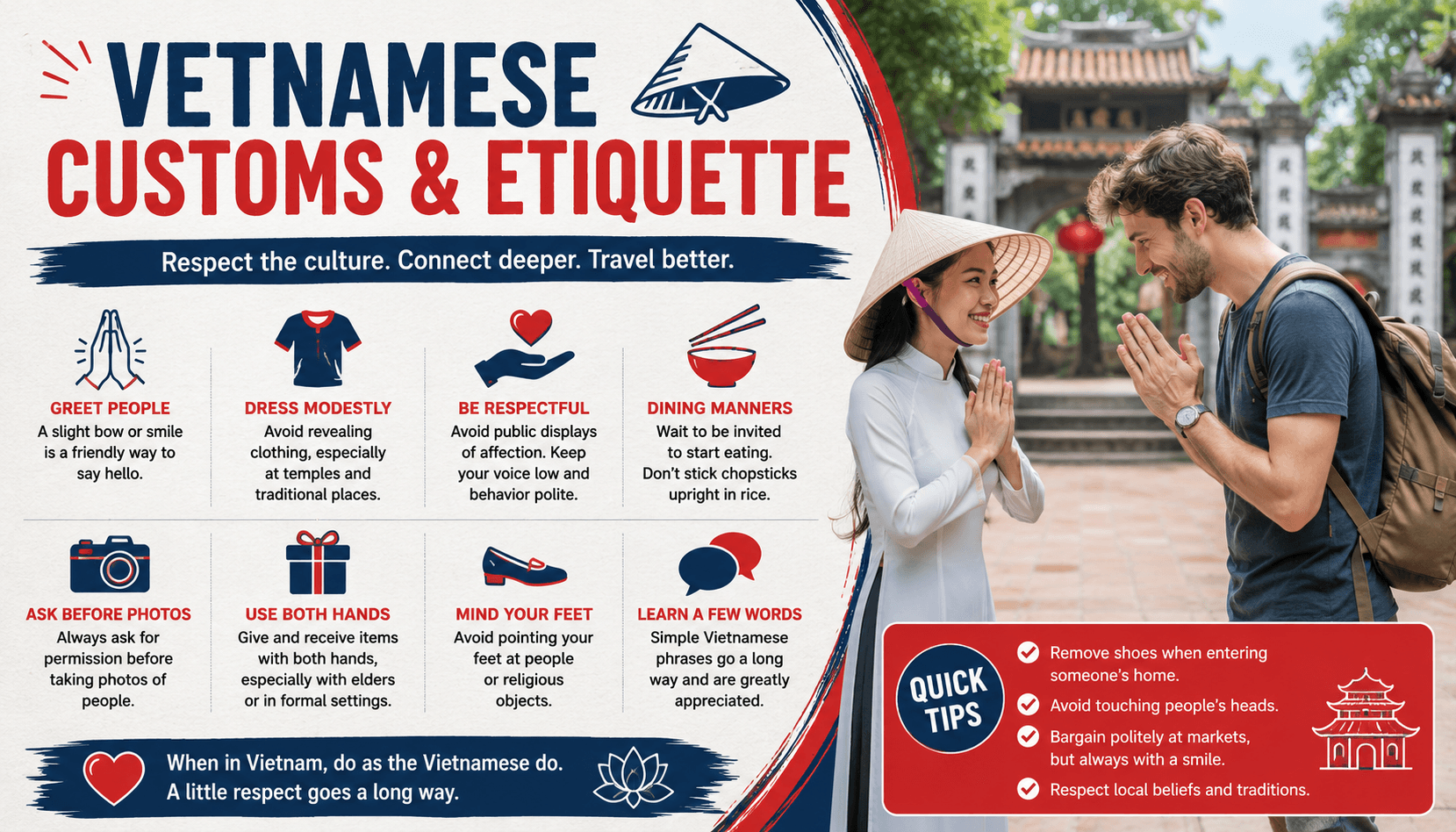
Why Cultural Awareness Matters
Travel is not only about seeing new places—it's also about connecting with local communities. Learning basic customs demonstrates respect and can help travelers feel more comfortable in unfamiliar situations.
In Vietnam, values such as politeness, humility, family, and community remain important parts of daily life. Understanding these principles can make communication smoother and more enjoyable.
Greetings and First Impressions
Vietnamese greetings are usually friendly but often more reserved than in some Western cultures.
When meeting someone for the first time:
- A smile is highly appreciated
- A light handshake is common in professional settings
- Respectful behavior creates a positive impression
Locals may not always engage in extensive physical contact, especially when meeting strangers.
A friendly attitude often goes a long way in Vietnam.
Respect for Elders
One of the most important aspects of Vietnamese culture is respect for older people.
You may notice that:
- Elders are greeted first
- Older family members are treated with special respect
- Younger people often use polite language when speaking to seniors
As a visitor, showing courtesy toward older individuals is considered good manners and reflects cultural awareness.
Dress Appropriately at Religious Sites
Vietnam is home to many temples, pagodas, and places of worship.
When visiting these sites:
- Wear modest clothing
- Cover shoulders when possible
- Avoid overly revealing outfits
- Remove hats when appropriate
Respectful attire demonstrates appreciation for local religious traditions and sacred spaces.
House Rules and Visiting Local Homes
If you are invited into a Vietnamese home, you may notice certain customs that differ from those in your own country.
For example:
- Shoes are often removed before entering
- Small gifts are appreciated
- Polite conversation is valued
Being attentive to the host's behavior can provide useful guidance regarding local expectations.
Dining Etiquette in Vietnam
Food plays an important role in Vietnamese culture and social life.
When sharing a meal:
- Wait for others to begin eating
- Use serving utensils when provided
- Show appreciation for the meal
Family-style dining is common, with multiple dishes shared among everyone at the table.
Trying local foods is often seen as a sign of respect and openness to the culture.
Public Behavior and Courtesy
Vietnamese society generally values harmony and consideration for others.
Travelers should try to:
- Speak politely
- Avoid aggressive behavior
- Remain patient in crowded situations
- Respect personal and public spaces
Calm and respectful communication is usually more effective than confrontation.
Photography Etiquette
Vietnam offers countless opportunities for beautiful photographs. However, travelers should remember that not everyone wishes to be photographed.
Before taking pictures:
- Ask permission when possible
- Respect privacy
- Be especially considerate around religious ceremonies
A simple request often leads to a more positive interaction.
Bargaining in Markets
In many traditional markets, bargaining is a normal part of shopping.
Successful bargaining should remain:
- Friendly
- Respectful
- Good-natured
The goal is often to reach a fair price rather than engage in intense negotiation.
Smiling and maintaining a positive attitude usually creates the best experience for both parties.
Learning a Few Vietnamese Words
Even basic Vietnamese phrases can make a strong impression.
Simple expressions such as greetings, thank you, and excuse me often generate warm responses from local people.
Making an effort to communicate in the local language demonstrates respect and interest in the culture.
Final Thoughts
Understanding Vietnamese customs and etiquette can greatly enhance your travel experience. While visitors are not expected to know every cultural tradition, showing respect, patience, and curiosity helps create positive connections with local communities.
Vietnam is a country that values hospitality, kindness, and mutual respect. By embracing local customs—whether through polite greetings, appropriate dress, respectful behavior, or an openness to cultural experiences—you can gain a deeper appreciation of the country's traditions and leave with unforgettable memories beyond the typical tourist attractions.
- Categories:
- Vietnam Travel Tips

Over the past 23 years in the travel service industry, the growth and success of TRANSOCEAN have stemmed not only from the dedication of our well-trained, enthusiastic, and customer-oriented staff, but also from the exceptional leadership of our Founder and CEO, Mr. STANLEY HO. With more than 20 years of experience in the travel and tourism sector, Mr. STANLEY HO possesses profound knowledge of the market, customer behavior, and modern travel trends. His strategic vision has guided the company toward sustainable growth while maintaining a strong commitment to service quality.