
Vietnam Visa Intended Border Gate of Entry: How to Choose the Correct Checkpoint
Latest update: Sep 23rd, 2026
Table of Contents
- What Does the Intended Border Gate Mean on a Vietnam E-Visa Application?
- How Should Travellers Choose the Correct Border Gate?
- Which Border Gates Can Vietnam E-Visa Holders Use?
- What Happens If the Entry Gate Changes After the Application?
- Do the Entry and Exit Border Gates Have to Be the Same?
- What Border Gate Mistakes Should Applicants Avoid?
- What Should Travellers Do When the Route Changes Close to Departure?
- Why Choose Expedite Vietnam Visa When Your Entry Route Changes?
- Frequently Asked Questions About Vietnam E-Visa Border Gates
The Vietnam visa intended border gate of entry is the international checkpoint where you plan to enter Vietnam, such as an airport, land border or seaport. Applicants should select the checkpoint that matches their current itinerary and make sure the actual arrival point is eligible for Vietnam e-Visa entry.
Expedite Vietnam Visa helps travellers review passport details, entry and exit checkpoints, visa validity and itinerary changes before departure. When travel plans change close to the departure date, the service can also assess faster processing options to help travellers prepare the correct visa documents with less delay.
What Does the Intended Border Gate Mean on a Vietnam E-Visa Application?
The intended border gate identifies the planned immigration checkpoint for entering Vietnam. The border gate is not simply the city or province where the traveller plans to stay.
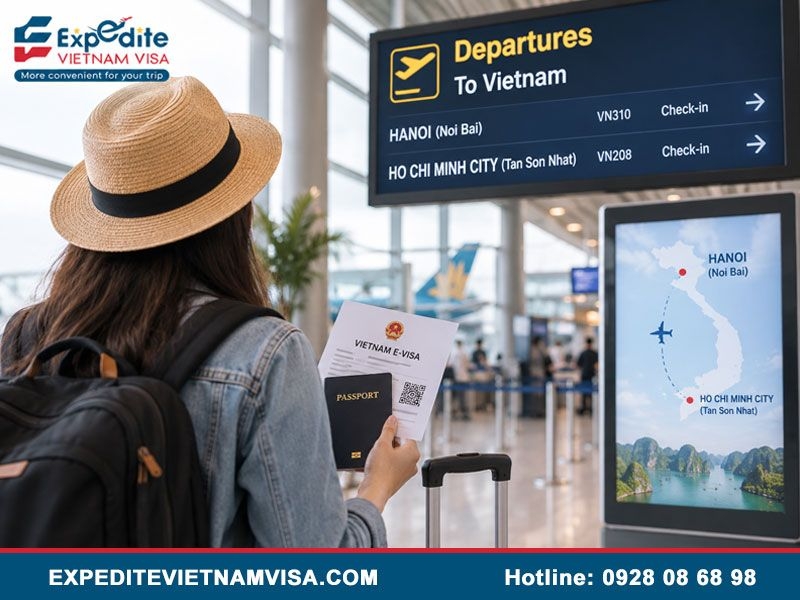
Is the destination city the same as the entry checkpoint?
No. A traveller flying to Ho Chi Minh City would normally identify Tan Son Nhat International Airport as the relevant airport checkpoint. A traveller flying to Hanoi would use Noi Bai International Airport.
Examples include:
Travel destination | Typical entry checkpoint |
Hanoi | Noi Bai International Airport |
Ho Chi Minh City | Tan Son Nhat International Airport |
Da Nang | Da Nang International Airport |
Nha Trang | Cam Ranh International Airport |
Phu Quoc | Phu Quoc International Airport |
Vietnam’s official e-Visa regulations require electronic visas to be used through border gates approved by the Vietnamese Government.
Why does the application request an intended entry point?
The information helps identify the traveller’s expected route into Vietnam. Applicants should therefore use the actual airport, land crossing or seaport shown in the current itinerary rather than selecting the nearest familiar city.
How Should Travellers Choose the Correct Border Gate?
The correct checkpoint depends on the method of transport. Air travellers should use the airport on the ticket, land travellers should identify the official border crossing, and cruise passengers should confirm the immigration seaport used by the vessel.
Which checkpoint should air travellers choose?
Air passengers should match the visa application with the airport shown on the international flight itinerary.
For example, a passenger connecting through another Asian city but landing in Vietnam at Tan Son Nhat should use Tan Son Nhat as the intended Vietnamese entry checkpoint.
Travellers should not select an airport simply because it is close to the hotel or final destination.
How should overland travellers select a border crossing?
Travellers entering from Cambodia, Laos or China should identify the exact official crossing. Common land checkpoints include Moc Bai, Lao Bao, Huu Nghi, Lao Cai and Ha Tien.
A province name and an immigration checkpoint are not interchangeable. Selecting an incorrect land crossing can create unnecessary inconsistency between the application and the actual travel route.
How should cruise travellers identify the seaport?
Cruise itineraries sometimes show a tourism destination rather than the formal immigration checkpoint name. Passengers should confirm the official seaport with the cruise operator before submitting an application.
Travellers planning a voyage can also review the guide to Vietnam visa for cruise ship passengers for details on seaport selection, multiple Vietnam port calls and cruise-specific visa preparation.
Which Border Gates Can Vietnam E-Visa Holders Use?
Vietnam permits e-Visa entry and exit only through designated international checkpoints. Government Resolution 127/NQ-CP established the approved list in 2023, and Resolution 389/NQ-CP dated December 2, 2025 added another 41 international border gates.
Are all international checkpoints automatically eligible?
No. Travellers should not assume that every airport, land crossing or seaport accepting international passengers automatically accepts e-Visa holders.
The current government-approved list is the relevant reference point. Newly added checkpoints may also depend on operational readiness; for example, the 2025 expansion specifies that certain airports become applicable when they are placed into operation.
What types of checkpoints are included?
The approved network covers:
International airports
Land border crossings
International seaports
This wider network gives travellers more route choices, but the actual journey should still be checked against the latest permitted checkpoint list before departure.
What Happens If the Entry Gate Changes After the Application?
A change in flight, cruise route or land itinerary does not automatically mean that the visa itself is invalid. However, travellers should first confirm that the new checkpoint is approved for e-Visa entry and that the issued visa does not contain a restriction affecting the new route.
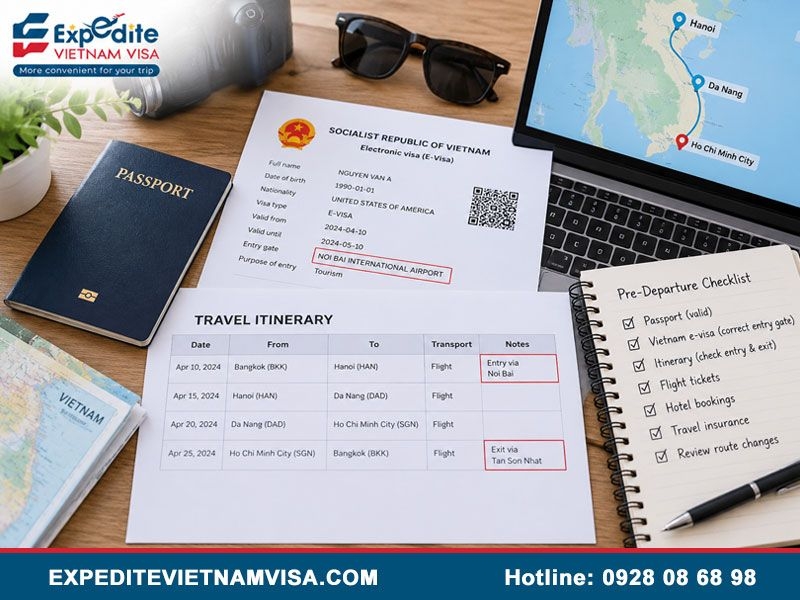
Can travellers simply arrive at a different airport?
A change between major approved airports may be straightforward in practice, but travellers should not treat every route change as automatically risk-free.
The safest approach is to verify:
The new airport is currently approved for e-Visa use.
The passport details remain unchanged.
The visa validity covers the new arrival date.
The entry type remains suitable for the itinerary.
Where guidance is unclear, checking the case before departure is safer than discovering a problem at airline check-in or immigration.
What if the transport type changes completely?
A change from air travel to a land border or seaport deserves more careful review because the immigration route is materially different.
For example, a traveller who originally planned to fly into Da Nang but later decides to enter overland from Cambodia should confirm that the selected land crossing accepts e-Visas and that the current visa can be used for the revised route.
Passengers sometimes assume an arrival counter can solve any mismatch. The guide explaining can you get a Vietnam visa at the airport clarifies why travellers should resolve visa and entry-document questions before boarding rather than depending on arrangements after landing.
Do the Entry and Exit Border Gates Have to Be the Same?
No. Travellers can enter and leave Vietnam through different eligible checkpoints when the visa type and itinerary permit the journey.
Can you enter through Hanoi and depart from Ho Chi Minh City?
Yes, an itinerary may involve entering through Noi Bai International Airport and later departing through Tan Son Nhat International Airport.
The important points are that both checkpoints are eligible and the visa validity covers the complete stay.
Can you enter by air and leave by land?
A mixed route can also be possible. For example, a traveller may arrive by air and continue overland to Cambodia through an approved land border.
The traveller should confirm that the planned exit point is included in the permitted e-Visa checkpoint network.
Does multiple entry mean every checkpoint can be used?
No. Multiple entry describes how many times the traveller may enter Vietnam during the visa validity period.
Checkpoint eligibility is a separate issue. Every international entry or exit should still use a border gate allowed for the traveller’s e-Visa.
What Border Gate Mistakes Should Applicants Avoid?
Most border-gate problems come from choosing a destination rather than an immigration checkpoint, using an outdated port name or failing to update travel planning after the itinerary changes.
What are the most common application mistakes?
Applicants should avoid:
Selecting a city instead of the airport
Choosing a nearby land border without confirming the exact crossing
Using a commercial cruise terminal name instead of the official seaport
Selecting a gate not approved for e-Visa use
Ignoring a significant itinerary change
Confusing single-entry and multiple-entry requirements
Reviewing these details before processing can reduce avoidable questions later.
What Should Travellers Do When the Route Changes Close to Departure?
When the departure date is approaching, travellers should avoid immediately submitting a duplicate application without reviewing the current visa first.
What should be checked first?
Compare the revised travel plan with:
Passport number
Visa validity dates
Single or multiple entry status
New arrival checkpoint
Planned exit checkpoint
Current flight, land or cruise booking
If all core visa details remain correct and the new checkpoint is eligible, the case may require only clarification rather than an entirely new application.
What if there is very little time left?
Travellers facing a near-term departure can use urgent Vietnam visa assistance to have the itinerary and available processing options reviewed quickly.
For extremely time-sensitive travel, emergency Vietnam visa support can help determine which processing route may still be available based on nationality, documentation, application status and Vietnamese working hours.
Why Choose Expedite Vietnam Visa When Your Entry Route Changes?
Expedite Vietnam Visa helps travellers handle border-gate changes with a faster and more practical review process before departure. Instead of trying to interpret entry-point rules alone, travellers can have their passport, visa details and updated itinerary checked together to determine the most suitable next step.
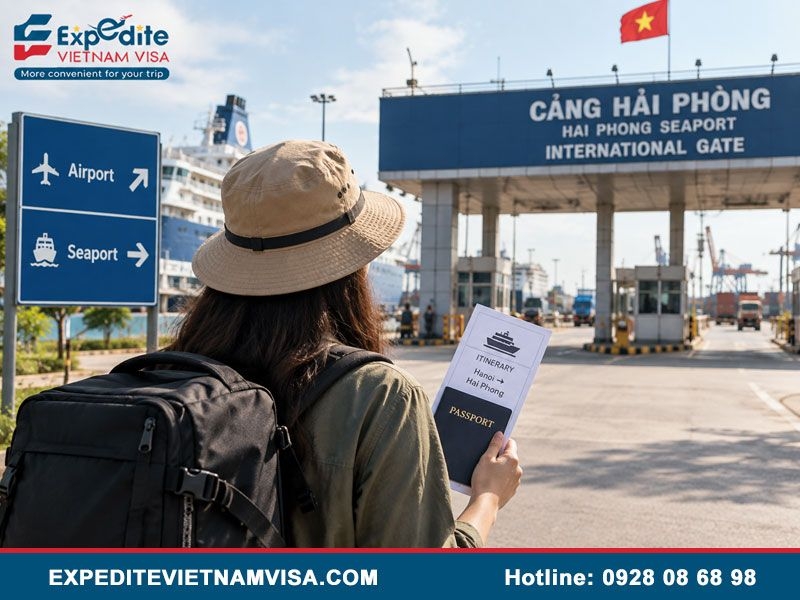
This support is especially valuable when an airline changes the arrival airport, a cruise line updates the docking port or an overland itinerary switches to another border crossing. Expedite Vietnam Visa focuses on identifying inconsistencies early, reducing avoidable application errors and helping travellers move forward quickly when time is limited.
What Can Expedite Vietnam Visa Review Before Departure?
The support team can check:
Passport information
Current visa or application details
Original intended border gate
Updated arrival checkpoint
Entry and exit dates
Single or multiple entry requirements
Flight, cruise or land itinerary
Time remaining before departure
By reviewing the complete travel route rather than only one application field, Expedite Vietnam Visa can help travellers understand whether the existing visa information is still suitable or whether another processing option should be considered.
How Can Expedite Vietnam Visa Help With Urgent Route Changes?
When departure is approaching, Expedite Vietnam Visa can prioritise the traveller’s current itinerary, visa status and revised entry point to identify a faster processing path where available.
This is particularly useful for last-minute flight changes, cruise-port adjustments and overland route changes. The goal is to help travellers avoid unnecessary delays, reduce confusion around border-gate requirements and prepare the correct visa information as efficiently as possible before the journey begins.
Frequently Asked Questions About Vietnam E-Visa Border Gates
Is the intended entry gate the same as the city I will visit?
No. The intended entry gate is the immigration checkpoint used to enter Vietnam, such as Tan Son Nhat International Airport, Moc Bai land border or an approved seaport.
Can I enter through one checkpoint and leave through another?
Yes, provided both checkpoints are permitted for e-Visa use and the travel route complies with the visa’s validity and entry conditions.
What should I do if my flight is rerouted?
Check whether the new airport is currently approved for e-Visa entry and compare the issued visa with the revised itinerary before departure.
Should I immediately apply again if the border gate changes?
Not necessarily. Review the existing visa, new checkpoint, validity and entry type first. A duplicate application should not be the automatic response to every itinerary change.
Contact Expedite Vietnam Visa
Email: [email protected]
US phone: +1 (972) 666-0676
Vietnam phone: +84 928 08 68 98
WhatsApp: +84 928 08 68 98
Website: https://expeditevietnamvisa.com/
Head Office:
1900 Jay Ell Drive, Richardson, TX 75081, United States
Branch Office:
4000 North O Street, Fort Smith, AR 72904, United States
Representative Office:
56 Nguyen Cu Trinh Street, District 1, Ho Chi Minh City, Vietnam

Over the past 23 years in the travel service industry, the growth and success of TRANSOCEAN have stemmed not only from the dedication of our well-trained, enthusiastic, and customer-oriented staff, but also from the exceptional leadership of our Founder and CEO, Mr. STANLEY HO. With more than 20 years of experience in the travel and tourism sector, Mr. STANLEY HO possesses profound knowledge of the market, customer behavior, and modern travel trends. His strategic vision has guided the company toward sustainable growth while maintaining a strong commitment to service quality.