
Vietnam Visa Rejection Rate: How Often Are e-Visas Refused?
Latest update: Sep 15th, 2026
Table of Contents
- Is There an Official Vietnam e-Visa Rejection Rate?
- What Can Cause a Vietnam e-Visa Application to Be Refused?
- What Is the Difference Between Rejected, Update Requested and Processing?
- Which Application Details Should You Check First?
- What Happens If a Vietnam e-Visa Is Rejected?
- How Can You Reduce the Risk of e-Visa Rejection?
- Does Nationality Determine the Chance of Rejection?
- How Can Expedite Vietnam Visa Help Reduce Application Errors?
- Frequently Asked Questions About Vietnam Visa Rejection
There is no official published Vietnam visa rejection rate, so applicants should focus on the factors that can actually affect a decision. Incorrect passport details, unclear supporting images and inconsistent application information can create avoidable problems. Expedite Vietnam Visa provides Vietnam visa assistance services, helping travellers review passport data, application fields and supporting information before processing.
Is There an Official Vietnam e-Visa Rejection Rate?
No official nationwide approval or refusal percentage is published on the Vietnam Immigration e-Visa portal. Applicants should therefore be cautious with websites claiming that a specific percentage of Vietnam visas are approved or rejected.
Why Do Online Rejection Percentages Vary?
A percentage published by a travel company, forum or individual website may reflect only that organisation's customers, a limited nationality group or applications submitted during a particular period.
Such figures cannot automatically be treated as the national rejection rate for all Vietnam e-Visa applicants.
What Matters More Than an Estimated Percentage?
The official immigration guidance states that applications containing missing, incorrect or unidentified information will not be accepted. The application process also requires applicants to satisfy Vietnam's entry conditions and provide the requested passport and personal information.
For an individual traveller, reviewing the actual application is therefore more useful than trying to calculate approval chances from an unofficial statistic.
What Can Cause a Vietnam e-Visa Application to Be Refused?
Application problems commonly begin with incorrect identity information, incomplete fields or supporting images that do not allow the applicant to be identified properly.
Can Incorrect Passport Information Cause Problems?
Yes. Passport information should be copied carefully from the passport data page.
Applicants should review:
Full legal name
Passport number
Date of birth
Nationality
Passport expiry date
Other required identity details
Even a small typing error can create a difference between the application and the travel document. Vietnam Immigration specifically warns that missing or incorrect information can prevent an application from being accepted.
Can Name Errors Affect the Application?
Name fields deserve particular attention because passports around the world use different naming structures.
Travellers with only one legal name should review the guidance on Vietnam visa without surname rather than creating a family name or using an unverified placeholder.
Applicants with several personal names should also confirm the correct Vietnam visa middle and given name order against the passport before submitting the form.
Can Passport or Portrait Images Cause Problems?
The official system requires applicants to upload a passport data-page image and a portrait photograph. The portal also specifies file-size requirements and asks for a portrait showing the applicant facing forward.
A cropped, unreadable or unsuitable image can make identity verification more difficult. Applicants should therefore check image quality before continuing.
What Is the Difference Between Rejected, Update Requested and Processing?
Applicants should not treat every delay or request for correction as a final rejection. The application status should be read carefully before taking further action.
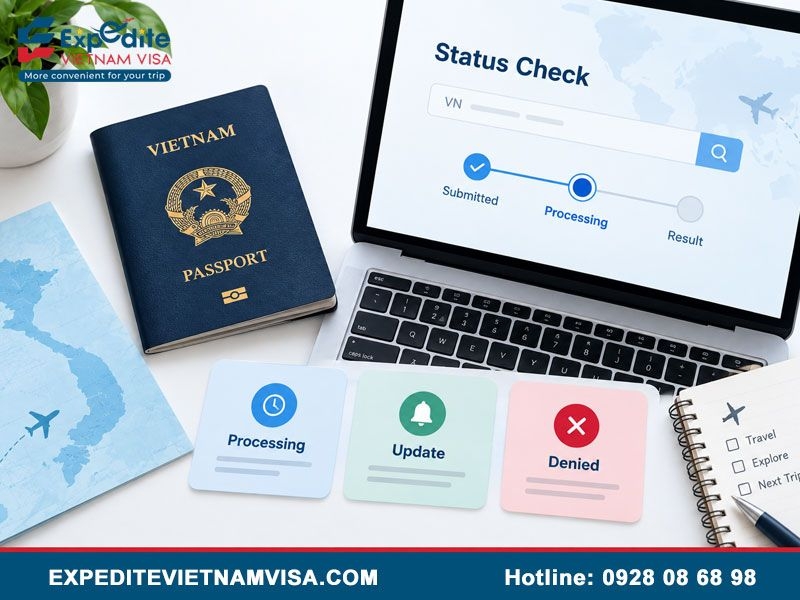
What Does a Denied Status Mean?
The official application-status page contains a field for the Denied Reason. When a case has been denied, applicants should read the stated reason before deciding what to do next.
A denial means the application was not granted in its current form, but the appropriate next step may depend on the reason shown.
Is an Update Request the Same as a Rejection?
Not necessarily.
The official status interface also includes an Edit or Update function in applicable cases. This indicates that some applications can require additional correction rather than being treated immediately as a final refusal.
Does a Processing Delay Mean the Visa Is Rejected?
No. A case that remains under processing has not automatically been refused.
Applicants should continue checking the official status using their registration code and other required information rather than submitting duplicate applications simply because the result has not yet appeared.
Which Application Details Should You Check First?
A structured review is one of the simplest ways to reduce avoidable application problems.
Are the Passport Name Fields Correct?
Compare the application directly with the passport rather than relying on memory, a nickname or the format used on another document.
Make sure that surname and given names have not been swapped, shortened or entered in a different order without a passport-based reason.
Are Birth and Passport Details Accurate?
Check the date and place of birth, nationality, passport number and expiry date character by character.
The applicant should use the passport data page as the primary identity reference instead of adding unnecessary information or changing passport wording.
Are the Uploaded Images Suitable?
Before submitting, confirm that:
The passport data page is complete and readable
Important passport details are not cropped
The portrait clearly shows the applicant
The image complies with the portal requirements
The files can be uploaded successfully
The official application process also provides a review stage before the application proceeds further, giving applicants an opportunity to check entered information.
What Happens If a Vietnam e-Visa Is Rejected?
A rejection can affect both the travel timeline and the applicant's budget, so the stated reason should be reviewed before another application is submitted.
Is the Government e-Visa Fee Refunded?
No. Vietnam Immigration states that the e-Visa fee is not refunded if the application is refused.
This is another reason to check the application carefully before payment rather than assuming an incorrect form can always be replaced without additional cost.
Can You Find Out Why the Application Was Denied?
The official status page includes a Denied Reason field.
Applicants should use the stated reason, together with the passport and submitted information, to identify what may need correction.
Do You Always Need to Submit a New Application?
Not automatically.
First check whether the status page provides an edit or update option. If the required change cannot be made through the existing case or the application has been finally refused, a corrected new application may be necessary.
Submitting another application without understanding the original problem can simply repeat the same error.
How Can You Reduce the Risk of e-Visa Rejection?
Applicants cannot guarantee a visa decision, but they can reduce avoidable mistakes through careful preparation.
Use the Passport as the Primary Reference
Identity information should come from the passport being used for the trip.
Avoid substituting:
Nicknames
Preferred English names
Airline-specific name formats
Unverified abbreviations
Personal translations that differ from passport information
Review Every Required Field Before Payment
A practical final check should cover:
Full legal name
Passport number
Date of birth
Nationality
Passport validity
Birth information
Requested travel details
Passport and portrait images
Applicants should correct known discrepancies before proceeding whenever the application system allows.
Allow Extra Time Before Departure
Visa processing should not be left until the final possible moment.
Additional time gives the traveller more flexibility if the immigration system requests an update, supporting information needs correction or another application becomes necessary.
Does Nationality Determine the Chance of Rejection?
There is no official public breakdown showing a natio
nal e-Visa rejection percentage for each nationality.
Should Travellers Trust Nationality-Based Rejection Rankings?
Applicants should be cautious with unsupported claims that particular nationalities have a fixed refusal percentage.
Vietnam's official guidance focuses on eligibility requirements, passport validity and whether the traveller falls within legal categories affecting entry into Vietnam.
Individual applications should therefore be assessed according to the traveller's actual circumstances rather than an unverified nationality ranking.
How Can Expedite Vietnam Visa Help Reduce Application Errors?
Expedite Vietnam Visa provides Vietnam visa assistance for travellers who want an additional review before processing. Support can include checking passport information, name fields, travel details, uploaded documents and other application information for avoidable inconsistencies.
Who May Benefit From an Application Review?
Additional support may be useful for:
First-time applicants
Travellers with unusual passport names
Applicants who previously received an update request
Families submitting several applications
Business travellers
Travellers with an approaching departure date
The purpose of application review is to identify preventable errors before they create unnecessary complications.
Which Vietnam Visa Services Are Available?
Travellers visiting for leisure can review the Vietnam Tourist E-Visa, while eligible commercial visitors can consider the Vietnam Business Visa.
Family visitors can explore the Vietnam Family Visit E-Visa. Applicants dealing with a short departure timeline may also review the Urgent Vietnam Visa Service or Emergency Vietnam Visa Service.
Expedite Vietnam Visa assists with application preparation and review, while visa issuance and final immigration decisions remain with the relevant Vietnamese authorities.
Frequently Asked Questions About Vietnam Visa Rejection
What Percentage of Vietnam e-Visas Are Rejected?
Vietnam does not publish an official overall e-Visa rejection percentage, so a reliable national figure is not publicly available.
Can a Typo Cause an Application Problem?
Yes. Missing, incorrect or unidentified information can prevent an application from being accepted.
Is an Update Request the Same as a Rejection?
No. An application may have an edit or update option, while a denied case can display a specific denial reason.
Do I Get the Government Fee Back After Rejection?
No. The official Immigration portal states that the e-Visa fee is non-refundable if the application is refused.
Can I Reapply After a Rejection?
A new application may be possible, but applicants should first check the denied reason and any available correction option so that the same problem is not repeated.
Can Expedite Vietnam Visa Guarantee Approval?
No. Expedite Vietnam Visa can assist with preparing and reviewing application information, but final visa decisions are made by the relevant Vietnamese authorities.
Contact Expedite Vietnam Visa
Email: [email protected]
US phone: +1 (972) 666-0676
Vietnam phone: +84 928 08 68 98
WhatsApp: +84 928 08 68 98
Website: https://expeditevietnamvisa.com/
Head Office:
1900 Jay Ell Drive, Richardson, TX 75081, United States
Branch Office:
4000 North O Street, Fort Smith, AR 72904, United States
Representative Office:
56 Nguyen Cu Trinh Street, District 1, Ho Chi Minh City, Vietnam
- Categories:
- Blogs

Over the past 23 years in the travel service industry, the growth and success of TRANSOCEAN have stemmed not only from the dedication of our well-trained, enthusiastic, and customer-oriented staff, but also from the exceptional leadership of our Founder and CEO, Mr. STANLEY HO. With more than 20 years of experience in the travel and tourism sector, Mr. STANLEY HO possesses profound knowledge of the market, customer behavior, and modern travel trends. His strategic vision has guided the company toward sustainable growth while maintaining a strong commitment to service quality.