
Committed to Declare Temporary Residence Vietnam Visa
Latest update: Oct 15th, 2026
Table of Contents
- What does “committed to declare temporary residence” mean?
- What address should applicants enter on the e-Visa form?
- What happens to temporary residence information after arrival?
- Does temporary residence declaration affect visa status or cost?
- Common Questions About Temporary Residence Declaration
- Keep Your Accommodation Details Consistent With the Trip
Applicants completing a Vietnam e-Visa form may notice wording about temporary residence and wonder what they are agreeing to. The phrase committed to declare temporary residence Vietnam visa refers to the requirement to provide intended accommodation information and comply with Vietnam’s temporary residence declaration rules after arrival. Expedite Vietnam Visa helps travelers understand what this field means, which address information matters and how it connects with the rest of the e-Visa application.
What does “committed to declare temporary residence” mean?
This wording is connected with the accommodation section of the Vietnam e-Visa application rather than a separate visa type. Official e-Visa forms include an intended temporary residential address in Vietnam and a commitment to comply with temporary residence declaration requirements.
Is it a separate immigration application?
No. The commitment appears inside the e-Visa information relating to the applicant’s trip and intended stay in Vietnam.
It does not create another visa, residence card or independent immigration application. Applicants are confirming that temporary residence will be declared according to Vietnamese requirements after they arrive.
Is temporary residence the same as permanent residence?
No. Temporary residence describes where a foreign traveler is staying during a visit, while permanent residence is a separate immigration concept.
Applicants who are uncertain about the address fields should distinguish this section from the permanent residential address on a Vietnam visa, which refers to a different type of personal information.
Who is involved in the declaration after arrival?
Temporary residence information for foreigners is normally declared through the accommodation establishment or person responsible for the place where the foreign visitor stays.
This means the traveler provides accurate passport and stay information, while the hotel, host or accommodation manager handles the declaration through the appropriate system.
What address should applicants enter on the e-Visa form?
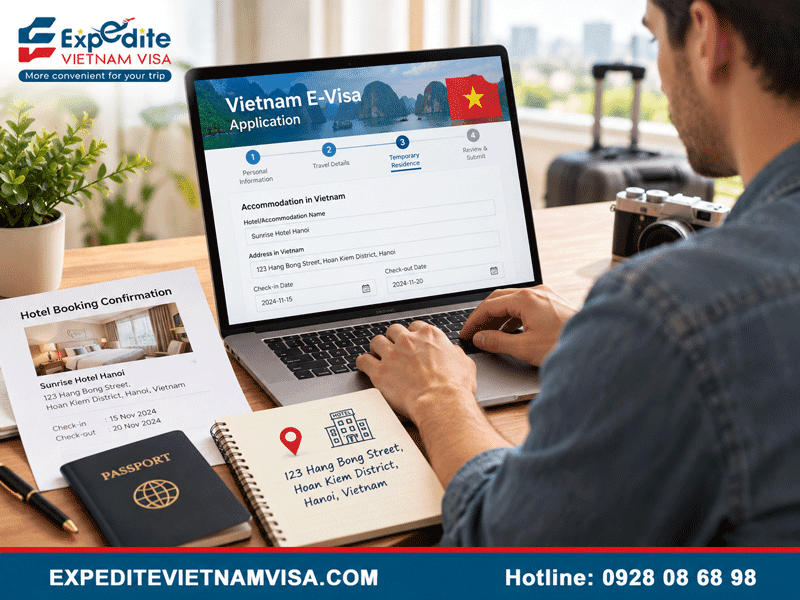
The intended temporary residential address should reflect where the traveler genuinely expects to stay in Vietnam. The e-Visa form asks for an intended temporary residential address together with relevant location information.
Can the first hotel be used as the address?
Yes. If the traveler plans to stay at a hotel after arrival, that property can normally serve as the intended temporary residential address.
Use the actual hotel information rather than an invented address. If several hotels are planned, the first intended accommodation is generally the most logical information to provide.
What if the address includes a ward or commune?
Vietnamese addresses may include administrative information such as a ward or commune. Applicants should use the address supplied by the hotel, host or accommodation provider rather than guessing the administrative unit.
The guide on what is ward/commune in a Vietnam visa explains this address element in more detail.
Does the border gate need to match the accommodation?
They do not need to be in the same location, but the itinerary should make sense as a whole. The e-Visa form separately asks for the intended entry checkpoint and the temporary residential address.
Travelers planning an airport, seaport or land-border arrival should also check the Vietnam visa intended border gate of entry before submitting travel details.
What happens to temporary residence information after arrival?
The address entered on the e-Visa application is part of pre-travel information, while temporary residence declaration takes place when the foreign traveler actually stays at accommodation in Vietnam.
What happens when staying at a hotel?
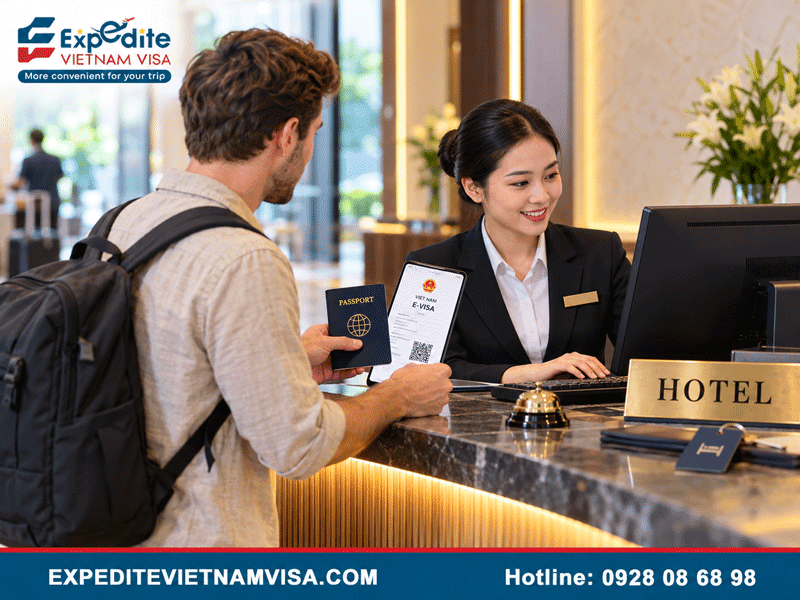
Hotels and other accommodation establishments collect identifying information from foreign guests and use it for temporary residence reporting.
Foreign travelers should therefore have the passport and valid immigration documents available at check-in. Passport information is central to both the visa application and accommodation reporting.
For travelers checking passport conditions before departure, passport required for Vietnam provides additional context.
What if the traveler stays at a private home?
Temporary residence declaration also applies to foreigners staying at private residences. The responsible host or accommodation manager needs to provide the required stay information.
What if the traveler changes accommodation?
Moving to a new hotel, apartment or private residence does not remove the temporary residence requirement. The actual place where the foreigner stays should still be properly reported.
For ordinary leisure trips, travelers using a Vietnam Tourist E-Visa should therefore treat accommodation reporting as a post-arrival obligation separate from visa validity.
Does temporary residence declaration affect visa status or cost?
Temporary residence declaration and e-Visa issuance are connected to the same trip but are separate administrative matters. One concerns permission to enter and stay; the other records where the foreign traveler is actually residing after arrival.
Is there a fee for temporary residence declaration?
Temporary residence declaration itself does not carry the same government visa fee as an e-Visa application.
Item | Reference cost |
|---|---|
Temporary residence declaration | No separate visa fee |
Single-entry e-Visa | USD 25 |
Multiple-entry e-Visa | USD 50 |
Expedite Vietnam Visa assistance | Contact for quote |
The e-Visa charge depends on whether the traveler requests single or multiple entry, while private visa assistance is quoted separately.
Does a longer stay change the declaration requirement?
A longer stay may involve different visa or residence considerations, but temporary residence reporting still concerns the actual accommodation used by the foreigner.
People researching longer-term living arrangements should separate accommodation declaration from immigration status. For example, Retirement Visa for Vietnam deals with long-stay planning rather than hotel or residence reporting.
What about remote workers staying for several weeks?
Remote workers may stay in apartments, serviced accommodation or several cities during one trip. Each actual stay still needs to comply with applicable residence reporting requirements.
The Digital Nomad Visa Vietnam guide covers the wider immigration questions for location-independent travelers, while temporary residence declaration remains an accommodation matter.
Common Questions About Temporary Residence Declaration
The wording on the e-Visa form can appear more complicated than the obligation itself. These points address the main areas that applicants commonly confuse.
Do I need temporary residence registration before applying for the e-Visa?
No. You provide your intended temporary residential address during the application, while the actual temporary residence declaration is associated with where you stay after arrival.
Can I use a hotel booking that may later change?
Yes, provided it genuinely reflects your intended stay when completing the application. If accommodation changes later, the actual place of stay should still be properly declared after arrival.
Is “committed to declare temporary residence” a visa approval condition?
It is part of the e-Visa application information and reflects the traveler’s obligation to comply with Vietnamese residence rules. It is not a separate visa type or an additional paid permit.
Keep Your Accommodation Details Consistent With the Trip
The temporary residence commitment is easier to understand when it is viewed as part of accommodation planning rather than another visa application. Travelers should enter a genuine intended address, keep their passport and visa information consistent, and ensure the actual accommodation reports their stay after arrival.
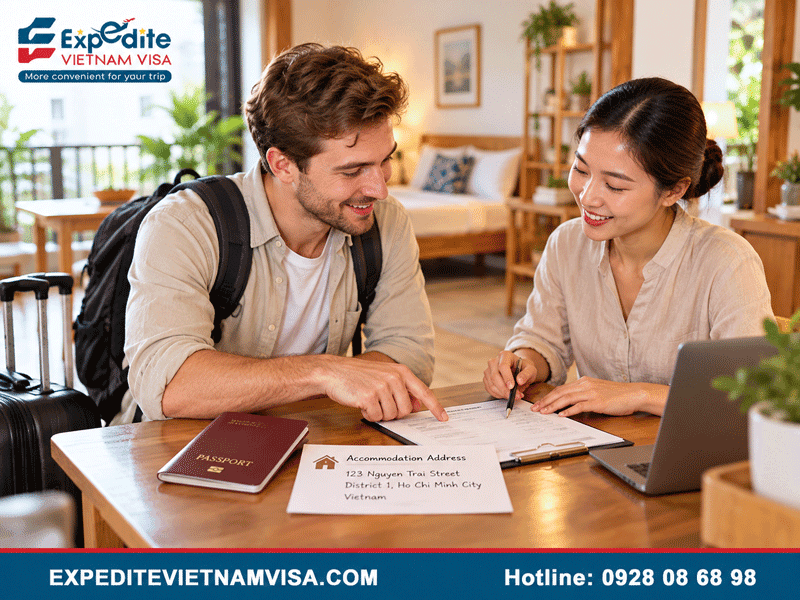
Expedite Vietnam Visa can assist with reviewing the e-Visa information and related travel details so applicants can complete the form with fewer uncertainties before traveling to Vietnam.
Contact Expedite Vietnam Visa
- Email: [email protected]
- US phone: +1 (972) 666-0676
- Vietnam phone: +84 928 08 68 98
- WhatsApp: +84 928 08 68 98
- Website: https://expeditevietnamvisa.com/
Head Office:
1900 Jay Ell Drive, Richardson, TX 75081, United States
Branch Office:
4000 North O Street, Fort Smith, AR 72904, United States
Representative Office:
56 Nguyen Cu Trinh Street, District 1, Ho Chi Minh City, Vietnam
- Categories:
- Blogs

Over the past 23 years in the travel service industry, the growth and success of TRANSOCEAN have stemmed not only from the dedication of our well-trained, enthusiastic, and customer-oriented staff, but also from the exceptional leadership of our Founder and CEO, Mr. STANLEY HO. With more than 20 years of experience in the travel and tourism sector, Mr. STANLEY HO possesses profound knowledge of the market, customer behavior, and modern travel trends. His strategic vision has guided the company toward sustainable growth while maintaining a strong commitment to service quality.