
Hanoi Transit Visa: Requirements, Fees & Flight Transfers
Latest update: Oct 26th, 2026
Table of Contents
- Do You Need a Transit Visa for Hanoi Airport?
- How Does International Transit Work at Noi Bai Airport?
- How Much Does a Hanoi Transit Visa Cost?
- How Can You Prepare for a Hanoi Airport Transit?
- What Else Should Travelers Know About Hanoi Transit?
- Get Hanoi Transit Visa Assistance From Expedite Vietnam Visa
Travelers connecting through Noi Bai International Airport may need a visa depending on their flight arrangements and whether they enter Vietnam. A Hanoi transit visa is generally unnecessary when passengers remain inside the designated international transit area without clearing immigration. However, collecting checked baggage, changing to a domestic flight, or leaving the airport can change entry requirements. Expedite Vietnam Visa helps international travelers understand these conditions and prepare appropriate visa documentation before traveling through Hanoi.
Do You Need a Transit Visa for Hanoi Airport?
A transit visa is not required for eligible international air passengers who remain inside the designated transit area at Noi Bai International Airport. Under Vietnamese immigration law, air passengers transiting without entering the country are exempt from visa requirements.
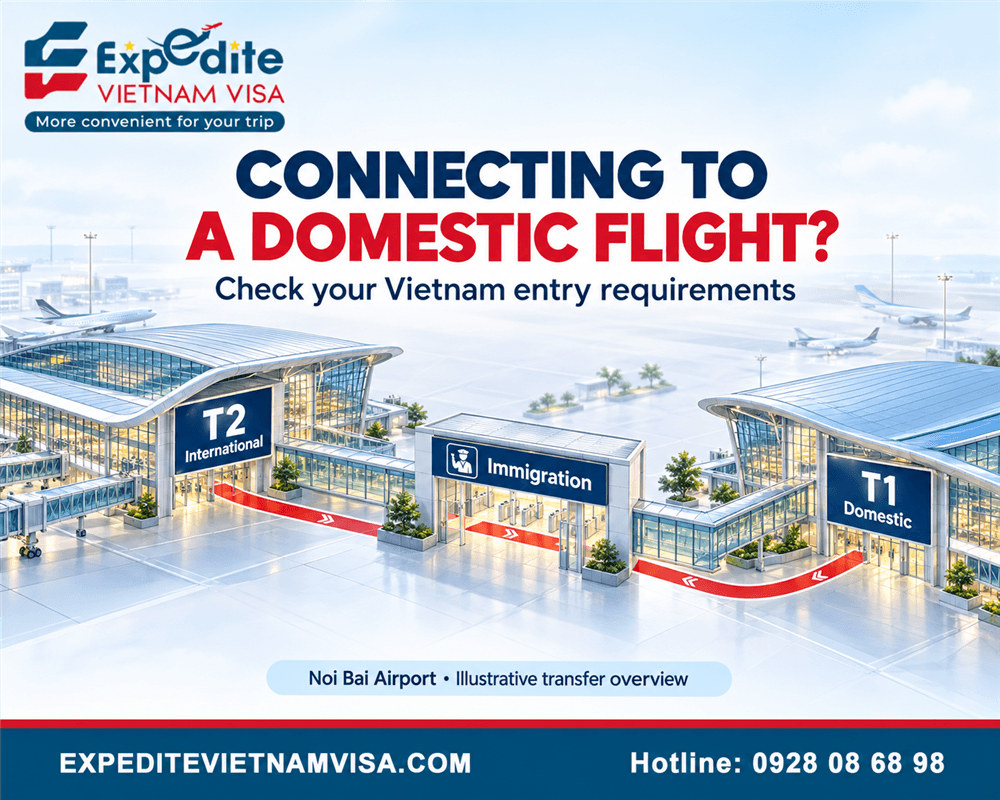
However, passengers who must pass through immigration need to satisfy Vietnam's entry requirements.
Do You Need a Visa for an International Layover in Hanoi?
No. International passengers connecting between flights at Noi Bai Airport can normally transit without a Vietnamese visa if they remain airside and do not clear immigration.
Travelers must have valid travel documents, confirmed onward arrangements, and permission to enter their final destination where required. Airlines should confirm whether the planned connection supports airside transit.
When Is a Hanoi Transit Visa Required?
A visa or applicable visa exemption is necessary when passengers must formally enter Vietnam.
Common situations include leaving the transit area, collecting baggage outside immigration, transferring to a domestic flight, or visiting Hanoi during a layover.
Travelers can review whether a Vietnam visa can be obtained at the airport, although eligible passengers should arrange any required entry documentation before departure.
Can You Leave Hanoi Airport Without a Visa?
Passengers can leave Noi Bai Airport only if they meet Vietnam's entry requirements.
Travelers from visa-exempt countries may enter under applicable exemptions. Others generally need a valid visa or another qualifying entry document.
A long layover does not automatically grant permission to enter Hanoi, even when the connecting flight departs the following day.
How Does International Transit Work at Noi Bai Airport?
Noi Bai International Airport (HAN) serves Hanoi and operates separate domestic and international passenger terminals.
Terminal 2 (T2) handles international flights, while Terminal 1 (T1) handles domestic services. International transfer arrangements depend on the airline, baggage handling, and availability of the connecting boarding pass.
How Do You Transfer Between International Flights?
Passengers transferring between international flights within Terminal 2 should follow the airport's international transfer signs.
The normal process includes:
Proceed to the international transfer counter when required.
Confirm the onward boarding pass and baggage arrangements.
Complete the applicable transfer security checks.
Follow departure signs to the connecting gate.
Eligible airside transfer passengers do not pass through Vietnamese immigration.
Do You Need a Visa When Changing Terminals?
Changing between Terminal 2 and Terminal 1 generally involves passing through immigration because T1 handles domestic flights.
Passengers transferring from an international arrival to a Vietnamese domestic flight must enter Vietnam before continuing.
The intended arrival airport and Vietnam visa border gate information should be checked when preparing an e-Visa application.
What Happens if You Need to Collect Checked Baggage?
If passengers must enter Vietnam to collect checked luggage and check in again, a visa or applicable exemption may be required.
This situation can occur with separate tickets or when baggage is not checked through.
Travelers should confirm their baggage arrangements directly with the airline before departure.
How Much Does a Hanoi Transit Visa Cost?
Airside international transit does not require a Vietnamese visa fee when the passenger qualifies for visa-free transit. If entering Vietnam is necessary, the applicable visa type, nationality, and entry arrangements determine the cost.
Vietnam's electronic visa system provides published government fees for single-entry and multiple-entry applications.
What Are the Government Visa Fees for Hanoi Transit?
The official Vietnamese e-Visa fee is USD 25 for single-entry and USD 50 for multiple-entry applications.
These fees apply when travelers need an e-Visa to enter Vietnam, not when remaining within an eligible international transit area.
Travel arrangement | Government visa fee |
|---|---|
Eligible international airside transit | USD 0 |
Entry under a qualifying visa exemption | USD 0 |
Single-entry e-Visa | USD 25 |
Multiple-entry e-Visa | USD 50 |
Agency application assistance | Contact for quotation |
Government application fees are separate from professional service charges.
Are There Additional Costs for Urgent Visa Assistance?
Yes. Optional visa assistance services may involve additional charges depending on application requirements and available processing arrangements.
The Vietnam urgent visa service provides application support for travelers with limited preparation time.
Travelers should request a quotation outlining the service fee and government charges before submitting an application.
Does a Short Layover Make the Visa Cheaper?
No. The published government e-Visa fee is based on the visa type rather than the length of the airport layover.
A passenger entering Vietnam for a few hours may still need a valid entry document.
The Vietnam transit visa cost therefore depends primarily on whether formal entry is required.
How Can You Prepare for a Hanoi Airport Transit?
Travelers should review their flight itinerary, passport details, connecting airline, and baggage arrangements before departure.
Correct preparation reduces uncertainty at airline check-in and airport transfer counters. Passengers who may need to enter Vietnam should arrange the necessary documents before traveling.
What Documents Do You Need for Transit in Hanoi?
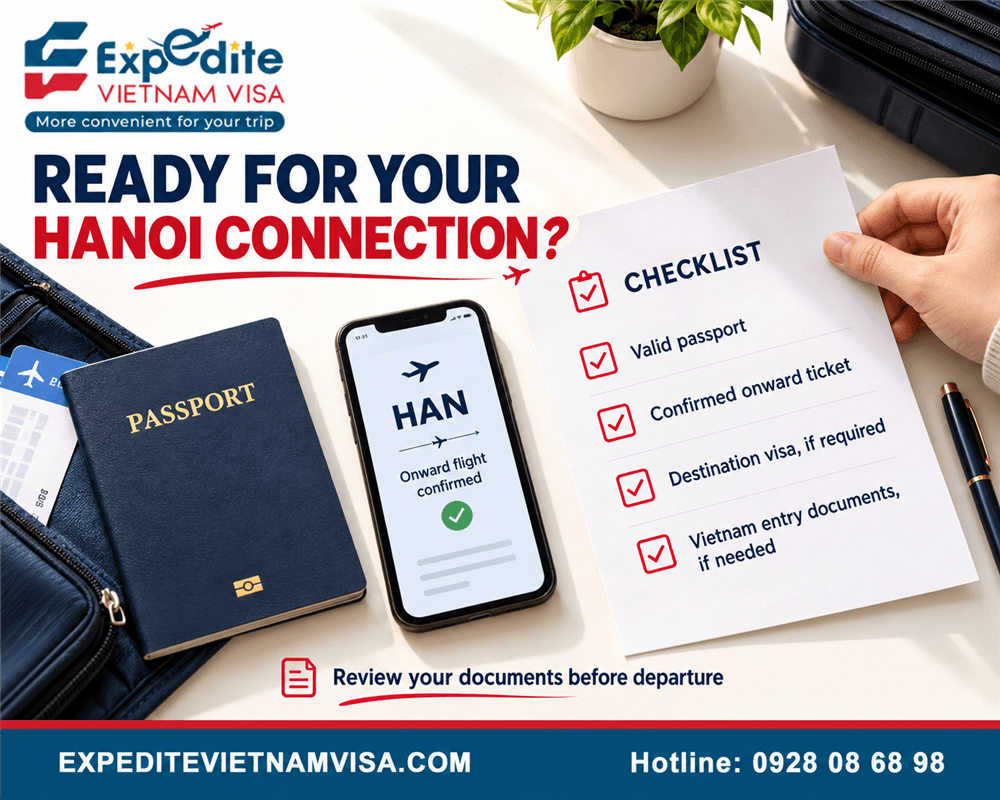
International transit passengers should prepare:
A valid passport or recognized travel document.
A confirmed ticket to their onward destination.
A destination visa, where required.
Connecting flight details and boarding passes.
A Vietnamese visa or entry exemption if immigration clearance is necessary.
The passport requirements for Vietnam become particularly relevant when travelers plan to enter the country.
How Can You Apply for a Vietnam e-Visa Before Transit?
Travelers who need to enter Vietnam can apply through the official Vietnamese e-Visa system if eligible.
The application involves:
Completing the online application.
Uploading a portrait and passport information page.
Entering accurate personal and travel information.
Paying the government application fee.
Checking the application result before departure.
Travelers planning to visit Hanoi during their connection may also consider the Vietnam tourist visa, depending on their intended activities and eligibility.
What Should You Do if Your Transit Flight Changes?
Contact your airline immediately to confirm revised connection times, baggage handling, and whether the new itinerary requires immigration clearance.
If a visa becomes necessary, travelers can inquire about the Vietnam emergency visa service.
Expedited assistance is subject to eligibility and processing availability. Travelers should not assume that same-day approval is available.
What Else Should Travelers Know About Hanoi Transit?
Can You Transit Through Hanoi Without a Visa for 24 Hours?
Potentially, yes. Visa-free airside transit depends on remaining in the designated transit area, not simply on a fixed layover duration. Confirm that the airline and airport can accommodate the entire connection without immigration clearance.
Can You Visit Hanoi During a Long Layover?
Yes, provided you qualify to enter Vietnam through a valid visa, visa exemption, or another permitted entry arrangement. Leaving the international transit area requires immigration clearance regardless of the available layover time.
Do Separate Flight Tickets Affect Transit Visa Requirements?
Yes. Separate tickets can require passengers to collect baggage, check in again, or obtain another boarding pass. If these steps require entering Vietnam, passengers must meet the applicable entry requirements.
Get Hanoi Transit Visa Assistance From Expedite Vietnam Visa
Understanding Hanoi airport transit requirements helps travelers avoid unexpected immigration and connection difficulties. Expedite Vietnam Visa assists international passengers with visa eligibility questions, travel documentation, and e-Visa application preparation. Our team helps identify potential entry requirements based on individual itineraries and provides guidance for suitable application services.
Contact us for professional Vietnam visa assistance and a personalized service quotation.
Contact Expedite Vietnam Visa
Email: [email protected]
US phone: +1 (972) 666-0676
Vietnam phone: +84 928 08 68 98
WhatsApp: +84 928 08 68 98
Website: https://expeditevietnamvisa.com/
Head Office:
1900 Jay Ell Drive, Richardson, TX 75081, United States
Branch Office:
4000 North O Street, Fort Smith, AR 72904, United States
Representative Office:
56 Nguyen Cu Trinh Street, District 1, Ho Chi Minh City, Vietnam
- Categories:
- Blogs

Over the past 23 years in the travel service industry, the growth and success of TRANSOCEAN have stemmed not only from the dedication of our well-trained, enthusiastic, and customer-oriented staff, but also from the exceptional leadership of our Founder and CEO, Mr. STANLEY HO. With more than 20 years of experience in the travel and tourism sector, Mr. STANLEY HO possesses profound knowledge of the market, customer behavior, and modern travel trends. His strategic vision has guided the company toward sustainable growth while maintaining a strong commitment to service quality.