
Ho Chi Minh Transit Visa: Airport Rules and Fees
Latest update: Oct 26th, 2026
Table of Contents
Passengers connecting through Tan Son Nhat International Airport in Ho Chi Minh City may not need a visa if they remain within the designated international transit area. However, certain flight arrangements require immigration clearance before continuing the journey. Understanding Ho Chi Minh transit visa requirements helps travelers avoid unexpected entry restrictions, baggage complications, and missed connections. Expedite Vietnam Visa assists international travelers with visa documentation and application preparation when their transit plans require entry into Vietnam.
Do You Need a Transit Visa in Ho Chi Minh City?
A Vietnam visa is generally unnecessary for international passengers who remain inside the designated transit area at Tan Son Nhat International Airport (SGN). Travelers who pass through Vietnamese immigration must instead meet the applicable entry requirements, regardless of how briefly they intend to stay.
Who Can Transit Through Tan Son Nhat Without a Visa?
Foreign passengers connecting between international flights can transit without a Vietnamese visa when they remain within the designated airport transit area.
They must possess valid travel documents, onward tickets, and any necessary permission to enter their destination country.
Airlines should confirm whether the itinerary permits an airside connection without immigration clearance.
When Do Connecting Passengers Need a Vietnam Visa?
Passengers generally need a visa or applicable visa exemption if their connection requires formal entry into Vietnam.
Typical situations include collecting baggage outside the transit area, transferring to a domestic flight, or leaving the airport.
Travelers should understand whether they can obtain a Vietnam visa at the airport before relying on arrival arrangements.
Can You Leave Tan Son Nhat Airport During a Layover?
Yes, but only if you meet Vietnam's entry requirements.
Travelers eligible for visa-free entry may leave the airport within their permitted stay. Other passengers need an appropriate visa or entry authorization.
A confirmed onward ticket does not automatically permit entry into Ho Chi Minh City, even during an extended layover.
How Do Flight Transfers Work at Tan Son Nhat Airport?
Tan Son Nhat International Airport serves both domestic and international flights, with separate terminal facilities. International-to-international connections and international-to-domestic transfers involve different procedures.
Passengers should verify their terminal, baggage arrangements, and boarding pass availability before departure.
How Do You Connect Between International Flights?
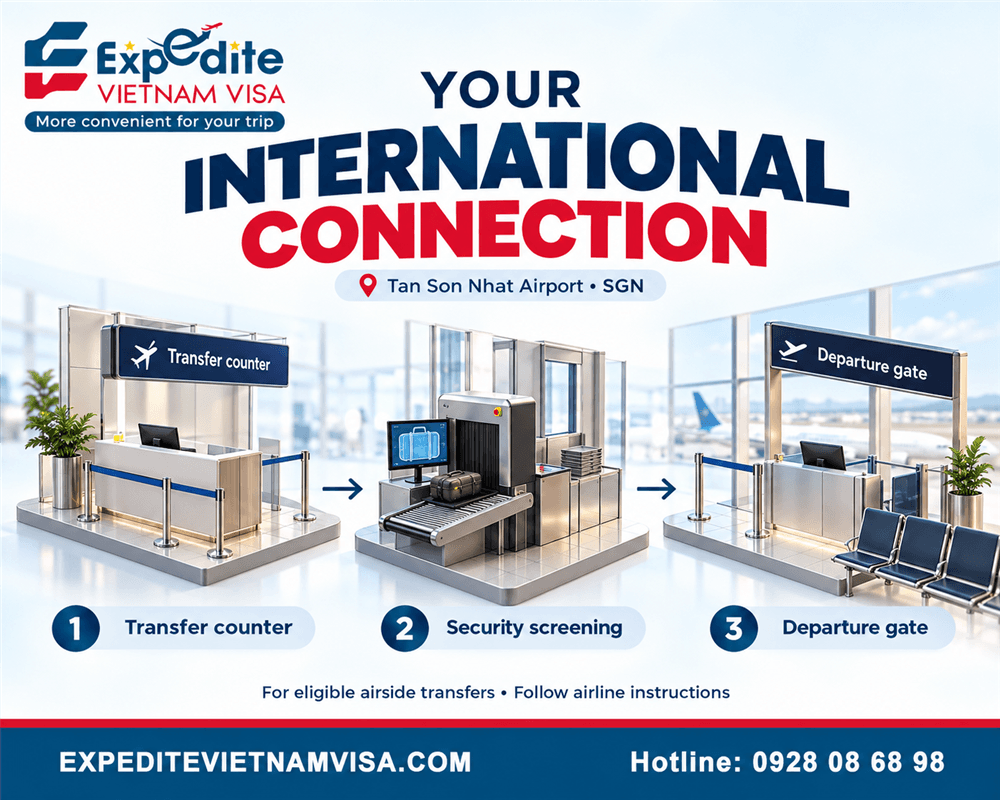
Passengers eligible for an international airside transfer should follow the airport's transit signs and airline instructions.
The transfer generally involves:
- Following signs to the international transfer counter.
- Presenting onward flight documents when requested.
- Completing transfer security screening.
- Proceeding to the assigned departure gate.
Passengers who remain airside normally do not clear Vietnamese immigration.
Do You Need Immigration Clearance for Domestic Transfers?
Yes. Passengers arriving internationally and connecting to a domestic flight must enter Vietnam before continuing their journey.
For example, someone flying from Singapore through Ho Chi Minh City to Da Nang must complete Vietnamese immigration procedures at Tan Son Nhat.
When applying for an e-Visa, the correct intended border gate of entry should reflect the actual international entry point.
What Happens if Your Flights Are Booked Separately?
Separate flight tickets can complicate international connections when baggage must be collected or another boarding pass issued outside the transit area.
Passengers should confirm whether the airline can transfer checked luggage directly to the final destination.
If immigration clearance becomes necessary, travelers must have the appropriate Vietnamese entry permission before boarding.
How Much Does a Ho Chi Minh Transit Visa Cost?
Eligible international airside transit carries no Vietnamese visa fee. Travelers who need to enter Vietnam may have to pay the relevant visa fee unless an exemption applies.
Official electronic visa fees depend on the number of permitted entries, not simply the duration of the airport connection.
What Are the Government Visa Fees for Transit Passengers?
Vietnam's official e-Visa fees are USD 25 for a single-entry visa and USD 50 for a multiple-entry visa.
These fees apply when travelers require an e-Visa to enter Vietnam.
Transit arrangement | Government visa fee |
|---|---|
Eligible international airside transit | USD 0 |
Entry under an applicable visa exemption | USD 0 |
Single-entry e-Visa | USD 25 |
Multiple-entry e-Visa | USD 50 |
Professional visa application assistance | Contact for quotation |
The Vietnam transit visa cost therefore depends on whether the passenger needs to enter the country and which entry authorization applies.
Are Urgent Visa Processing Services Available?
Expedited application assistance may be available depending on the applicant's nationality, documentation, requested service, and processing conditions.
Travelers with limited preparation time can inquire about urgent Vietnam visa assistance.
Service charges are separate from government fees. Contact the provider for an individual quotation before proceeding.
Does a Short Layover Reduce the Visa Fee?
No. A short layover does not reduce Vietnam's published government e-Visa fees.
Passengers entering Vietnam for a few hours remain subject to the applicable entry requirements.
If the connection qualifies for airside transit without immigration clearance, no Vietnamese visa fee is required.
How Should You Prepare for a Ho Chi Minh Airport Transit?
Travelers should check their itinerary, onward flight documents, baggage transfer arrangements, and Vietnamese entry eligibility before traveling.
These checks are particularly important when flights involve different airlines, separate bookings, or overnight connections.
What Documents Should Transit Passengers Prepare?
Travelers should have:
- A valid passport or recognized travel document.
- A confirmed onward flight ticket.
- A visa for the destination country, if required.
- Connecting boarding passes or booking confirmations.
- Vietnamese entry authorization when immigration clearance is necessary.
The passport requirements for Vietnam should be reviewed carefully when travelers intend to enter the country.
What Should You Do if Your Connecting Flight Is Delayed?
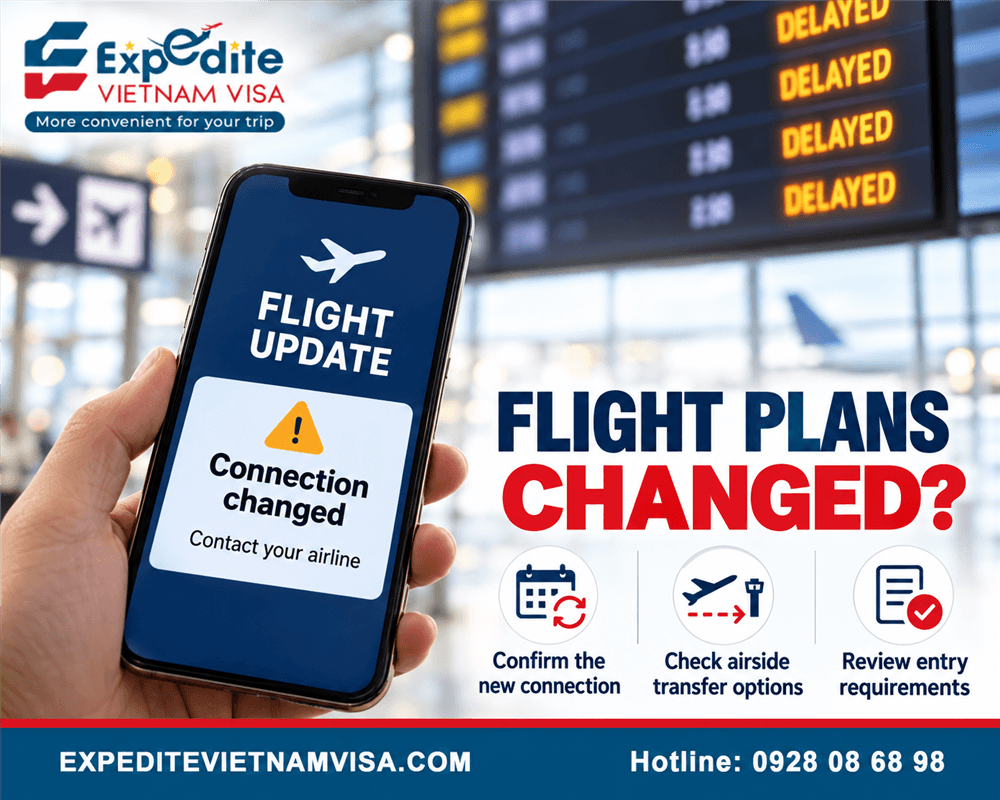
Contact the airline immediately to confirm whether the revised connection can still be completed within the international transit area.
If a cancellation or extended delay requires entering Vietnam, ask the airline about available arrangements and immigration requirements.
Travelers may inquire about emergency Vietnam visa assistance where appropriate. Approval and processing times remain subject to immigration authorities.
How Can You Avoid Problems During an Airport Connection?
Before departure, confirm the following details with your airline:
- Whether both flights use compatible transfer facilities.
- Whether checked baggage travels to the final destination.
- Whether a new boarding pass can be issued airside.
- Whether the transit area can accommodate your connection.
- Whether you need Vietnamese immigration clearance.
Travelers connecting through another airport can compare these arrangements with Hanoi Transit Visa requirements, particularly when planning itineraries involving Noi Bai International Airport.
What Else Should You Know About Ho Chi Minh Transit?
Travelers should understand how layover duration, overnight connections, and visa requirements affect transit arrangements at Tan Son Nhat Airport.
Can You Transit Through Ho Chi Minh City Without a Visa for 24 Hours?
Yes, potentially. The key requirement is remaining within the designated transit area without entering Vietnam. A 24-hour layover does not independently guarantee visa-free transit, so confirm whether your airline and airport arrangements permit the connection.
Do You Need a Visa for an Overnight Layover?
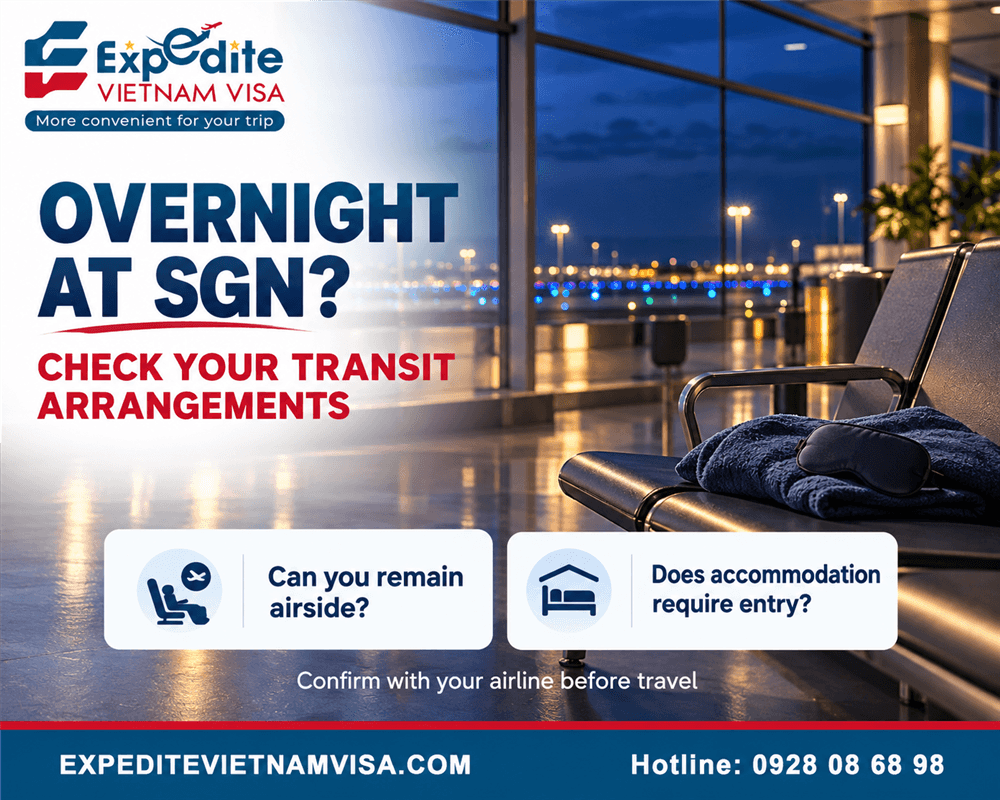
Not necessarily. Passengers who can legally remain in the airport transit area may not need a visa. However, leaving the airport, accessing accommodation outside the transit area, or collecting baggage after immigration requires appropriate entry permission.
Is a Transit Visa the Same as a Vietnam e-Visa?
No. Airside transit can be visa-exempt, while a Vietnam e-Visa authorizes eligible foreigners to enter the country under its conditions. A separate visa is not automatically required merely because a flight connects through Ho Chi Minh City.
Get Ho Chi Minh Transit Visa Assistance
Understanding airport transit rules helps prevent immigration difficulties and unexpected changes to travel arrangements. Expedite Vietnam Visa assists travelers with visa eligibility questions, passport documentation, and e-Visa application preparation. Our team helps review individual travel requirements and identify suitable application options when entry into Vietnam is necessary.
Contact us for professional Vietnam visa assistance and a personalized service quotation.
Contact Expedite Vietnam Visa
- Email: [email protected]
- US phone: +1 (972) 666-0676
- Vietnam phone: +84 928 08 68 98
- WhatsApp: +84 928 08 68 98
- Website: https://expeditevietnamvisa.com/
Head Office:
1900 Jay Ell Drive, Richardson, TX 75081, United States
Branch Office:
4000 North O Street, Fort Smith, AR 72904, United States
Representative Office:
56 Nguyen Cu Trinh Street, District 1, Ho Chi Minh City, Vietnam
- Categories:
- Blogs

Over the past 23 years in the travel service industry, the growth and success of TRANSOCEAN have stemmed not only from the dedication of our well-trained, enthusiastic, and customer-oriented staff, but also from the exceptional leadership of our Founder and CEO, Mr. STANLEY HO. With more than 20 years of experience in the travel and tourism sector, Mr. STANLEY HO possesses profound knowledge of the market, customer behavior, and modern travel trends. His strategic vision has guided the company toward sustainable growth while maintaining a strong commitment to service quality.