
Phu Quoc Island Vietnam Visa: Entry Rules and Fees
Latest update: Nov 4th, 2026
Table of Contents
- What Are the Visa Requirements for Phu Quoc Island?
- How Do Different Travel Routes Affect Phu Quoc Entry?
- When Should You Apply for a Vietnam e-Visa Instead?
- How Much Does a Phu Quoc Island Vietnam Visa Cost?
- What Should Travelers Know Before Visiting Phu Quoc?
- Get Phu Quoc Travel Visa Assistance From Expedite Vietnam Visa
Planning an international trip to Phu Quoc requires understanding how the island's immigration rules differ from those of mainland Vietnam. The Phu Quoc Island Vietnam Visa policy allows eligible foreign passport holders to stay on the island for up to 30 days without obtaining a visa. However, your arrival route, travel documents, and plans to visit other Vietnamese destinations can affect the requirements. Expedite Vietnam Visa helps international travelers review their itineraries and determine whether an e-Visa or another form of entry permission is necessary before departure.
What Are the Visa Requirements for Phu Quoc Island?
Phu Quoc offers a 30-day visa exemption for eligible foreign passport holders arriving from overseas. Travelers can use this exemption when their visit satisfies the island's immigration conditions.
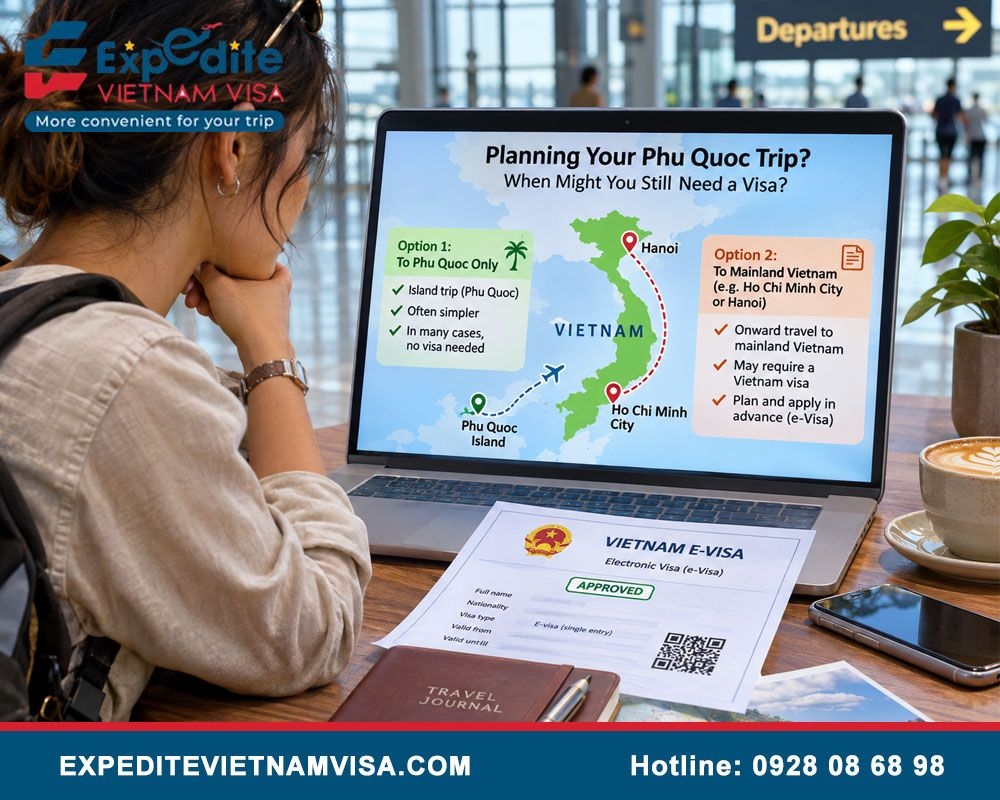
The exemption is separate from Vietnam's broader visa policies and does not automatically authorize travel throughout the country.
Who Qualifies for the 30-Day Visa Exemption?
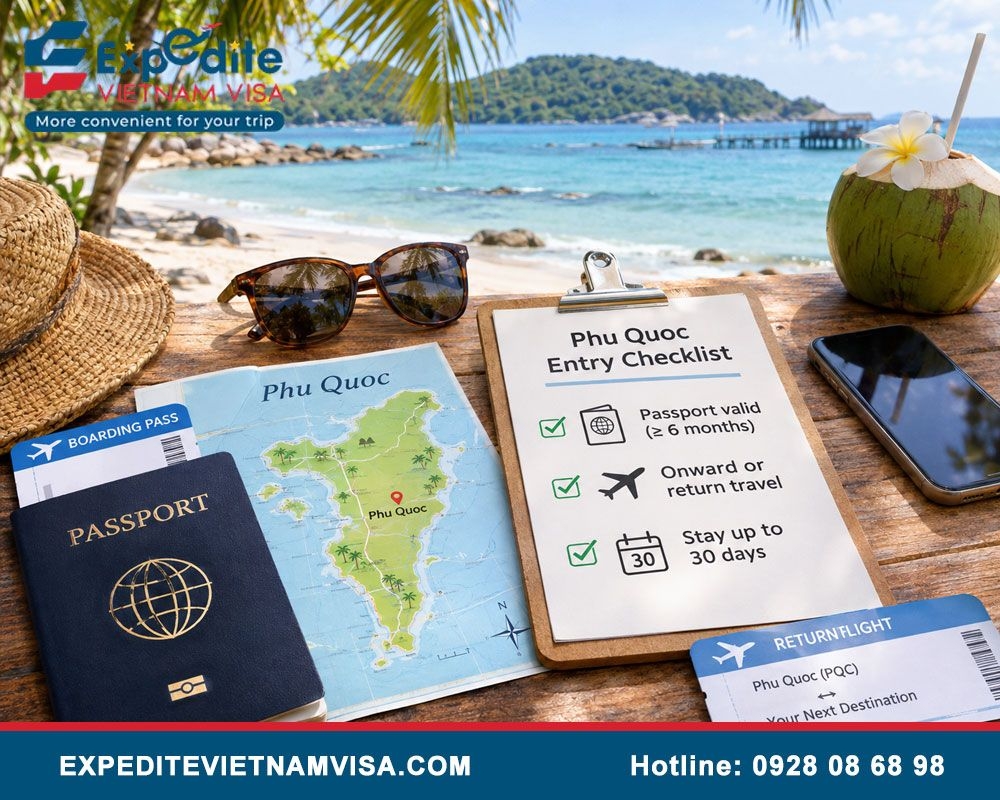
Foreign nationals holding valid foreign passports can generally qualify for visa-free entry to Phu Quoc for stays of up to 30 days.
The policy is not restricted to a specific list of nationalities.
However, travelers must satisfy Vietnam's entry conditions and should not be subject to an entry prohibition or other immigration restrictions.
What Documents Should Travelers Prepare?
International visitors should prepare a passport with at least six months of remaining validity and documentation supporting their travel arrangements.
Recommended documents include:
A valid foreign passport.
Confirmed international flight or travel reservations.
A return or onward ticket within the permitted stay.
Accommodation and itinerary details when requested.
The passport requirements for Vietnam help travelers understand why passport validity remains important even when a visa exemption applies.
Does the Exemption Cover All of Vietnam?
No. The special exemption applies to eligible visits to Phu Quoc Island.
Travelers planning to visit Ho Chi Minh City, Hanoi, Da Nang, or other mainland destinations must separately qualify for nationwide visa-free entry or obtain appropriate immigration permission.
A traveler who receives permission to stay on Phu Quoc should not assume that the same permission covers an unrestricted mainland itinerary.
How Do Different Travel Routes Affect Phu Quoc Entry?
Your route to Phu Quoc determines how the island's visa exemption can be applied. Direct international arrivals are generally straightforward, while connecting flights through mainland airports require additional attention.
Airline procedures, baggage arrangements, and immigration clearance can affect whether a passenger remains eligible for the exemption.
Can You Fly Directly to Phu Quoc From Overseas?
Yes. Eligible visitors can arrive directly at Phu Quoc International Airport from another country without obtaining a visa for a stay of up to 30 days.
For example, a traveler flying internationally to Phu Quoc for a two-week holiday may use the exemption.
The traveler must still complete the required entry procedures and meet Vietnam's immigration conditions.
What Happens When Connecting Through Ho Chi Minh City?
A connection through Tan Son Nhat International Airport may qualify under the exemption when the traveler remains within the permitted international transit arrangements.
However, some connecting itineraries require passengers to clear immigration, collect checked baggage, and enter mainland Vietnam.
Understanding the Vietnam transit rules is important because the exemption should not be assumed to cover every domestic connection.
Can You Reach Phu Quoc Through Hanoi?
Yes, but the same immigration considerations apply to connections through Noi Bai International Airport.
Passengers should confirm whether their airline can accommodate the applicable transit arrangements.
A separate-ticket itinerary or a connection requiring entry into Vietnam may change the documents needed.
The rules on whether a Vietnam visa is required during a layover are relevant when comparing flight options.
When Should You Apply for a Vietnam e-Visa Instead?
A Vietnam e-Visa may be necessary when a traveler does not qualify for the Phu Quoc exemption, intends to visit mainland Vietnam, or needs an appropriate longer-stay option. Vietnam issues electronic visas for stays of up to 90 days, subject to immigration approval.
The correct document depends on the traveler's nationality, itinerary, and planned duration.
Do You Need an e-Visa for Phu Quoc and Mainland Vietnam?
Travelers planning to combine Phu Quoc with destinations such as Ho Chi Minh City, Hanoi, or Da Nang should check their entry requirements before departure.
Understanding Do You Need a Visa for Phu Quoc helps travelers determine whether the 30-day island exemption applies or a separate Vietnam tourist visa is necessary for the full itinerary.
How Do You Apply for a Vietnam e-Visa?
Travelers can complete the application on the official Vietnam e-Visa website.
The main steps are:
Prepare a passport information page and suitable portrait photograph.
Enter personal and travel information accurately.
Select the appropriate visa entry type.
Pay the required government application fee.
Save the registration code and monitor the application result.
Download the approved e-Visa before departure.
Approval is determined by the Vietnamese immigration authorities.
What Entry Point Should You Select for Your Trip?
The intended entry point should match the actual route and the applicable e-Visa requirements.
Travelers should verify whether their planned airport, land checkpoint, or seaport accepts electronic visas.
The Vietnam visa intended border gate of entry information is particularly relevant when planning a trip involving Phu Quoc and mainland Vietnam.
Incorrect entry information can complicate travel arrangements.
How Much Does a Phu Quoc Island Vietnam Visa Cost?
Eligible visitors using the 30-day Phu Quoc exemption do not pay a government visa fee. Travelers who need an e-Visa must pay the applicable government charge, while optional visa agency assistance is priced separately.
The cost therefore depends on the type of entry permission required.
Is the Phu Quoc Visa Exemption Free?
Yes. The 30-day island exemption does not require an application fee for travelers who satisfy its conditions.
However, travelers remain responsible for transportation, accommodation, and other travel-related expenses.
The exemption also does not remove ordinary immigration checks or any applicable pre-arrival information requirements.
What Are the Government e-Visa Fees?
The standard Vietnam e-Visa fees are:
Visa or entry arrangement | Government fee |
|---|---|
Phu Quoc 30-day visa exemption | USD 0 |
Single-entry Vietnam e-Visa | USD 25 |
Multiple-entry Vietnam e-Visa | USD 50 |
Optional visa agency assistance | Contact for quotation |
Government e-Visa fees are generally non-refundable if an application is refused.
A visa agency's service charge is separate from the government fee and depends on the requested assistance.
Can You Get a Visa After Arriving in Phu Quoc?
Travelers requiring additional immigration permission may contact the competent authorities to inquire about available options.
However, visa issuance or a change in immigration status is not automatic.
The rules governing Vietnam visa at the airport should not be confused with the special Phu Quoc exemption.
Travelers planning to visit mainland Vietnam should establish their eligibility before arranging onward transportation.
What Should Travelers Know Before Visiting Phu Quoc?
The island's exemption can simplify international travel, but several practical considerations remain important. Confirming the complete itinerary before departure helps travelers identify the correct entry documents.
Can Indian Citizens Enter Phu Quoc Without a Visa?
Yes. Indian passport holders can generally use the 30-day Phu Quoc exemption when they meet the island-specific entry conditions. A separate visa may be necessary for mainland travel.
Can You Stay in Phu Quoc for 90 Days Without a Visa?
No. The special Phu Quoc exemption permits a stay of up to 30 days. A longer visit requires an appropriate immigration arrangement, such as an approved e-Visa where applicable.
Do You Need to Complete a Pre-Arrival Declaration?
Foreign travelers entering through Phu Quoc International Airport may be subject to Vietnam's electronic pre-arrival information declaration requirements. Check the official immigration instructions and your airline's guidance before departure. A visa exemption does not automatically remove declaration requirements.
Get Phu Quoc Travel Visa Assistance From Expedite Vietnam Visa
Preparing the correct entry documents helps travelers plan international arrivals, mainland connections, and longer holidays involving Phu Quoc. Expedite Vietnam Visa provides assistance with electronic visa applications, document reviews, and travel-related immigration questions. Our team can help evaluate your itinerary, explain applicable visa options, and identify documentation that may require attention.
Contact Expedite for a personalized service quotation when professional visa assistance is needed. Visa approval and entry decisions remain with Vietnamese immigration authorities.
Contact Expedite Vietnam Visa
Email: [email protected]
US phone: +1 (972) 666-0676
Vietnam phone: +84 928 08 68 98
WhatsApp: +84 928 08 68 98
Website: https://expeditevietnamvisa.com/
Head Office:
1900 Jay Ell Drive, Richardson, TX 75081, United States
Branch Office:
4000 North O Street, Fort Smith, AR 72904, United States
Representative Office:
56 Nguyen Cu Trinh Street, District 1, Ho Chi Minh City, Vietnam
- Categories:
- Blogs

Over the past 23 years in the travel service industry, the growth and success of TRANSOCEAN have stemmed not only from the dedication of our well-trained, enthusiastic, and customer-oriented staff, but also from the exceptional leadership of our Founder and CEO, Mr. STANLEY HO. With more than 20 years of experience in the travel and tourism sector, Mr. STANLEY HO possesses profound knowledge of the market, customer behavior, and modern travel trends. His strategic vision has guided the company toward sustainable growth while maintaining a strong commitment to service quality.