
Vietnam Transit Rules: Visa Requirements and Fees
Latest update: Oct 27th, 2026
Table of Contents
International travelers passing through Vietnam must understand whether their journey qualifies as transit or requires formal entry into the country. Vietnam transit rules distinguish passengers remaining in designated transit areas from those who cross immigration checkpoints. Flight connections, baggage collection, onward travel documents, and transportation methods can affect these requirements. Expedite Vietnam Visa helps travelers identify relevant visa conditions and prepare entry documentation when necessary. This guide explains the legal requirements, transit exemptions, applicable fees, and practical preparations for connecting journeys through Vietnam.
What Are the Official Vietnam Transit Rules?
Vietnam permits eligible foreign travelers to transit through designated international border gates when they meet the required travel-document conditions. The rules differ depending on whether passengers travel by air, sea, or need to enter Vietnam during their journey.
What Documents Are Required to Transit Through Vietnam?
Under Article 23 of Vietnam's immigration law, foreign transit passengers must have a valid passport or recognized international travel document, an onward ticket appropriate to their journey to a third country, and a destination visa unless exempt.
Travelers should also confirm airline requirements and applicable passport requirements for Vietnam before departure.
Are International Air Transit Passengers Exempt From Visas?
Yes. Article 25 provides a visa exemption for foreign passengers transiting by air who remain within the designated transit area of an international airport while waiting for their connecting flight.
Passengers who must enter Vietnam must instead satisfy the applicable entry requirements.
Whether a passenger can remain airside depends on the airport facilities, airline arrangements, and baggage handling.
What Are the Transit Rules for Sea Passengers?
Under Article 26, eligible foreign sea transit passengers are exempt from visas while remaining in designated transit areas at international seaports during their vessel's stay.
Passengers wishing to enter Vietnam for organized sightseeing may be considered for an appropriate visa.
Travelers planning to leave Vietnam through another border gate may require a VR visa under the applicable provisions.
When Do Vietnam Transit Rules Require a Visa?
A visa or qualifying visa exemption becomes necessary when passengers must formally enter Vietnam rather than remain in an authorized transit area. This distinction is important for travelers with separate flight tickets, domestic connections, overnight accommodation, or plans to leave the airport.
Do You Need a Visa for an International Flight Connection?
Not when your itinerary permits eligible visa-free airside transit.
Passengers who remain inside the designated international transit area generally do not need a Vietnamese visa.
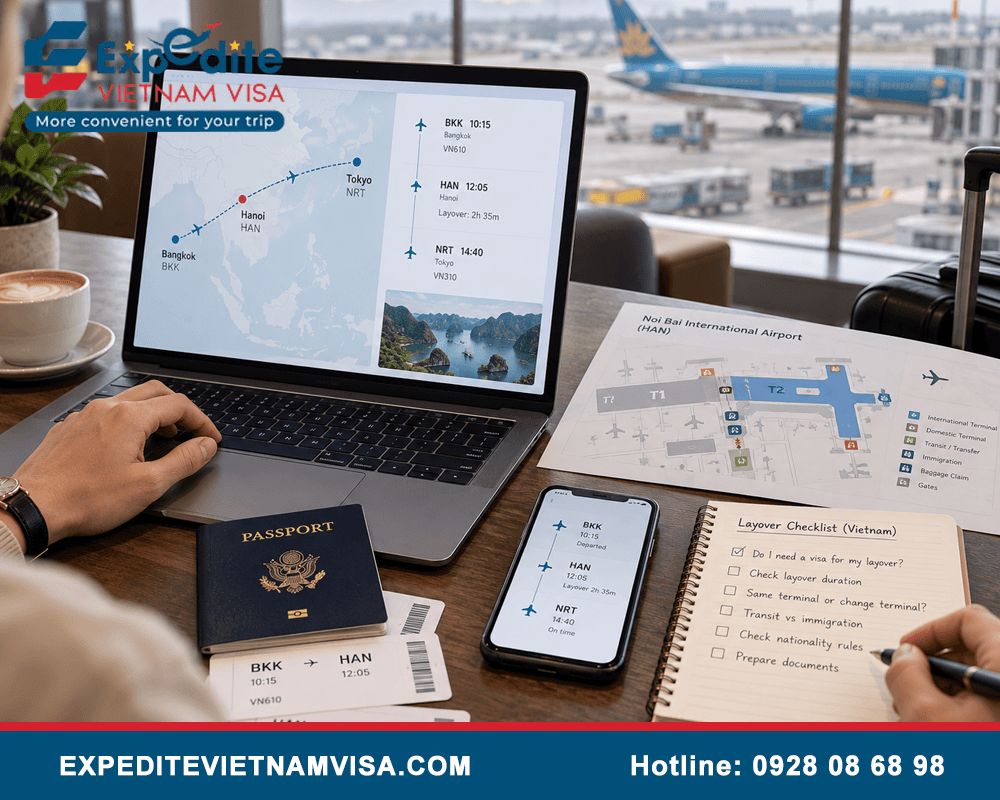
However, travelers asking Do I Need a Vietnam Visa for a Layover must consider whether collecting baggage, changing terminals, or obtaining another boarding pass requires immigration clearance.
Do Domestic Flight Connections Require Immigration Clearance?
Yes. International passengers connecting to domestic flights must enter Vietnam before continuing to their next destination.
For example, a traveler arriving internationally in Hanoi and connecting to Da Nang must complete Vietnamese entry procedures.
The Hanoi transit visa requirements therefore depend on whether the itinerary involves international airside transit or domestic travel.
Can You Leave a Vietnam Airport During Transit?
Yes, provided you meet the applicable entry requirements.
Travelers with an appropriate visa or qualifying visa exemption may leave the airport after immigration clearance.
Passengers connecting through Tan Son Nhat International Airport should consider the Ho Chi Minh transit visa requirements when planning city visits, overnight accommodation, or separate flight connections.
How Much Does Transit Through Vietnam Cost?
Eligible visa-free transit does not involve a Vietnamese visa fee. If a passenger needs to enter the country, government visa fees depend on the applicable entry authorization.
Travelers should distinguish official immigration charges from optional agency service fees and other travel expenses.
What Are the Government Fees for Vietnam Transit?
Vietnam does not charge a separate e-Visa fee specifically for a flight connection.
For eligible travelers entering Vietnam, the published government e-Visa fees are USD 25 for single entry and USD 50 for multiple entry.
Transit arrangement | Government visa fee |
|---|---|
Eligible airside airport transit | USD 0 |
Eligible seaport transit within designated area | USD 0 |
Entry under a qualifying visa exemption | USD 0 |
Single-entry e-Visa | USD 25 |
Multiple-entry e-Visa | USD 50 |
Professional visa assistance | Contact for quotation |
The actual Vietnam transit visa cost depends on whether the traveler enters Vietnam and which visa arrangement applies.
Are There Additional Charges for Visa Assistance?
Yes. Professional visa assistance may involve additional service charges for document reviews, application preparation, and administrative support.
These charges are separate from official government visa fees.
Expedite Vietnam Visa provides quotations based on individual application requirements, allowing travelers to review the relevant costs before requesting assistance.
Does Transit Duration Affect Visa Fees?
No. The published government e-Visa fees depend on the visa's permitted number of entries, rather than the number of hours spent waiting for a connecting flight.
A short layover requiring immigration clearance may still involve a visa fee.
Conversely, an eligible airside connection does not automatically become chargeable simply because the waiting period is longer.
How Can Travelers Comply With Vietnam Transit Rules?
Travelers should verify their flight arrangements, immigration requirements, and supporting documents before departure. Correct preparation helps prevent unexpected difficulties when checking in, collecting baggage, or transferring between international and domestic services.
How Should You Check Your Transit Eligibility?
Start by reviewing your complete travel itinerary and confirming whether you must cross Vietnamese immigration.
Check the following details:
- Passport and destination entry requirements.
- Confirmed onward transportation.
- Airport or seaport transit facilities.
- Baggage transfer arrangements.
- Boarding pass and check-in procedures.
- Requirements for entering Vietnam, if necessary.
Airlines and relevant transport operators should confirm practical transfer arrangements before departure.
How Can You Apply for an e-Visa if Entry Is Required?
Eligible foreigners can submit a Vietnam e-Visa application through the official government electronic visa portal.
Applicants must provide accurate personal information, a passport information-page image, a suitable portrait photograph, and the required government fee.
The selected Vietnam visa entry border gate must correspond to an authorized entry point for the visa.
Travelers should obtain the necessary authorization before departure.
What Should You Do if Your Transit Plans Change?
Contact your airline or transport operator immediately to confirm whether revised arrangements require entering Vietnam.
Flight cancellations, unexpected baggage collection, or changes to onward transportation may affect visa eligibility.
Travelers with urgent entry requirements can inquire about emergency Vietnam visa assistance, subject to eligibility and processing availability.
Immigration approval is not automatic.
What Else Should Travelers Know About Vietnam Transit?
Transit requirements depend on whether travelers remain inside designated transit areas and meet the conditions for onward travel. Common questions concern waiting times, separate flight bookings, and airport transfers.
Can You Transit Through Vietnam Without a Visa for 24 Hours?
Yes, if you qualify for visa-free airside transit and remain within the authorized transit area. A 24-hour connection does not independently grant permission to enter Vietnam. Confirm that your airline and airport arrangements accommodate the entire connection.
Do Separate Flight Tickets Affect Vietnam Transit Rules?
Yes. Separate tickets may require collecting checked baggage, obtaining another boarding pass, or completing check-in outside the transit area. If any step requires immigration clearance, the passenger must meet Vietnam's entry requirements.
Can You Change Airports in Vietnam Without a Visa?
Generally, changing between separate airports requires entering Vietnam and traveling outside the designated transit area. Passengers must therefore hold an appropriate visa or qualify for a visa exemption before completing the transfer.
Get Vietnam Visa Assistance From Expedite Vietnam Visa
Understanding Vietnam transit rules helps travelers prepare for connecting flights and avoid unexpected immigration difficulties. Expedite Vietnam Visa assists international passengers with visa eligibility questions, document preparation, and e-Visa applications when entry into Vietnam is required.
Our team helps review individual travel arrangements and identify relevant documentation requirements. Contact us for professional visa assistance and a personalized service quotation.
Contact Expedite Vietnam Visa
- Email: [email protected]
- US phone: +1 (972) 666-0676
- Vietnam phone: +84 928 08 68 98
- WhatsApp: +84 928 08 68 98
- Website: https://expeditevietnamvisa.com/
Head Office:
1900 Jay Ell Drive, Richardson, TX 75081, United States
Branch Office:
4000 North O Street, Fort Smith, AR 72904, United States
Representative Office:
56 Nguyen Cu Trinh Street, District 1, Ho Chi Minh City, Vietnam
- Categories:
- Blogs

Over the past 23 years in the travel service industry, the growth and success of TRANSOCEAN have stemmed not only from the dedication of our well-trained, enthusiastic, and customer-oriented staff, but also from the exceptional leadership of our Founder and CEO, Mr. STANLEY HO. With more than 20 years of experience in the travel and tourism sector, Mr. STANLEY HO possesses profound knowledge of the market, customer behavior, and modern travel trends. His strategic vision has guided the company toward sustainable growth while maintaining a strong commitment to service quality.