
Vietnam Visa Changes 2027: What's New for Travelers?
Latest update: Nov 11th, 2026
Table of Contents
- What Has Actually Changed in Vietnam's Visa Policy?
- Which Travelers Benefit From the Visa Changes?
- How Do These Changes Affect Travel Planning?
- What Should Travelers Check Before Applying?
- What Should You Know About Vietnam's Future Visa Changes?
- Check Your Vietnam Visa Options With Expedite Vietnam Visa
Vietnam has introduced visa policy changes that make travel more flexible for eligible international visitors. These include expanded visa-free entry, longer electronic visa validity, and multiple-entry options. However, travelers searching for Vietnam visa changes 2027 should distinguish confirmed regulations from proposals that have not taken effect. The changes do not apply equally to every nationality or travel purpose. Expedite Vietnam Visa explains what has changed, which policies remain relevant, and how visitors can adjust their travel plans before arriving in Vietnam.
What Has Actually Changed in Vietnam's Visa Policy?
Vietnam's major visa reforms have expanded access to visa-free travel and longer electronic visas. These measures remain important for visitors planning trips in 2027, although they were introduced before that year.
The practical impact depends on nationality, intended length of stay, and whether repeated entry is necessary.
Have Visa-Free Stays Been Extended?
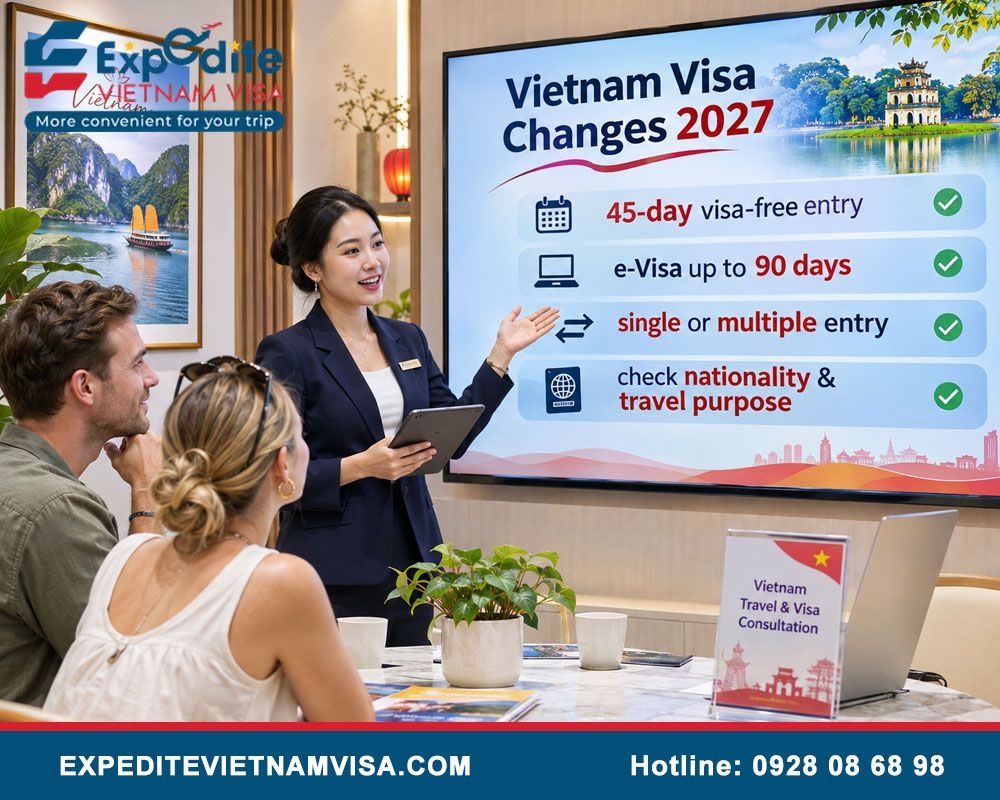
Yes. Vietnam has expanded 45-day visa-free entry to additional eligible nationalities, replacing shorter arrangements for some travelers.
The confirmed exemption framework covers two groups of 12 countries, subject to different eligibility conditions.
Travelers can use the applicable exemption without obtaining an e-Visa for each qualifying short visit.
Has Vietnam Increased e-Visa Validity?
Yes. Vietnam's e-Visa framework allows a validity period of up to 90 days, compared with the previous 30-day arrangement.
Travelers can request a single-entry or multiple-entry e-Visa.
This offers greater flexibility for extended holidays and regional travel without requiring a separate visa for every qualifying entry.
Has Vietnam Introduced a New Visa Specifically for 2027?
A separate nationwide visa introduced exclusively for 2027 has not been established by the official information reviewed.
The Vietnam new visa policy 2027 should therefore be assessed against existing regulations, confirmed amendments, and their validity periods.
Proposals concerning additional long-term or preferential visa arrangements should not be treated as approved immigration programs without formal government confirmation.
Which Travelers Benefit From the Visa Changes?
The impact of Vietnam's visa changes differs by nationality and purpose of travel. Some visitors benefit from 45-day visa exemptions, while others gain flexibility through longer electronic visas.
Travelers should compare the available arrangements rather than assuming that every visitor qualifies for the same entry conditions.
Which Countries Receive 45-Day Visa-Free Entry?
Vietnam's confirmed exemption framework includes two groups:
Group 1: Germany, France, Italy, Spain, the United Kingdom, Russia, Japan, South Korea, Denmark, Sweden, Norway, and Finland.
Group 2: Belgium, Bulgaria, Croatia, the Czech Republic, Hungary, Luxembourg, the Netherlands, Poland, Romania, Slovakia, Slovenia, and Switzerland.
Both groups benefit from 45-day exemptions, but the second group's arrangement applies specifically to tourism.
What Changes for Travelers Who Need a Visa?
Travelers without an applicable exemption can generally apply for an electronic visa, subject to immigration eligibility requirements.
The longer validity period makes it easier to plan visits exceeding 30 days.
For leisure travel, a Vietnam tourist visa remains an appropriate entry option when the visitor's nationality and intended activities meet its conditions.
Do Business Travelers Benefit From These Changes?
Business travelers may benefit from more flexible short-term entry options, particularly when their activities are permitted under an e-Visa.
However, longer-term commercial activities may require sponsorship or a specific immigration category.
A Vietnam business visa should match the proposed activities, and employment may require separate authorization under Vietnamese labor regulations.
How Do These Changes Affect Travel Planning?
The visa reforms give eligible travelers more flexibility, but they also make choosing the appropriate entry arrangement important. A visa exemption, single-entry e-Visa, and multiple-entry e-Visa do not provide identical permissions.
Travelers should consider the number of visits, expected stay duration, and intended destinations.
Is a Visa Exemption Better Than an e-Visa?
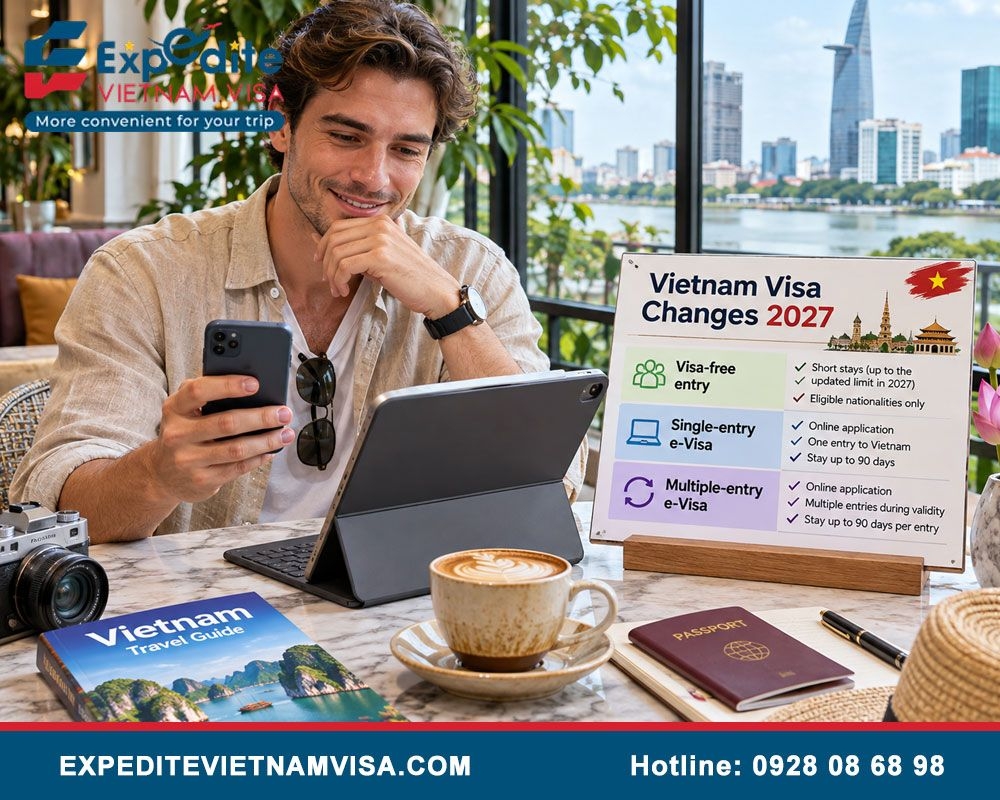
A visa exemption can be convenient for qualifying short visits because no separate visa application is required.
An e-Visa may be more appropriate when a traveler needs a longer stay or planned multiple entries.
The correct choice depends on nationality, permitted activities, and travel duration.
Entry option | Main benefit | Important limitation |
|---|---|---|
45-day visa exemption | No visa application for eligible travelers | Nationality and purpose conditions apply |
Single-entry e-Visa | Stay validity of up to 90 days | One entry |
Multiple-entry e-Visa | Repeated entries within up to 90 days | Validity period still applies |
Five-year exemption certificate | Repeated family visits over several years | Restricted eligibility and stay limits |
Can Travelers Visit Neighboring Countries and Return?
Yes. Travelers holding a valid multiple-entry e-Visa can generally leave Vietnam and return during the approved validity period, subject to immigration conditions.
For example, a traveler may visit Vietnam, continue to another country, and return without applying for a new visa.
A longer-term Vietnam visa multiple entry 5 years arrangement is different: it refers to a certificate available only to qualifying applicants.
Have Vietnam's Passport Requirements Changed?
Travelers must still satisfy the passport validity requirements associated with their entry arrangement.
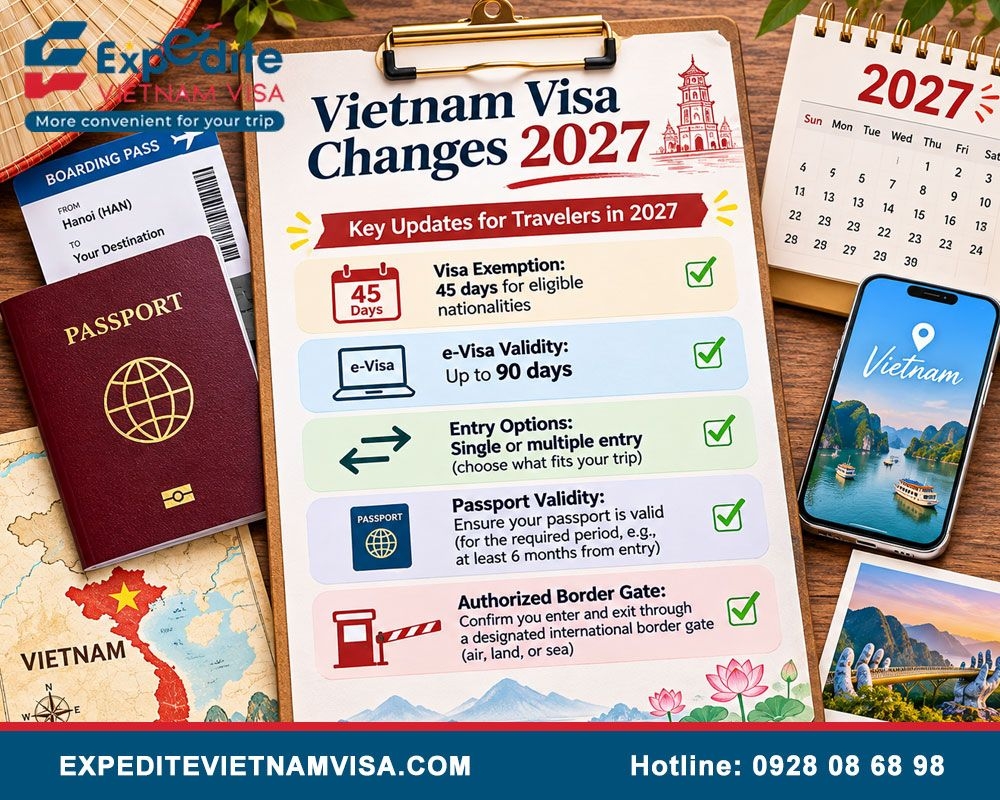
For visa-free entry, a passport generally needs at least six months of remaining validity upon arrival.
The relevant passport requirements for Vietnam should be checked before travel, especially when the passport is approaching its expiration date.
Visa policy changes do not remove the requirement to travel with valid identity documents.
What Should Travelers Check Before Applying?
Travelers should verify the regulations applicable to their nationality before submitting an application. Confirmed policies can remain effective for several years, while new amendments may alter individual requirements.
The following checks help prevent confusion between current rules and unapproved proposals.
How Can You Confirm Whether a Visa Change Is Official?
A visa change should be supported by a government resolution, legal amendment, or announcement from a competent Vietnamese authority.
Travelers should check:
- Whether the rule has formally taken effect.
- Which nationalities and passport types qualify.
- The permitted entry purpose and stay duration.
- Any limitations or expiration conditions.
The New visa rules for Vietnam 2027 should be interpreted using confirmed legal requirements rather than announcements about possible future reforms.
Have the e-Visa Application Fees Changed?
The published government e-Visa fees remain USD 25 for single entry and USD 50 for multiple entries.
Application expense | Reference fee |
|---|---|
Single-entry e-Visa | USD 25 |
Multiple-entry e-Visa | USD 50 |
Qualifying visa-free entry | No visa issuance fee |
Sponsored visa | Depends on visa category |
Optional visa application assistance | Contact for quotation |
These government fees are separate from optional commercial service charges.
Expedite Vietnam Visa provides quotations according to the requested assistance and application requirements.
Can Travelers Use Any Border Crossing With an e-Visa?
No. Electronic visa holders must use authorized international entry and exit checkpoints.
Vietnam permits e-Visa entry through designated airports, land crossings, and seaports.
The Vietnam visa intended border gate of entry is relevant when planning an itinerary and completing application information.
Travelers should confirm that their chosen checkpoint accepts e-Visa holders before departure.
What Should You Know About Vietnam's Future Visa Changes?
Visa policy updates may affect eligibility, travel planning, and application requirements. Travelers should rely on confirmed rules rather than anticipated policy announcements.
Will Vietnam Introduce a Longer-Term Tourist Visa?
No new general long-term tourist visa for 2027 has been confirmed in the official information reviewed. Proposals should not be treated as available application options before receiving formal approval.
Will the 45-Day Visa Exemption Continue Through 2027?
Yes, under the confirmed published arrangements. Both groups of 12 countries have exemption validity periods extending beyond 2027, subject to the conditions of their respective policies and any subsequent amendments.
Can Travelers Stay Longer Than Their Visa Allows?
No. Travelers must leave before their authorized stay expires or obtain an appropriate extension or immigration status where legally permitted. A multiple-entry visa does not authorize an indefinite stay.
Check Your Vietnam Visa Options With Expedite Vietnam Visa
Visa changes can affect which entry document suits your trip. Expedite Vietnam Visa helps travelers check eligibility, prepare e-Visa applications, and understand available entry options.
Contact our team for application assistance and a service quotation tailored to your travel plans. Final visa decisions rest with Vietnamese immigration authorities.
Contact Expedite Vietnam Visa
- Email: [email protected]
- US phone: +1 (972) 666-0676
- Vietnam phone: +84 928 08 68 98
- WhatsApp: +84 928 08 68 98
- Website: https://expeditevietnamvisa.com/
Head Office:
1900 Jay Ell Drive, Richardson, TX 75081, United States
Branch Office:
4000 North O Street, Fort Smith, AR 72904, United States
Representative Office:
56 Nguyen Cu Trinh Street, District 1, Ho Chi Minh City, Vietnam
- Categories:
- Blogs

Over the past 23 years in the travel service industry, the growth and success of TRANSOCEAN have stemmed not only from the dedication of our well-trained, enthusiastic, and customer-oriented staff, but also from the exceptional leadership of our Founder and CEO, Mr. STANLEY HO. With more than 20 years of experience in the travel and tourism sector, Mr. STANLEY HO possesses profound knowledge of the market, customer behavior, and modern travel trends. His strategic vision has guided the company toward sustainable growth while maintaining a strong commitment to service quality.