
Vietnam Visa Photo Size 2027: Complete Requirements
Latest update: Oct 21st, 2026
Table of Contents
- What Is the Required Vietnam Visa Photo Size?
- How Can You Take a Vietnam Visa Photo Correctly?
- What Common Vietnam Visa Photo Mistakes Should You Avoid?
- How Much Does a Vietnam Visa Photo Cost?
- What Else Should You Know About Vietnam Visa Photos?
- Get Vietnam Visa Application Assistance From Expedite Vietnam Visa
Applying for a Vietnam visa requires a clear portrait photograph that meets immigration specifications. Incorrect dimensions, unsuitable backgrounds, or oversized files may prevent successful uploading or require corrections. Understanding Vietnam visa photo size 2027 helps travelers prepare their photographs before completing an online application. Expedite Vietnam Visa provides application assistance for international visitors, including document preparation and photo reviews. This guide explains the required dimensions, image formats, preparation methods, common mistakes, and photography costs based on currently published requirements.
What Is the Required Vietnam Visa Photo Size?
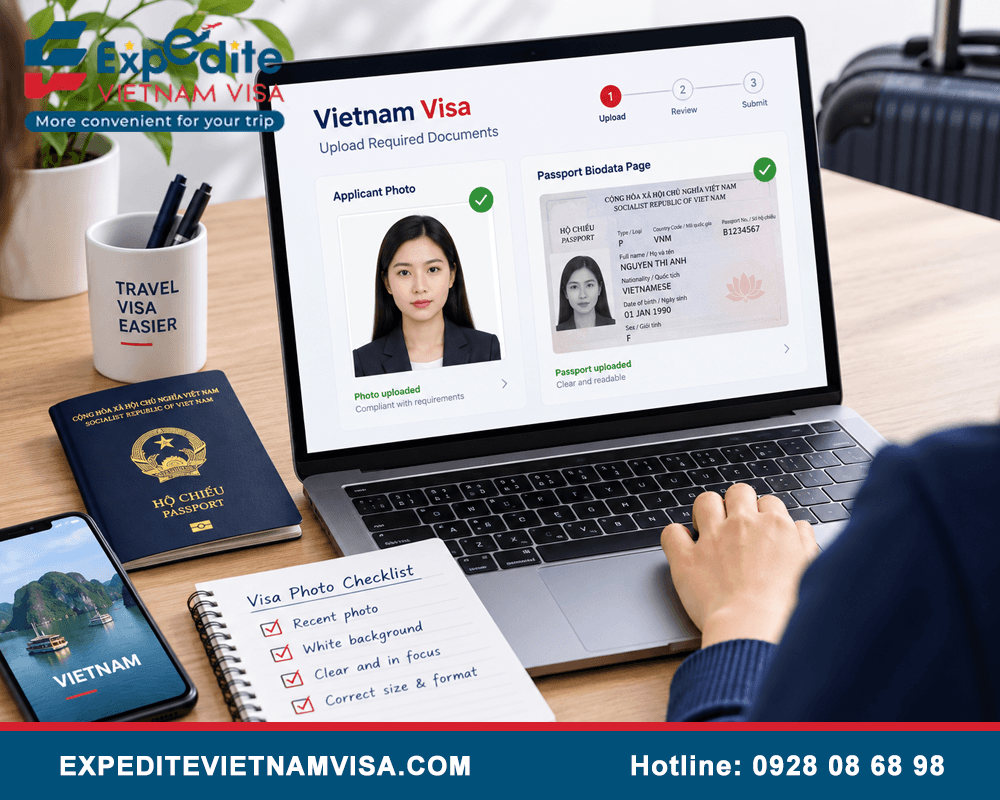
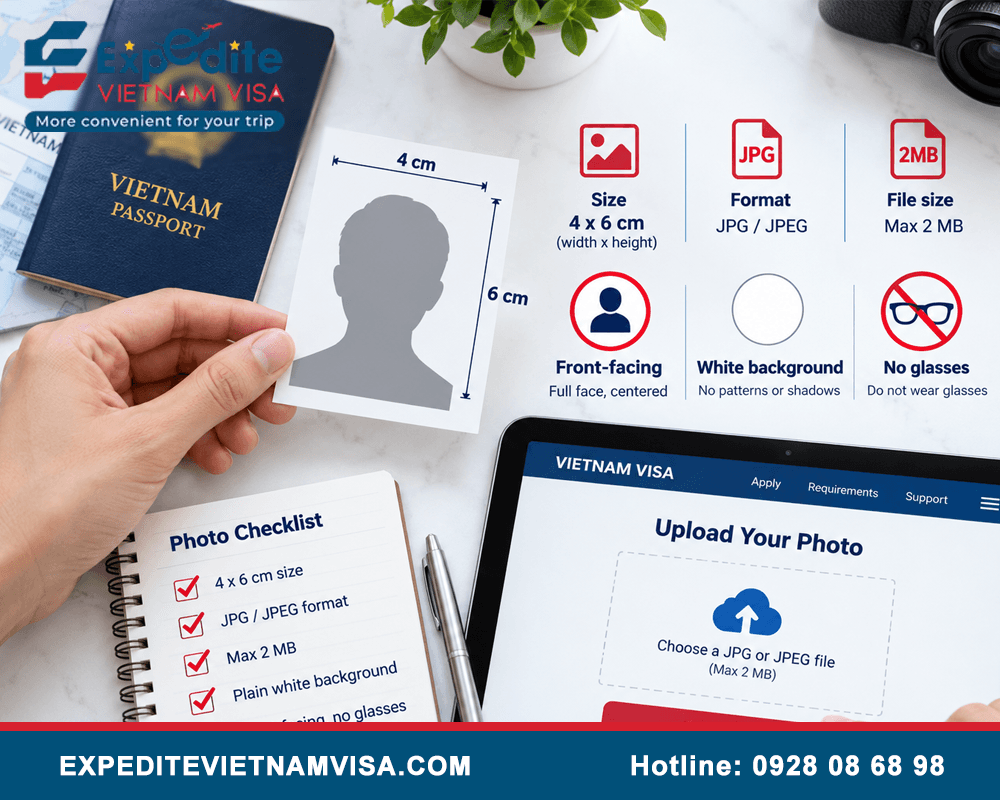
The standard Vietnam e-Visa portrait measures 4 × 6 cm, with a width-to-height ratio of 2:3. The photograph must clearly identify the applicant and satisfy the applicable technical specifications. Travelers should distinguish physical dimensions from digital file size when preparing their images.
What Are the Official Vietnam Visa Photo Dimensions?
Vietnam's published e-Visa procedure specifies a portrait measuring 4 cm wide and 6 cm high. This corresponds to a 2:3 aspect ratio.
The official requirements for the size of photo for Vietnam visa include a recent photograph showing the applicant facing forward against a white background.
What Digital Photo Format and File Size Are Accepted?
The official administrative procedure specifies JPEG format with a maximum portrait file size of 2 MB. However, instructions retained on an older e-Visa system specify a portrait below 50 KB.
Applicants should therefore check the upload limits displayed on the active application form rather than relying on file size alone.
Requirement | Specification |
|---|---|
Portrait dimensions | 4 × 6 cm |
Aspect ratio | 2:3 |
Digital format | JPEG |
Administrative file-size limit | Up to 2 MB |
Older portal guidance | Below 50 KB |
Background | Plain white |
Face position | Looking directly at camera |
Glasses and hats | Not permitted |
Photograph | Recent and clearly recognizable |
Is a Passport Photo Different From a Passport Scan?
Yes. The e-Visa application requires two separate images: a portrait photograph and a passport biographical-page image.
The portrait identifies the applicant's face, while the passport scan verifies personal information and travel-document details.
The passport requirements for Vietnam also involve checking document validity and ensuring personal details remain readable.
How Can You Take a Vietnam Visa Photo Correctly?
Travelers can prepare a suitable visa photograph using a digital camera or smartphone, provided the image meets official requirements. Professional studio photography is not mandatory for a standard online application. Correct lighting, positioning, and cropping are more important than expensive equipment.
Can You Take a Vietnam Visa Photo With a Smartphone?
Yes. A smartphone can capture a suitable portrait when the image is clear and correctly framed.
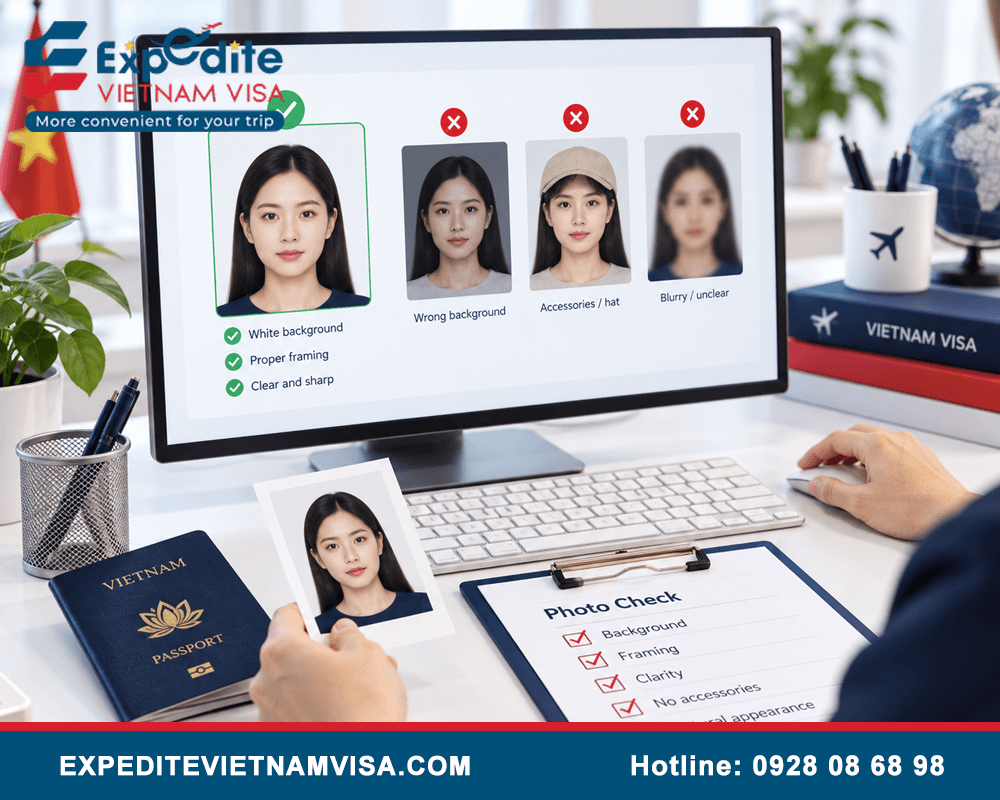
Follow these practical steps:
Stand against a plain white background.
Position the camera at eye level.
Use even lighting without strong shadows.
Look directly into the camera.
Keep your face fully visible.
Remove glasses and hats.
Avoid beauty filters or facial alterations.
These recommendations support the requirements discussed under Vietnam visa digital photo requirements, including preparing digital files for online submission.
How Should You Crop a Vietnam Visa Photo?
Crop the photograph vertically to maintain a 2:3 aspect ratio, corresponding to the official 4 × 6 cm dimensions.
Keep the face centered and include the head and upper shoulders. Avoid stretching or distorting the photograph.
After cropping, check that the final image remains sharp and recognizable.
How Can You Reduce the Photo File Size?
Save the photograph in JPEG format and adjust compression carefully until it meets the active portal's upload requirements.
Avoid excessive compression that makes facial features blurry. Always inspect the exported image before uploading.
For travelers experiencing repeated technical difficulties, Vietnam visa website upload problems may involve file compatibility, browser behavior, or incomplete application fields.
What Common Vietnam Visa Photo Mistakes Should You Avoid?
Visa photographs may require correction when important identification details are unclear or the file does not satisfy upload specifications. Applicants should examine both photo quality and technical settings before submission. A failed upload does not automatically indicate that immigration authorities have rejected the application.
Can an Incorrect Background Cause Photo Problems?
Yes. The official portrait requirements specify a plain white background.
Colored walls, patterned surfaces, and distracting objects may make the photograph unsuitable.
Choose a clean background with even lighting. Avoid pronounced shadows behind the head or across the face.
A clear photograph helps immigration authorities identify the applicant accurately.
Why Does the Vietnam e-Visa Website Reject Photo Uploads?
Upload failures may result from unsupported formats, excessive file sizes, interrupted connections, or temporary technical errors.
First, verify the photograph's extension, dimensions, and file size. Then retry using a compatible browser.
Some Vietnam e-Visa website technical errors require troubleshooting beyond replacing the photograph.
Can an Incorrect Photo Cause Visa Rejection?
An unsuitable photograph can lead to correction requests or difficulties verifying the applicant's identity. However, a technical upload failure is not itself a visa refusal.
Repeated applications containing the same unsuitable photograph may encounter similar issues.
Other reasons Vietnam visa applications keep getting denied can involve passport discrepancies, application information, or immigration eligibility.
How Much Does a Vietnam Visa Photo Cost?
The cost of preparing a Vietnam visa photograph depends on whether travelers take the picture themselves, use editing tools, or visit a photography studio. These expenses are separate from government visa fees and professional application assistance. Applicants should compare the options before paying for unnecessary services.
Can You Prepare a Vietnam Visa Photo for Free?
Yes. Travelers with a suitable smartphone can take and prepare their photographs without paying photography fees.
Free editing tools may help crop images and adjust file sizes. However, applicants remain responsible for checking whether the final photograph meets official specifications.
No professional studio is required solely because the application is submitted online.
What Are the Photography and Visa Fees?
Photography service prices vary by provider, location, and editing requirements.
The following table distinguishes optional photo preparation expenses from published government e-Visa fees.
Service | Cost or pricing basis |
|---|---|
Self-taken visa photograph | No additional photography fee |
Basic photo resizing | Free or paid, depending on tool |
Professional photo studio | Contact local provider for price |
Single-entry government e-Visa fee | USD 25 |
Multiple-entry government e-Visa fee | USD 50 |
Professional application assistance | Contact for quotation |
Government fees are separate from photography charges and agency service fees. Applicants should confirm current charges before payment.
Does a Tourist Visa Require a Different Photograph?
The published standard e-Visa portrait specifications do not change simply because the traveler intends to visit Vietnam for tourism.
Applicants must still provide an appropriate portrait and passport image.
Those applying for a Vietnam tourist visa should also check their travel purpose, passport details, and intended entry information before submission.
What Else Should You Know About Vietnam Visa Photos?
Travelers frequently have questions about printed photographs, digital editing, and personal information. Understanding these differences helps prevent avoidable application mistakes.
Do You Need to Print a Vietnam e-Visa Photo?
No printed portrait is normally required during the standard online e-Visa application. Applicants upload the photograph electronically.
Other visa procedures may require physical photographs, so check the instructions applicable to the chosen application method.
Can You Use the Same Photograph for Multiple Applications?
A previous photograph may be reused if it remains recent, clearly represents the applicant, and meets the current specifications.
If an earlier application encountered photograph-related problems, preparing a new image may be more appropriate than reusing the same unsuitable file.
Must Your Photograph Match Your Passport Information?
The photograph must accurately represent the person identified in the passport and visa application.
Applicants should also verify their names and other personal details. The correct Vietnam visa middle and given name information should correspond with the passport to avoid identity discrepancies.
Get Vietnam Visa Application Assistance From Expedite Vietnam Visa
Preparing a compliant visa photo helps prevent application errors and unnecessary delays. Expedite Vietnam Visa assists travelers with photo requirements, passport documentation, and Vietnam e-Visa applications. Our experienced team helps review application details and identify common mistakes before submission.
Contact us for professional visa assistance and a personalized service quotation.
Contact Expedite Vietnam Visa
Email: [email protected]
US phone: +1 (972) 666-0676
Vietnam phone: +84 928 08 68 98
WhatsApp: +84 928 08 68 98
Website: https://expeditevietnamvisa.com/
Head Office:
1900 Jay Ell Drive, Richardson, TX 75081, United States
Branch Office:
4000 North O Street, Fort Smith, AR 72904, United States
Representative Office:
56 Nguyen Cu Trinh Street, District 1, Ho Chi Minh City, Vietnam

Over the past 23 years in the travel service industry, the growth and success of TRANSOCEAN have stemmed not only from the dedication of our well-trained, enthusiastic, and customer-oriented staff, but also from the exceptional leadership of our Founder and CEO, Mr. STANLEY HO. With more than 20 years of experience in the travel and tourism sector, Mr. STANLEY HO possesses profound knowledge of the market, customer behavior, and modern travel trends. His strategic vision has guided the company toward sustainable growth while maintaining a strong commitment to service quality.